
‘BD commits to stronger governance in public investment’
Staff Reporter :
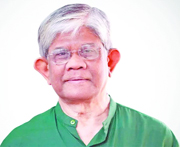
Finance Adviser Dr. Salehuddin Ahmed reaffirmed on Monday that Bangladesh is steadfast in its commitment to strengthening governance in public investment by enhancing efficiency, transparency, and accountability within financial services.
“Sustainable development is grounded in three fundamental pillars: accountability, transparency, and ethical governance. These are not mere ideals-they are critical, actionable principles. Through evaluation, auditing, and compliance, we transform policy into practice, ensuring projects deliver measurable impact for our people,” he said.
Dr. Ahmed made the remarks while addressing the inaugural session of a high-level seminar titled “Transforming Development: Building a Culture of Accountability through Evaluation, Auditing, and Ethics”, held at a city hotel.
The seminar was jointly organized by the Economic Relations Division (ERD) of the Ministry of Finance and the Independent Evaluation Office, Internal Audit Department, and Compliance and Investigations Department of the New Development Bank (NDB).
It aimed to embed evaluation, accountability, and ethical standards at the core of development initiatives-key elements for realizing Bangladesh’s growth aspirations.
The event spotlighted NDB’s strategy for sustainable development, anchored in integrated systems of evaluation, audit, and compliance. Attended by more than 150 participants-including senior policymakers, development practitioners, and private sector leaders-it provided a platform for knowledge-sharing among emerging economies.
Md Shahriar Kader Siddiky, Secretary of the ERD, also addressed the audience, emphasizing the importance of global collaboration. “The presence of global experts and key stakeholders is a valuable opportunity to exchange insights. We must learn from international experiences and tailor best practices to our national context,” he noted.
Ashwani K. Muthoo, Director General of NDB’s Independent Evaluation Office, expressed interest in deepening ties with Bangladesh. “Bangladesh is advancing toward a ‘National Project Evaluation Policy.’ The NDB stands ready to support the policy’s finalization,” he said.
The seminar also featured remarks from Additional Secretary of the ERD, Md Kamal Uddin, Secretary of the Planning Division Iqbal Abdullah Harun, and other dignitaries.
Bangladesh became the first non-BRICS member of the NDB in 2021. As the country ramps up its infrastructure and development agenda, the seminar underscored the vital role of sound governance, accountability, and sustainability. Both Bangladesh and the NDB signaled their shared commitment to financing development aligned with the Sustainable Development Goals (SDGs).