
Barrister Mainul cited as voice against authoritarianism
Abu Jakir :
In a notable development during Sunday’s formal hearing, prosecutors at the International Crimes Tribunal (ICT) referred to longstanding patterns of political repression under the Awami League, tracing them back to the post-independence era.
This historical overview was presented as part of the contextual framework for the charges relating to the events of the July 2024 uprising.
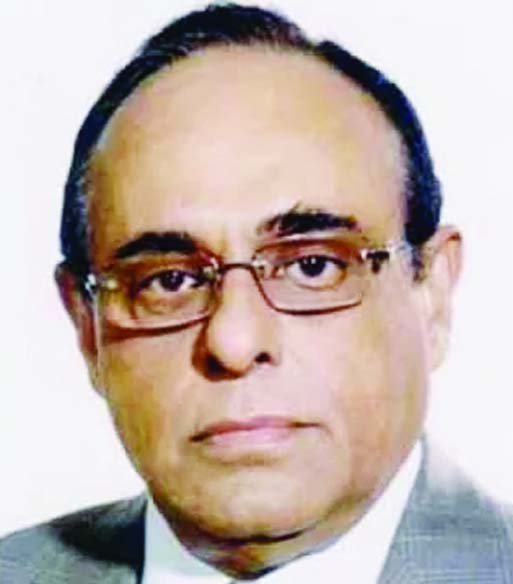
Barrister Mainul Hosein, founder and former Chairman of the Editorial Board of The New Nation, was recognised as a courageous opponent of the one-party BAKSAL system introduced under Sheikh Mujibur Rahman’s regime in 1975.
Prosecutor Mizanul Islam argued that a culture of authoritarianism and political violence had been deeply embedded in the party’s governance for decades.
He cited historical examples to illustrate continuity between past episodes of state repression and the alleged crimes committed during the Monsoon Revolution.
The tribunal was reminded of the formation of the Rakkhi Bahini in 1972-73-a paramilitary force widely accused of extrajudicial killings, enforced disappearances, and political intimidation.
Prosecutor Mizanul described the force as setting a precedent for “systematic suppression of dissent” that persisted over successive administrations.
He also referenced the 1973 general election, which he characterised as “fraudulent,” to highlight a pattern of electoral manipulation.
The 1974 famine, which claimed hundreds of thousands of lives, was described not merely as a natural disaster but as a “catastrophic failure of governance” under then-Prime Minister Sheikh Mujibur Rahman.
A central element of the prosecution’s historical argument was the Fourth Amendment to the Constitution, passed on 25 January 1975.
This amendment effectively dismantled multiparty democracy and established a one-party system under BAKSAL (Bangladesh Krishak Sramik Awami League).
The amendment banned all other political parties and restricted press freedom by cancelling the declarations of most newspapers, leaving only four state-sanctioned publications in circulation. Mizanul referred to this as a “deliberate and systematic erosion of democratic principles.”
As acts of protest, prominent political figures opposed the BAKSAL regime. Barrister Mainul Hosein, then a Member of Parliament, resigned from his position.
Esteemed freedom fighter General Ataul Gani Osmani also publicly rejected the new political arrangement.
Additionally, Rajshahi MP Moinuddin Ahmed Manik was stripped of his parliamentary seat for refusing to join BAKSAL.
Prosecutor Mizanul asserted that this legacy of intolerance and political suppression created the conditions that led to the violence of July 2024. He argued that the current charges of crimes against humanity should be viewed not as isolated acts but as part of a longstanding culture of impunity and state-sponsored repression.
The tribunal acknowledged these arguments as part of the broader effort to establish intent, motive, and continuity in the alleged abuse of state power under Awami League leadership.