Bangladesh’s Cashless Dream and Reality of a Cash-Driven Economy
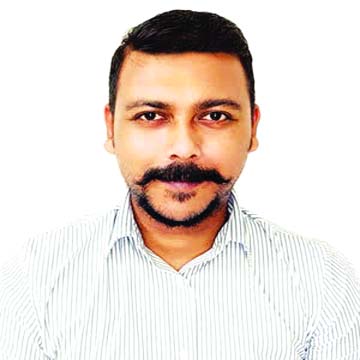
H. M. Nazmul Alam :
When Bangladesh launched mobile financial services more than a decade ago, the ambition was clear: to build a cashless society.
It was envisioned as a quiet revolution that would reshape the country’s financial habits, reduce dependence on physical money, and bring millions into the formal economy.
The technology succeeded in spreading widely, but its deeper purpose remains largely unfulfilled.
Today, mobile banking accounts number more than 145 million, and every month transactions exceed Tk 1.5 lakh crore.
Yet, according to Bangladesh Bank data, more than 85 per cent of these activities are still limited to basic money transfers, including cash in, cash out, and person-to-person exchanges.
Only a small fraction, around 4.5 per cent, involves merchant or bill payments. This pattern shows that while the service has grown in scale, it has not yet grown in function.
Mobile banking in Bangladesh has evolved into a convenient way of sending money rather than an instrument for genuine digital transactions.
This contradiction between technological adoption and behavioral change exposes the gap between financial innovation and social readiness. Despite the spread of mobile services, most citizens continue to live in a cash-driven economy.
The country’s central bank estimates that roughly Tk 3 lakh crore in printed notes circulate outside the formal banking sector. This enormous amount of cash reflects both habit and distrust. It also carries an economic cost.
Managing cash alone costs the central bank around Tk 20,000 crore annually for printing, storing, distributing, and replacing currency.
In addition, the government is believed to lose at least Tk 1.5 lakh crore every year in potential revenue because transactions remain outside formal, traceable systems.
These figures should have been enough to trigger a decisive shift toward digital transactions.
Yet the culture of cash remains deeply entrenched. For many shopkeepers, especially small traders and business owners, cash is still the most trusted form of exchange.
Many of them refuse mobile payments, often citing practical barriers. Suppliers demand cash, customers are used to cash, and digital payments sometimes lead to additional scrutiny through value-added tax or compliance reporting.
This everyday reluctance mirrors a national pattern. Around 1.4 million micro-merchants are eligible for mobile financial transactions, but more than 70 percent still do not use them.
Although the government introduced the Bangla QR system to promote a universal, interoperable payment method, it has failed to gain traction among both merchants and customers.
The absence of a national interoperable gateway has left the system fragmented. Customers frequently face problems using one service to pay a merchant registered with another.
In India, the introduction of the Unified Payments Interface created a seamless national framework that transformed consumer behavior.
Bangladesh has yet to create such an integrated model. Without a single interoperable platform, mobile banking in Bangladesh remains disjointed, limiting the growth of digital transactions.
The structure of incentives also discourages users from moving away from cash. Withdrawing Tk 1,000 through MFS costs Tk 18.50, a significant charge for low-income users. Instead of rewarding digital payments, the current system often penalizes them.
The fees, combined with the lack of merchant acceptance, keep users trapped in the old cycle of withdrawing money before spending it.
Banking experts and financial technology specialists have repeatedly argued that digital payments could strengthen the country’s economy by improving transparency, reducing transaction costs, and increasing revenue collection.
However, these benefits depend on a strong and coordinated policy effort. At present, the government’s approach has been largely reactive, focusing more on regulation than on innovation.
One potential way forward could involve offering temporary tax exemptions to small businesses that adopt digital payment systems.
A tax break for four to five years would encourage micro and small enterprises to move from informal to formal channels. Simplifying the process of merchant registration and making it easier to integrate digital payment options could further accelerate this transition.
The experience of mobile financial service providers like bKash, Nagad, and Rocket shows both the potential and the limitation of digital finance in Bangladesh.
These platforms have achieved remarkable inclusion by reaching millions of unbanked individuals, especially in rural areas. Yet, most users continue to rely on them for remittances or short-term money transfers rather than broader financial engagement.
This narrow usage reflects the country’s economic structure, where much of the income and trade still operates informally.
Infrastructure weakness remains another obstacle. Many rural areas still lack stable internet connections or reliable agent networks.
Even in urban centers, merchants often do not have the necessary equipment to accept digital payments. The QR system, though introduced, is still unfamiliar to many users.
In some cases, it exists only as a printed sticker with no real integration behind it.
Digital literacy and trust are also key challenges. A significant portion of the population remains cautious about using technology for payments.
The fear of error, fraud, or loss makes people prefer cash, which they can see and control. Until financial literacy programs address this perception gap, digital adoption will continue to grow unevenly.
The government’s recent effort to make QR codes mandatory for business registration is a positive initiative, but it must be supported by incentives and education.
Simply imposing a requirement will not change behavior unless it becomes convenient and beneficial for users. For many small traders, digital payments are seen as a risk rather than an opportunity.
They fear additional taxes, complex paperwork, and a lack of clarity about the costs involved. The irony of Bangladesh’s financial modernisation is that the infrastructure for digital finance has expanded faster than the mindset to use it.
The country now has one of the largest mobile banking user bases in the world, yet cash in circulation continues to rise. The progress has been technological, but not behavioural. Inclusion has been achieved without transformation.
A cashless society cannot be built only through technology. It requires trust, cooperation, and shared benefit. It requires banks, telecom operators, and regulators to work together toward a single interoperable platform where transactions are fast, cheap, and transparent.
It also requires social acceptance – a belief that digital money is not just convenient but secure and fair. Bangladesh stands at a decisive moment in its financial journey. On one side lies the comfort of informality and cash, which supports the hidden economy and weakens accountability.
On the other lies the promise of a digital economy that could improve transparency, reduce costs, and strengthen growth. The choice between the two is not just technological but moral and institutional.
The country’s experience with mobile financial services shows how technology alone cannot change economic habits without proper infrastructure, incentives, and trust.
To become truly cashless, Bangladesh must move beyond the rhetoric of digital transformation and build systems that make it easier, cheaper, and more rewarding to go digital.
Only then will the mobile banking revolution fulfill its original promise – not just connecting millions of accounts, but transforming the very culture of money.