Bangladesh yet to approve dengue vaccine

Staff Reporter :
Dengue fever, once a seasonal concern in Bangladesh, has now become a year-round health threat.
With cases and fatalities on the rise, many citizens are asking: if vaccines against dengue already exist, why hasn’t Bangladesh started using them?
Experts say the answer lies in a mix of scientific limitations, regulatory caution, and complex public health considerations.
Entomologists note that climate change, rapid urbanisation, and poor waste management have expanded breeding grounds for Aedes mosquitoes, the carriers of the dengue virus.
As a result, dengue is no longer confined to the rainy season but poses a continuous risk across the country.
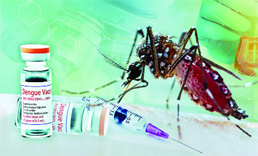
According to public health specialist Professor Mushtaq Hossain, the World Health Organization (WHO) has approved two dengue vaccines — Dengvaxia and Qdenga — but both have important limitations.
The first, Dengvaxia, developed by French company Sanofi-Aventis, is approved in several countries but can only be given to individuals who have previously been infected with dengue.
Administering it to someone who has never had the disease could increase the risk of severe complications if they contract dengue later.
The second, Qdenga, developed by Japan’s Takeda Pharmaceuticals and approved by WHO in 2023, is a two-dose vaccine for children aged 6 to 16. It has shown encouraging results but remains limited in supply and lacks long-term safety data.
Because of these challenges, Bangladesh has not yet granted approval for either vaccine’s use.
Jahangirnagar University entomologist Professor Kabirul Bashar explained that introducing a new vaccine requires not just scientific evidence but also political and administrative decisions.
“To authorise a dengue vaccine, the government would first need to declare dengue an epidemic,” he told media. “But doing so could affect the government’s image and fuel public anxiety.”
He also emphasised that while vaccines could be part of the solution, awareness and preventive measures — such as eliminating stagnant water, maintaining cleanliness, and using mosquito nets — remain more effective at controlling the disease’s spread.
Although Bangladesh has not rolled out any dengue vaccine, research has been underway.
In 2023, the International Centre for Diarrhoeal Disease Research, Bangladesh (icddr,b), in partnership with the University of Vermont’s Larner College of Medicine and the U.S.
National Institutes of Health (NIH), completed the second phase of trials for a new vaccine called TV005.
The trial results were promising, and scientists said large-scale production could begin if phase-three trials in India proved successful. However, progress has since slowed, and no new updates have been reported.
Professor Mushtaq Hossain believes the growing number of dengue cases should prompt the authorities to “consider introducing a safe and effective vaccine as part of a broader strategy.”
Health experts continue to stress that vaccines alone will not eliminate dengue.
“Even if Bangladesh eventually approves a vaccine, it won’t replace public cooperation,” said Prof.
Bashar. “Every citizen must take basic precautions — keeping surroundings clean, preventing waterlogging, and avoiding mosquito bites.”
As dengue continues to spread nationwide, the debate over vaccination reflects a deeper challenge: how to integrate scientific progress with public responsibility in combating one of Bangladesh’s most persistent public health crises.