
Bangladesh-India trade to continue for mutual consumer benefit: Commerce Adviser
NN Online:
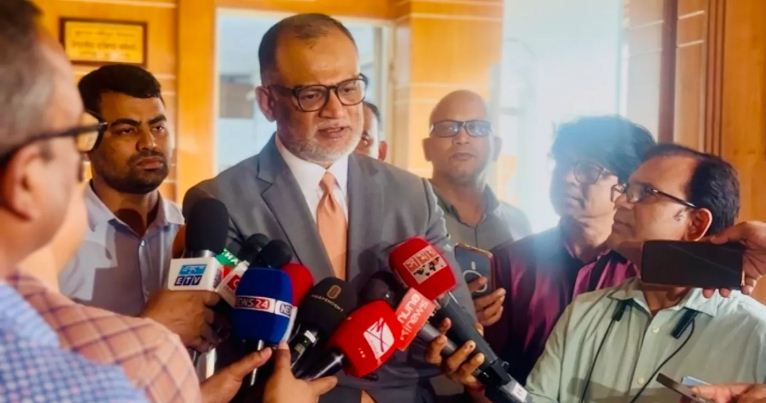
Commerce Adviser Sk Bashir Uddin has affirmed that trade between Bangladesh and India will continue in the mutual interest of consumers and businesses from both nations.
Speaking to reporters at the Secretariat on Sunday, the adviser said, “We have not received any official communication from the Indian side. Once we do, we will take appropriate action. Any arising issues will be resolved through discussions.”
Citing recent media reports, he noted that India has reportedly made decisions affecting specific land ports, including Akhaura and Dawki, as well as certain border areas. However, he stressed that the government is yet to be officially informed.
When asked about the potential impact on Bangladesh’s exports, Bashir Uddin stated, “Not all exports are affected. The garment sector, which makes up a large portion of our exports, remains strong. Despite India having its own textile industry, they continue to import from us due to our capabilities.”
He reiterated that trade benefits both countries and emphasized its continuation, saying, “This serves the interests of consumers and the production sectors on both sides.”
On India’s reported restrictions on transshipment and exports, the adviser said, “Transshipment has not had a significant impact on us. We have managed the situation using our own capacity.”
He also acknowledged that any disruption could affect Indian businesses as well, noting, “Trade is about competitiveness, including transport costs. Both countries occasionally impose bans on specific imports, such as agricultural goods. This is part of regular trade management.”
Regarding possible bilateral discussions, Bashir Uddin said, “We are prepared to take all necessary measures. However, no official notification has been received so far.”
When asked whether political relations were influencing trade decisions, he responded, “My responsibility lies with trade, and I intend to stay focused on that. I believe in open trade. Liberalisation and inclusion are vital for strengthening our businesses and empowering consumers.”
On addressing the growing trade deficit with India, he said, “This is a long-term issue. It cannot be resolved overnight. Imports are driven by proximity and necessity. Our strategy is to diversify and enhance competitiveness to expand trade.”