
Bangladesh heads to polls next February
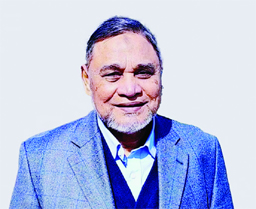
Staff Reporter :
In a televised address on Tuesday night, Chief Adviser Professor Dr Mohammad Yunus announced that the next general election in Bangladesh will be held in February 2026, ahead of Ramadan, marking the final phase of the interim government’s mandate.
“This is the most important chapter of our duty – to facilitate the transfer of power to an elected government,” said Yunus. He confirmed that a formal request has been sent to the Election Commission (EC) to organise the polls before Ramadan, expected to begin on 17 or 18 February next year.
Following the announcement, the EC confirmed that it has begun preparations for the national election, with Chief Election Commissioner (CEC) AMM Nasir Uddin stating the poll schedule would be announced 50 to 60 days ahead of the vote – likely in December.
“Preparations are well underway. We are finalising the voter list, recruiting officials, and training staff,” said the CEC. He noted that recent amendments allow individuals turning 18 by December 2025 to register as new voters.
The CEC further shared plans to consult stakeholders – political parties, civil society, and the media – in the coming weeks. “We are considering updates to media guidelines and welcome journalists as partners, not adversaries,” he said.
Addressing parliamentary constituency boundary reforms, Nasir Uddin assured that changes would be made impartially following public objections and hearings.
He also reaffirmed the EC’s commitment to a level playing field, stating that the administration, police, and intelligence agencies have been instructed to act neutrally. “There is no political pressure. Our challenge now is to restore public trust,” he added, citing declining voter turnout in past polls.
Regarding the July Declaration – announced by Yunus during a public event at the National Parliament’s South Plaza – the CEC confirmed it would receive constitutional recognition in the upcoming reforms. The declaration commemorates the student-led mass uprising of 5 August 2024.
Reactions from political parties were mixed. The BNP welcomed both the election announcement and the July Declaration. However, Bangladesh Jamaat-e-Islami expressed disappointment over the lack of prior consultation, though they still viewed the announcement positively.
The National Citizen Party (NCP) criticised the declaration for omitting key historical events and demanded stronger electoral reforms and guarantees of a fair contest.
Election Commissioner Abdur Rahman el Masud said a detailed action plan would soon be released. “The Chief Adviser has set the timeframe. We will now finalise our operational steps,” he stated.
Election expert Abdul Alim praised the move, saying it removed uncertainty over the poll date. “Now that we know the election will take place in February, political activities will shift into election mode,” he said, urging all sides to prioritise law and order.
The government has allocated Tk2,956 crore in the FY2025-26 budget to support the EC in conducting the polls – a significant increase from the previous year’s allocation of Tk2,000 crore.
With the clock ticking, the EC is focusing on finalising legal reforms, completing voter enrolment, and coordinating logistics to ensure a credible, participatory election early next year.