
Bangladesh faces tax, FDI hurdles
Staff Reporter :
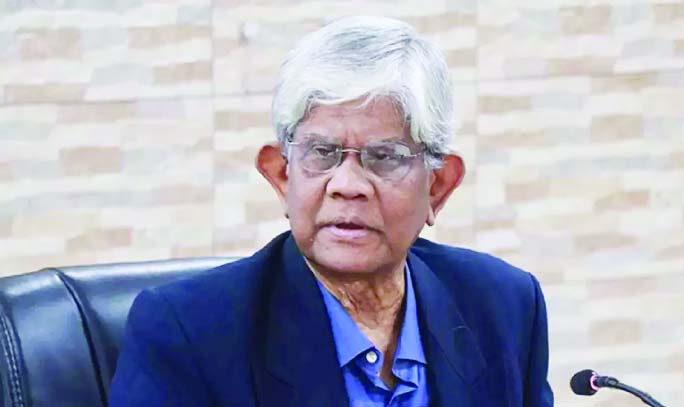
Finance Adviser Dr. Salehuddin Ahmed emphasised the need to increase the tax-to-GDP ratio and attract higher Foreign Direct Investment (FDI), highlighting these as significant challenges for the government as it seeks to further streamline the country’s economy.
He pointed out that many individuals are not paying taxes, stressing the necessity of broadening the tax base.
“Some initiatives have already been implemented, leading to an increase in income tax collection this time,” he said.
Dr. Salehuddin shared these insights during a recent interview with BSS, the national news agency.
He noted that despite commitments for foreign loans and investments, the response has been underwhelming, with FDI inflow remaining relatively low.
The business community has urged the government to address regulatory barriers, simplify customs policies, and resolve concerns about high tax rates and perceived tax disparities.
Dr. Salehuddin explained that the country faces resource constraints, with the low tax-to-GDP ratio hindering the expansion of the tax base.
While direct taxpayers comply with regulations, a substantial portion of eligible taxpayers still evade their obligations.
He stressed that, in addition to local financing, the government relies on foreign loans to effectively implement the Annual Development Programme (ADP).
While substantial foreign loans, particularly from the World Bank and JICA, are in the pipeline, disbursements have been slow.
However, he noted that the process has recently gained momentum.
Describing FDI attraction as a key challenge, Dr. Salehuddin explained that its flow depends on multiple factors, including the country’s law and order situation, regulatory framework, tax policies, and the role of the central bank.
He emphasised that investor confidence is crucial in boosting FDI and acknowledged the continuous efforts of the Bangladesh Investment Development Authority (BIDA) and other relevant agencies in this regard. “As a result of these efforts, the overall investment climate has improved,” he remarked.
Dr. Salehuddin, also a former governor of the central bank, highlighted that foreign companies are now permitted to repatriate their profits, which has contributed to an improved investment climate.
Moreover, the government is working on simplifying tax procedures, expediting customs clearance, and ensuring faster unloading of goods at ports.
At the same time, it is providing input, policy, and regulatory support to investors to attract further investments.
Regarding the development of the Economic Zone in Mirersarai, Chattogram, he noted that government agencies are working to provide essential utility services such as gas, electricity, and water, although the process will take time.
“Nonetheless, FDI is flowing in, with numerous foreign companies making investments and some expanding their operations,” he said.