
Bangladesh and China: A modern alliance inspired by tradition
Al Mamun Harun Ur Rashid :
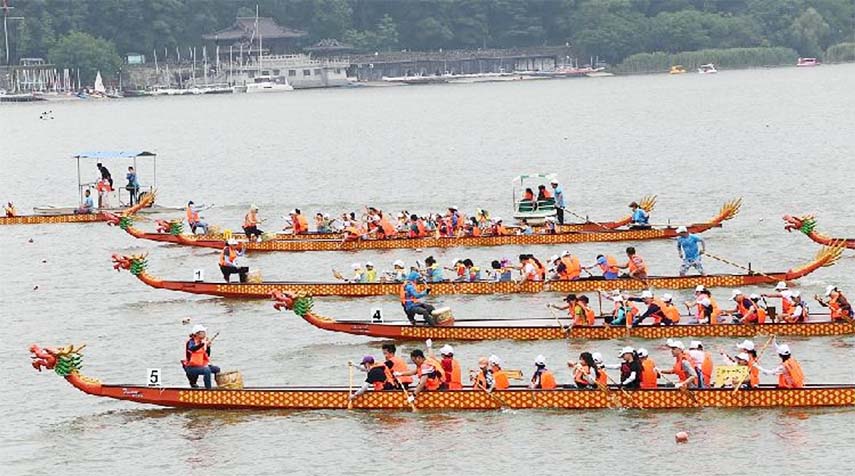
When we picture a Chinese dragon boat – its vivid head, rhythmic drumbeats, and oars slicing through the water – we often think of festivity and ancient tradition. Yet behind this colourful spectacle lies a story of loyalty, alliance, and shared struggle, rooted in the Warring States period of ancient China.
More than two millennia ago, Qu Yuan – a poet, diplomat, and patriot of the Chu Kingdom – urged his monarch to forge an alliance with the neighbouring Qi State to resist the rising might of the Qin. Misguided by slander, the king banished Qu Yuan. Though exiled, Qu Yuan remained loyal, expressing his anguish and dreams for a better future through poetry. When Chu finally fell to Qin, the despairing poet took his own life in the Miluo River. Locals, mourning his sacrifice, raced out in boats, beating drums and throwing rice dumplings (zongzi) into the water to honour his spirit. From this act of collective mourning and unity, the Dragon Boat Festival was born – a lasting tribute to the power of alliance and patriotism. It has since been recognised as China’s first national intangible cultural heritage and listed by UNESCO.
Today, that spirit of alliance continues to shape China’s outreach around the world – and Bangladesh is no exception. In a symbolic coincidence, Chinese Commerce Minister Wang Wentao arrived in Dhaka on the very weekend of the Dragon Boat Festival, leading a 250-member delegation from 143 companies. Their visit marked the first such mission focused on exploring trade, investment, and cooperation under the banner of a “Comprehensive Strategic Cooperative Partnership”.
The delegation included major players in textiles, solar energy, infrastructure, agribusiness, and advanced manufacturing. Their discussions spanned investment opportunities, technology transfer, and joint ventures in agriculture, garments, and machinery – signalling a new chapter in Bangladesh-China economic engagement.
The interim government, led by Nobel Laureate Prof Muhammad Yunus, welcomed this outreach as a milestone. Minister Wang reaffirmed China’s willingness to deepen cooperation, particularly in trade, agriculture, and fisheries. His message was clear: Chinese firms see Bangladesh as a promising investment destination.
This partnership, however, goes beyond business. China supported Bangladesh during the Covid-19 pandemic with vaccine donations and medical aid. Following last year’s political transition, it again stepped in-sending doctors, providing humanitarian relief, and offering hospital access to Bangladeshi patients after neighbouring India imposed visa restrictions.
Looking ahead, China plans to build a world-class hospital in northern Bangladesh, while also promoting balanced trade by granting duty-free access to Bangladeshi goods. The symbolic export of mangoes to Hunan Province – birthplace of Mao Zedong – speaks to growing cultural ties alongside economic ones.
Both countries are also exploring literary and cultural exchanges. China recently translated President Xi Jinping’s The Governance of China into Bengali to mark 50 years of diplomatic relations – an effort to foster mutual understanding.
China’s increasing engagement with Bangladesh should not be viewed through the lens of dependency, but rather as an opportunity – an opportunity for balance, for shared prosperity, and for shaping our future with dignity and self-determination.
In a world defined by shifting power dynamics and evolving alliances, the ancient wisdom of Qu Yuan reminds us that unity, forged through trust and common purpose, remains as relevant today as it was two thousand years ago.
(The write is Diplomatic Correspondent, The New Nation).