
Badiul urges parties to protect July Uprising spirit
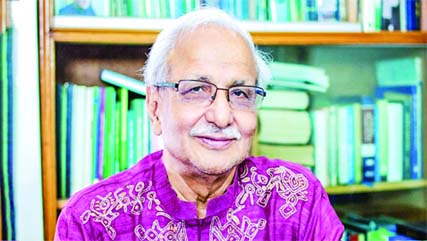
Staff Reporter :
Civic activist and Sujan secretary Badiul Alam Majumdar on Tuesday called on political parties to draw lessons from history and to ensure that the sacrifices of those who fought in the July Uprising are not in vain.
He expressed hope that parties will take concrete steps to uphold the spirit of the July Charter.
Speaking at a public discussion in the capital, Majumdar stressed that the implementation of the July Charter is not solely the responsibility of political parties but also requires the active involvement of the Election Commission.
“The Commission must take the initiative to fully implement the proposals it has put forward. If it cannot, then it should explain why these steps are not being taken, or why they will not be taken,” he said.
Former Comptroller and Auditor General Mohammad Muslim Chowdhury, who also spoke at the event, underscored the challenges of introducing new matters as fundamental rights. “Resource allocation is tied to every inclusion in the list of fundamental rights. How these new rights would be implemented remains unclear,” he noted.
On the broader question of implementing the Charter, he argued that a national referendum would be the most acceptable path. “Alternatively, the proclamation could be passed in the next parliament,” he suggested.
Monir Haider, Special Assistant to the Chief Adviser on Consensus Building, addressed the issue of women’s representation in parliament. He recalled that the matter had been raised repeatedly, including five times in the Consensus Commission dialogues, despite being rejected over the years.
“The first Constitution and Election Reform Commission had proposed reserving one-third of nominations for women, but the parties did not agree. Later, when the Consensus Commission came forward with a similar proposal, that too was rejected. Now, many are blaming the commission. What has been agreed is not ideal, but perhaps it is the best possible under current circumstances,” he remarked.
Haider added that the challenges extend beyond the July Charter itself. “There are both visible and invisible crises at play. The only way forward is through political compromise,” he said.
Dhaka University faculty member Asif Mohammad Sahan struck a more skeptical note, pointing to the large number of dissenting notes attached to key recommendations.
“With so many reservations, the Charter is unlikely to create major political hurdles for whichever party comes to power. In fact, it does not significantly reduce the scope for authoritarian or hegemonic tendencies in future governments,” he observed.
He further questioned how the Charter, with dissenting notes attached, could be presented in a referendum. “If the political parties do not make concessions on the notes of dissent, the Charter will not bring about meaningful change,” he cautioned.
The discussion highlighted both optimism and doubt surrounding the July Charter’s trajectory, underscoring the critical role of political consensus, institutional clarity, and resource commitments in ensuring its realization.