
Asia’s factories slow as US trade tensions hit exports
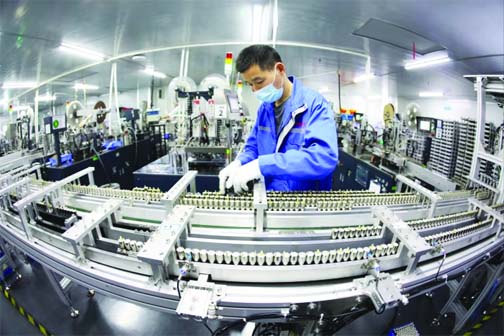
Business Desk :
Asia’s major manufacturing hubs struggled in October, as weak demand from the United States and ongoing tariffs under President Donald Trump weighed heavily on factory orders across the region.
Recent private-sector surveys indicate that manufacturing activity in China grew at a slower pace, while South Korea experienced a contraction, with both countries reporting declines in export orders.
China’s official Purchasing Managers’ Index (PMI) showed factory activity shrinking for the seventh consecutive month, confirming that the earlier rush to export goods ahead of US tariffs has largely ended.
“China’s economy lost some momentum in October, with slower growth in both manufacturing and construction,” said Zichun Huang, China economist at Capital Economics.
He added that while some of this weakness may be temporary, any boost from the latest US-China trade deal is likely to be limited,report Reuters.
Last week, Trump and Chinese President Xi Jinping agreed to de-escalate trade tensions, including a one-year delay in reciprocal tariffs.
However, economists warn that the agreement does little to resolve the deeper structural differences between the two largest economies in the world.
Policymakers in Beijing are closely monitoring whether China’s $19 trillion economy will meet its official 2025 growth target of around 5% without additional stimulus.
South Korea also signed a trade deal with the US that secured lower tariffs on Korean goods. Despite this, analysts see it primarily as a compromise that protects the country from falling behind in global trade rather than a major growth booster.
In contrast, India’s manufacturing sector accelerated in October, benefiting from strong domestic demand that offset weaker export performance. Elsewhere in Asia, PMIs showed continued declines in Malaysia and Taiwan’s factory activity.
while Vietnam and Indonesia reported growth in their manufacturing sectors, highlighting a mixed picture across the region.
As global supply chains remain sensitive to trade policies and demand shifts, many Asian exporters remain cautious about the outlook for the final months of 2025.