
Rajuk plot scam verdict today: ACC prosecutor seeks life terms for Hasina
Staff Reporter :
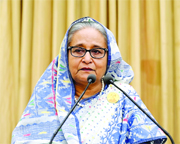
A Dhaka court is set to deliver its verdict today (Thursday) in three major corruption cases involving alleged irregularities in Rajuk plot allocations, with the Anti-Corruption Commission’s public prosecutor expressing confidence that all 47 accused – including ousted prime minister Sheikh Hasina, her son Sajeeb Wazed Joy, and daughter Saima Wazed Putul – will receive life imprisonment.
Public prosecutor Mir Ahammed Salam told reporters that the prosecution has been able to establish the allegations beyond reasonable doubt through a combination of witness testimony and documentary evidence. “We are expecting the maximum punishment, which is life imprisonment, for all the accused,” he said, adding that the cases represent one of the most comprehensive corruption investigations pursued by the ACC in recent years.
The verdict comes after months of hearings and procedural motions. On 23 November, Judge Mohammad Abdullah Al Mamun of Dhaka Special Judge Court-5 set 27 November for pronouncing the judgment after both prosecution and defence completed their arguments.
The three cases being decided on Thursday form part of a broader cluster of six corruption cases filed by the ACC in mid-January, all centering on allegations that members of the Sheikh family and senior political affiliates manipulated Rajuk’s plot allocation process to obtain large parcels of land in Purbachal and other residential zones.
Court proceedings gathered pace over the summer. On 31 July, Dhaka Special Judge Court-5 framed charges in three of the six cases and issued arrest warrants for the accused after they failed to appear despite repeated summons. On the same day, Dhaka Special Judge Court-4 framed charges in the remaining three identical cases. Earlier, on 20 July, Dhaka Metropolitan Senior Special Judge Zakir Hossain Galib transferred the cases to the trial courts, noting continuous non-compliance by defendants who had been ordered to appear. On 1 July, the court also issued a gazette notification summoning 100 accused, including Sheikh Hasina, Sheikh Rehana, and Sajeeb Wazed Joy, ensuring that all of them were officially informed of the proceedings.
The six cases were filed between 12 and 14 January, and charge sheets in all of them were submitted on 10 March. According to case records, ACC Deputy Director Md Salahuddin filed the first case on 14 January against eight individuals, including Hasina, over allegations surrounding the allocation of a 10-katha Purbachal plot; the charge sheet later expanded to list 12 accused. On the same day, ACC Assistant Director SM Rashedul Hasan filed another case against 15 accused, including Hasina and Joy; the charge sheet for that case ultimately named 17.
A separate case filed on 13 January accused 15 people – among them Hasina, Sheikh Rehana, Radwan Mujib, Tulip Siddiq, and Azmina Siddiq – with the number of accused later growing to 17 in the charge sheet. Another case filed that day named 16 accused, including Hasina, Tulip Siddiq, and Azmina Siddiq, though the charge sheet listed 18. A fifth case accused Radwan Mujib and 15 others, also expanded to 18 in the charge sheet. On 12 January, ACC Assistant Director Afnan Jannat Keya filed the final case, naming 16 people including Hasina and Saima Wazed Putul; the charge sheet again listed 18.
These cases mark one of the most sweeping corruption probes into the former ruling family since the political transformation following the July Uprising of 2024. Sheikh Hasina, already facing death sentences in cases tied to last year’s violent crackdown on protesters, is confronting a growing slate of legal battles that extend from war crimes to financial misconduct. A guilty verdict carrying life imprisonment – as anticipated by the ACC prosecutor – would intensify the already precarious legal and political situation surrounding the former prime minister and her close relatives.
The remaining three Rajuk plot cases are proceeding separately, with trial hearings ongoing. The outcome of Thursday’s verdict is expected to set the tone for how the courts will address the interconnected allegations in the broader cluster of cases, and could have far-reaching implications for the post-Hasina political landscape.