
Abul Hashim: A Maverick Leader
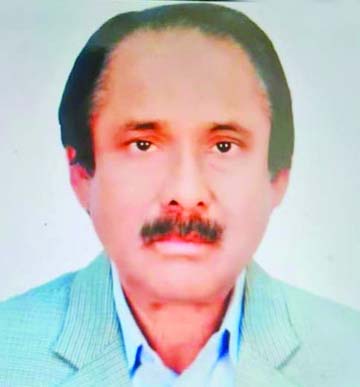
Syed Ziaul Huque :
Abul Hashim was the General Secretary of Muslim Leagueof undivided Bengal. At that time there were leaders having more popularity than him. Buthe was the leader who could be branded asa philosopherstatesman.
He was a leader with extraordinary eloquence and gale-force intellect. He lived with feeble eyesight but extraordinary insight. He was born on 27 January 1905 in the village Kashiara, in the district of Burdwan of West Bengal.
The year 1905 is marked as the year of movement against the parrtition of Bengal. His father was Abul Kashem and mother was Mokarrama Khatun.Moulvi Abul Majid was his paternal grandfather and Nawab Abdul Jabbar was his maternal grandfather.
Abul Hashim lost his mother when he was only 6 and was nurtured by his aunt Nasiba Khatun. Abul Hashim hailed from a muchdignified family with a heritage of four generations in active politics. The only other familywith such legacy was that of Nehrus’.
His father Abul Kashem (1872-1936) became a member of the working comitteeof Congress when he was only 30. He was the only member of All India Committee of Congress from Bengal and was also a member of the Constitution Committee of Congress.
He took active part in anti-partition movement of Bengal in 1905. After the death of Abul Kashem, Abul Hashim was elected a member of Provincial Legislature according to the Awarded declared by thenBritish Prime Minister Ramsey Mac Donald.
Abul Hashim joined Muslim League in 1937 and and was elected President of Burdwan District Muslim League in 1937 and1939. He joined the All IndiaMuslim League (AIML) conference of 23 March, 1940 held in Lahore.
It is well known that the Lahore Resolution of AIML proposed the creation of separate independent states in muslim majority areas of British India.
The resolution set forth that the constituent units of these states should be autonomous and sovereign. The resolution was presented byA K Fazlul Huq and is known as Pakistan Resolution.
1942 is marked as a very important year in the history of Bengal. Abul Hashim was elected as a member of the executive committee of Provincial Muslim League in a conference of the party held in Sirajganj. AK Fazlul Huq resigned from Muslim League in 1942 and formed the Provincial Government in coalition with Congress and Hindu Mahashava.
In protest of such move of Fazlul Huq, a public meeting was held in the Monument Maidan of Kolkata which was addressed by Abul Hashim among others. Abul Hashim was elected as General Secretary of Bengal Muslim League. With this heentered in a keyrole of his political carrier. During this time the provincial Muslim league was divided into two streams.
One was the progressive one lead by Husain Shahid Suhrawardy and Abul Hasim and the other one, a reactionaryfaction lead by Maulana Akram Khan and Khawaja Nazimuddin. Suhrawardy was in fact a politicalweathercock and was very obedient to Jinnah.
The office of provincialMuslimLeague was situated in Wellesley first lane. Abul Hashim stayed in the ground floor of a three storied building of Lower Circular Road which was very near to the party office.
On 19 September 1945, Vice Roy Lord Wavel declared to hold the election of Central and Provincial Legislatures during December 1945 and January 1946.
Accordinglythe election of the Provincial Legislature was held during 10-12 December 1945 and that of Central Legislature was held in January 1946. Muslim League bagged 113 seats in Bengal. EarlierMuslim League declared the election as a referendum on Pakistan issue.
Though Shere-e-Bangla AK Fazlul Huq came out successful by winning in two constituencies, his party KrishakProja Party was miserably defeated in the election and could manage only 4 seats. Imarat Party grabbed only 1 seat and independent candidates 2 seats.
Suhrawardy and Abul Hashim were the persons who deserved kudos for such landslide victory of Muslim League in Bengal. Suhrawardy was elected Leader of the House in a meeting of the elected members held on 2 April 1946.
His rival Khawaja Nazimuddin was defeated in the election of the parliamentary party which shoved him to almost in political quarantine. Governor Sir Frederick Burrowsinvited Suhrawardy to form the government.
The 2 victors as independent candidates joined Muslim League. Muslim League won in the by-election in Bagerhat constituency which was vacated by Fazlul Huq as he was elected from two constituencies. 25 members from European Party also extended their support for Muslim League.
As a result, the total numberof seats of Muslim League was 142 out of 250 seats in Bengal Legislature.It was only in Bengal where the Muslim League got absolute majority. Total number of seats of Congress in Bengal Legislature was 86.
With absolute majority Muslim League could easily form the government. But both Suhrawardy and Abul Hashim desired for a coalition government of Muslim League and Congress which could not see light due to reluctance rather aversion of high command of both Muslim League and Congress.
The reactionary faction of Khawaja group termed the attempt of such coalition as a betrayed to the Muslims of Bengal.
If such coalition government could be formed, communal harmony between Muslims and Hindus would prevail and the history of Bengal would have been otherwise. After the fruitless attempt, Suhrawardy formed his 8 member cabinet on 24 April 1946.
In addition to holding the position of Premier, Suhrawardy took the charge of the Ministry of Home Affairs. Other members of his cabinet were Shamsuddin Ahmed (Labour, Industry and Commerce), Khan Bahadur Moazzem Hossain (Education), Ahmed Hossain (Agriculture), Khan Bahadur Mohammad Ali (Health, Local government), Khan Bahadur AFM Abdur Rahman (Co-operative and Irrigation) andJogendranathMondal (Public works, Law and Justice).
Suhrawardy kept some positions in his cabinet vacant until third week of November with the hope that central leaders of Muslim League and Congress would agree with the proposal for a coalition government in Bengal.
It is a surprising matter that Jinnah joined in the coalition government in the center in October with Congress while he opposed such coalition in Bengal. At last, Suhrawardy included 3 Hindu members, Tarkanath Mukherjee, Nagendranath Roy and Darkanth Barai on November 22 with a frustrated mind. Fazlur Rahman, a leader of Khawaja Nazimuddin faction and a very close associate of Jinnah was also included in the cabinet.
If Suhrawardy did not commit this blunder, Khawaja group would have been uprooted totally from the cabinet. Not only this, Suhrawardy made a series of mistakes which left a far-reaching profound effect in the politics of Bengal.
Nurul Ameen, Tofazzel Mia and Mofizuddin of Comilla were elected as Speaker, DeputySpeaker and Chief Whip respectively. All the troika members belonged to the Khawaja faction of Muslim Leage. Among 13Parliamentary Secretaries, 5 were picked out from Khawaja faction.
Thusthe descendants of Jagat Sheth, Ray Durlabh, Rajaballav, Umichand grabbed important positions in Bengal politics with the blessings of Suhrawardy. And the big bird Khawaja Nazimuddin, still behind the curtain would appear with his real image in time.
At this time an important and detrimental event took place at the trickery and deceiving plan of Jinnah which was the amendment of the Lahore Resolution. Jinnah, suggested by Suhrawardy convened a meeting of all the members elected in 1946 election.
The convention was held during 7-9 April 1946 in the Anglo-Arabian College of Delhi and attended by more than 500 members of the Constituent Assembly. The convention started with the inaugural speech of Jinnah on 7 April.
On 8 April, Suhrawardy initiated an amendment proposal of the Lahore Resolution as per instruction of Jinnah. Abul Hashim played a historical role in the meeting.
In original Lahore Resolution it was stated, “Resolved that it is the considered view of this session of the All India Muslim League that no constitution plan would be workable in this country or acceptable to Muslims unless it is designed on the following basic principle, namely that geographically contiguous units are demarcated into regions which should be so constituted with such territorial readjustments as may be necessary, that the areas in which the Muslims are numerically in a majority as in the North-Western and Eastern Zones of India, should be grouped to constitute ‘Independent States’ in which the constituent units shall be autonomous and sovereign.”
Though it was known as Pakistan Resolution, the word Pakistan was not even mentioned there. In fact, the term Pakistan was taken from Punjab, Afghanistan, Kashmir and Baluchistan. There was no room for Bengal.
It is very much clear that original Lahore Resolution proposed for the creation of two independent states comprising of Muslim majority areas ineastern and western region of India. But the amendment, directed by Jinnah and placed by Suhrawardy proposed: ”This Convention of the Muslim League Legislators of India, Central and Provincial, after careful consideration hereby declares that Muslim Nation will never submit to any constitution for a United India and will never participate in any single constitution making machinery set up for the purpose, and any formula devised by the British Government for transferring power from the British to the people of India, which does not conform to the following just and equitable principles calculated to maintain internal peace and tranquility in the country; That the Zones comprising Bengal and Assam in the North East and the Punjab, the North West Frontier Province, Sind and Baluchistan in the North West of India, namely the Pakistan Zones, where the Muslims are a dominant majority, be constituted into ‘One Sovereign Independent State’ and that an unequivocal undertaking be given to implement the establishment of Pakistan without delay.
“This proposal of amendment opted for one country in two regions of India. Abul Hashim protested immediately and went on in argument with Jinnah.
He said “This resolution contradicts the contents of Lahore resolution. In that resolution nowhere One Pakistan state has been visualised, Independent States have been mentioned.”
Liaquat Ali khan placed the original file as per instruction of Jinnah and it was found that the proposal for ‘Two Independent States’ was clearly mentioned. Lahore Resolution was adopted on 23 march 1940 in All India Muslim League council and the election of 1946 was held on this issue.
It can not be believed that veteran and shrewd barristers like Jinnah and Suhrawardy did not know that any decisions of the Council could not be amended by the members elected in Legislative Council.
After being defeated in argument and reasoning with Abul Hashim, Jinnah stated that it was a typographical mistake which can be termed as no other term other than ridiculous. The sycophants of Jinnah, elected from Bengal created a hue and cry situation in the hall during the speech of Abul Hashim.
Though Jinnah was the main instigator of the move to amend the Lahore Resolution, he perhaps felt guilty within himself. So, he invited Abul Hashim at his place in the evening for a discussion with him in person.
The conversation between Jinnah and Abul Hashim has been cited in the memoirsof veteran left leader Mohammed Toaha as mentioned bellow: Jinnah:Maulana Abul Hashim, why do you oppose the idea of onePakistan? (Jinnah used to address Abul Hashim as `Maulana’because of his eloquent oratory in Arabic and Urdu).
Abul Hashim:Before I answer your question, may I put one question to you?
Jinnah :Yes, of course! You can ask me any question.
Hashim :Why do you want Pakistan at all?
Jinnah : We want to save the crores of Muslims from the exploitation of the Hindu capitalists and Landlords.
Hashim : Yes, I also take my stand exactly on the same logic. If you do not like to be exploited by Tatas and Biralas, Muslim Bengal also have the same right to refuse to be exploited by Ispahanies and Dosamies.
At the endof the conversation, Abul Hasim uttered his historical concluding remark, “I know that I can not stand before your sheer personality.
In spite of that, I want to express my viewson record so that future generation of Bengal would know that Abul Hasim had not betrayed them.”
HashratMohani, an anti-British freedom fighter protested severely against the amendment of Lahore Resolution along with Abul Hashim. He hailed from Uttarpradesh of India.
He Joined in Congress in 1904. Later he joined Muslim League and became its Presidentin 1919. He was the first person to demand compete independence of India in the All India Muslim League Conference held in 1921.
The famous slogan ‘Inqilab Zindabad’ was first uttered by him which is still voiced by left wing activistsand revolutionaries throughout the world.Hasrat Mohaniwas greatly influenced by October revolution of Russia and was one of the founders of ‘Indian Communist Party’.
He opposed the division of India and was in favor of a federal state comprising of East Pakistan, West Pakistan, Central India, South East part of India, South West part of India and Hyderabad. Mohani resigned from Muslim League as soon as the plan for division of India was announced on June 3, 1947.
Hasrat Mohani was the rare most example of honest and simple living who never stayed in a government house, rather in mosque, even being a member of the Indian parliament and always preferred to travel in third class in train journey.
Once asked why he always travels in third class he instantly replied “Because there is no fourth class in train”. Other than Hasrat Mohani, two other eminent leaders MianIftekher Uddin (1907-1962) of Punjab and GM Saiyed (1904-1905) of Sind vehemently opposed the move to amend Lahore Resolution.”
Jinnah would have not been successful to amend Lahore Resolution if Suhrawardy would join hands with Abul Hashim and opposed the move as he was the only Chief Minister among all the Muslim majority provinces of India. But Suhrawardy refrained only to appease Jinnah. People of this part of Bengal witnessed how much was the cost of only one ‘S’ in 1952, 1962, 1966, 1969 and finally in 1971.
On the eve of the partition, Suhrawardy and Kiron Shanker Roy took an initiative for an ‘Independent Bengal State’ which could not see light for lack of support from the central leaders of Muslim League and Congress. Such a move was also not workable after the deadly riot of 1946 between Muslims and Hindus.
Abul Hashim was elected the leader of the opposition in Bengal Legislative Council after the partition. He migrated to Dhaka in 1950 and actively participated in the Language Movement of 1952.
He presided over the historical meeting of All Party Language Movement Committee held on 20 February 1952. He was arrested on 25 February and was imprisoned for next 16 monthly in spite of his complete blindness. We pay our deepest respect for this maverick politician and a great son of the soil.