Govt mulls more Indian, Chinese investments in industrial sector: Titumir

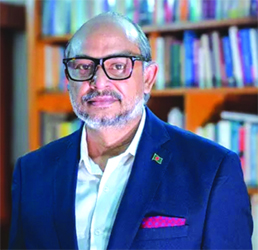
Dr. Rashed Al Mahmud Titumir, Prime Minister’s Adviser on the ministries of Finance and Planning, on Monday said the government is considering increasing investments from India and China in Bangladesh’s industrial sector.
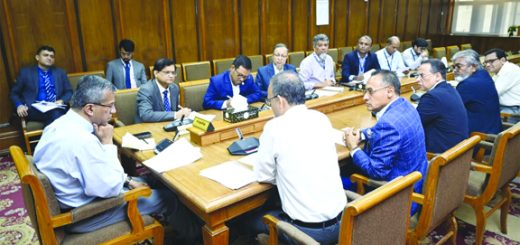
He said this while speaking to reporters after separate meetings with the High Commissioner of India to Bangladesh Pranay Verma and Ambassador of China to Bangladesh Yao Wen at his office in Bangladesh Secretariat on Monday.
Titumir said the government is also reviewing the future of various projects undertaken in Bangladesh in the past with support from India and China, reports BSS.
He said the fallen government had left the country’s economy in a devastated condition before fleeing, and the current administration needs to inject new vitality into the economy.
“In line with the manifesto of the Bangladesh Nationalist Party, we have to increase investments,” he said.
The Adviser noted that increased investment would boost production, which in turn would expand employment opportunities and raise revenue earnings. “With increased revenue, we will be able to invest more in health, education and other sectors,” he added.
Titumir said the government is holding meetings with representatives of various countries to achieve this goal, and discussions were held on Monday with the Ambassador of China and High Commissioner of India as part of that process.
He said discussions with India mainly focused on the current status of projects implemented under the Line of Credit (LoC) and how they could be advanced in line with Bangladesh’s present development priorities.
Referring to regional cooperation, he said Bangladesh always believes in maintaining good relations with all South Asian countries and linking those relations with development. In this context, discussions were held on strengthening development cooperation among Bangladesh, India, Bhutan and Nepal, particularly in the fields of electricity, energy and other areas.
The Adviser said the country is currently facing an energy crisis and noted that some energy agreements signed in the past were unequal. “We want to ensure that any future agreements on electricity and energy with India or other countries are beneficial for Bangladesh,” he said.
Titumir mentioned that India has a power exchange market, which Bangladesh may explore.
“If we connect to such a grid-based system, where prices are determined through market mechanisms as in Nepal, Bhutan or Indian states, it could create innovative opportunities while protecting Bangladesh’s interests,” he said.
He also said Bangladesh is moving towards a “One Citizen, One Card” system by integrating services such as farmer cards and family cards. In this regard, India’s experience with the Aadhaar system could be useful.
Regarding China, Titumir recalled that Xi Jinping, President of China, visited Bangladesh in 2016 and discussed projects worth about $20 billion. However, he noted that projects worth only around $8.2 billion have so far progressed.
“We discussed the current status of those projects and how to determine future strategies through proper review and monitoring of their progress,” he said. Titumir said the most important issue discussed was the need to increase investment in Bangladesh, particularly investment aimed at industrialization.
In this regard, the adviser said discussions were held on forming a working group involving the Bangladesh government, the Chinese government, Chinese state-owned enterprises and private sector companies to expand investment and promote investment-driven industrialization.
Titumir said although Bangladesh has substantial trade with China, the country now wants to move beyond a trade-based relationship.
“Trade will remain between countries, but what Bangladesh needs more is industrialization and greater investment. We want to move from a culture of loans to a culture of investment,” he said.
He added that the same theme dominated the discussions with China, including exploring ways to increase investment in Bangladesh’s capital market.