Opposition urges parliament to honour referendum outcome

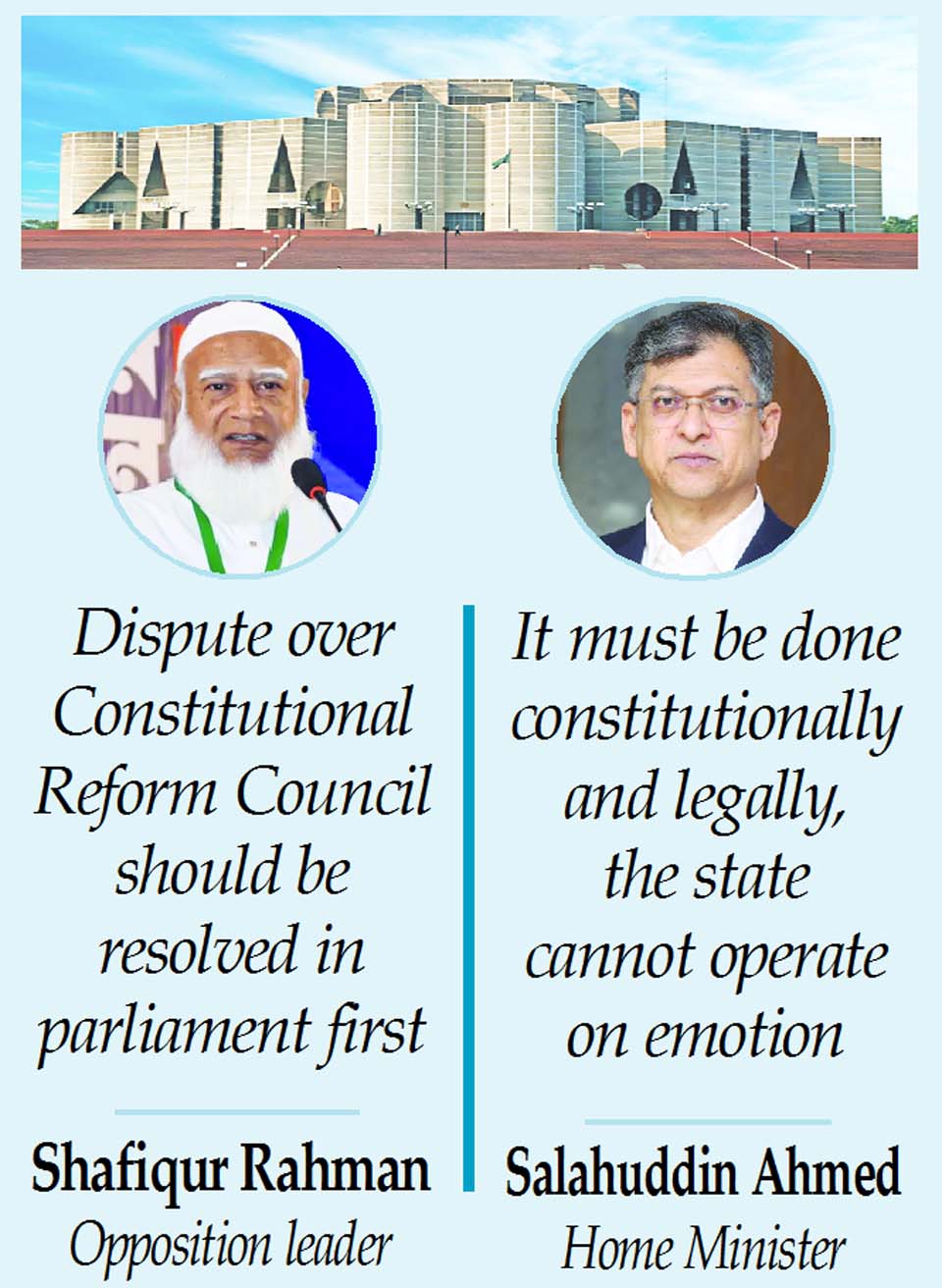
The leader of the opposition and Ameer of Bangladesh Jamaat-e-Islami, Shafiqur Rahman, has warned that opposition parties may take to the streets if the ongoing dispute over the formation of a Constitutional Reform Council is not resolved within parliament.
Speaking to reporters on Sunday afternoon after the second day of the first session of the 13th Jatiya Sangsad, Rahman said the opposition preferred a parliamentary solution but would not hesitate to mobilise public protests if the matter remained unresolved.
He noted that although the parliamentary session had been convened following the formation of the government, the session of the proposed Constitutional Reform Council had yet to be called.
During the first day of the session, opposition members attempted to raise the issue but were unable to pursue it fully due to time constraints and a walkout over a separate matter.
On the second day, opposition lawmakers again raised the matter through a point of order.
Rahman said the government had read out the full order implementing the July National Charter in parliament, and the opposition expected a clear decision on the issue by Sunday, the final day of the parliamentary calendar period.
Several questions were raised regarding the reform process, including the status of lawmakers who had already taken an oath to the Constitutional Reform Council and the timeline for those who had not yet done so.
The opposition also sought clarification on when the council’s session would be convened and whether the government intended to honour the outcome of the referendum held on the reform proposals.
“When these matters were raised under a point of order, the Speaker
told lawmakers that the issue could be discussed if a formal notice was submitted,” Rahman said. “The opposition will submit a notice and seek a solution within parliament.
But if the people’s expectations and aspirations are not reflected inside parliament, then naturally we may have to take to the streets. However, that is not our preferred course of action.”
Rahman also questioned the constitutional validity of selective acceptance of presidential orders.
“If one part of the presidential order is accepted even though it falls outside the constitution, then another part cannot be rejected for the same reason. Either both should be accepted or both rejected,” he said.
He argued that public opinion represents the supreme expression of constitutional authority, referring to the referendum on the reform proposals, which both the government and opposition had agreed to hold.
The opposition, he added, had initially preferred the referendum to take place before the parliamentary election.
The issue sparked debate in parliament over the formation of the Constitutional Reform Council under the July National Charter implementation order. Rahman expressed concern that the council’s session had not been convened within the stipulated timeframe.
Responding to the concerns, Home Minister Salahuddin Ahmed said the government faced constitutional limitations.
He explained that the constitution does not formally recognise the existence of a Constitutional Reform Council, and therefore the prime minister could not advise the president to convene its session, nor could the president call one independently.
Ahmed noted that while the president may issue ordinances when parliament is not in session, constitutional amendments cannot be enacted through an ordinance.
He added that the courts had issued a rule questioning certain provisions of the referendum ordinance and the constitutional reform implementation order, though judicial opinions would not be binding on the sovereign parliament.
He cautioned that parliament must avoid passing laws that could later be struck down for violating the constitution.
“Public opinion must be respected,” Ahmed said, “but it must be done constitutionally and legally. The state cannot operate on emotion; it must function under the law.”
Ahmed suggested that the matter be discussed in the parliamentary Business Advisory Committee and indicated that the constitutional amendment bill might instead be introduced during the budget session.
He noted that the current parliamentary agenda already included 133 ordinances placed before the House on the opening day of the session.
Speaker Hafiz Uddin Ahmed later told the opposition leader that the issue was of significant public importance and could not be resolved immediately on the floor of parliament.
“You have presented a very important issue,” he said. “Such matters cannot be resolved on the spot. Submit a notice, and after receiving it I will make a decision.”