Redefining urban development through prudent ministry leadership

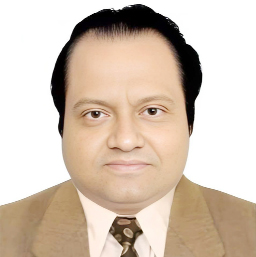
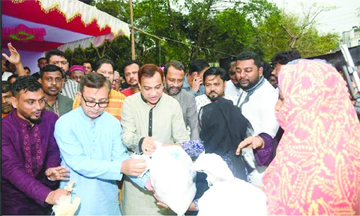
In the new cabinet, Minister Zakaria Taher Sumon and State Minister Ahmed Sohel Manzur Sumon have assumed responsibility for the Ministry of Housing and Public Works.
The coincidence of two leaders sharing the same name has naturally attracted public curiosity. Yet the symbolism matters far less than the larger question: how effectively their leadership can shape policies at a time when Bangladesh faces growing pressures from rapid urbanisation, housing shortages and uneven infrastructure development.
Bangladesh is now at a crucial stage in its development journey. Progress can no longer be measured simply by the number of roads, bridges or buildings constructed.
Development today is increasingly linked to the quality of life of citizens, social equity, environmental sustainability and the management of expanding urban centres.
Over the past decade, urbanisation has accelerated significantly. While this transformation has brought economic opportunities, it has also created new challenges-unplanned expansion, rising land prices, housing insecurity for lower- and middle-income groups, and widening disparities between urban and rural areas. In this context, the Ministry of Housing and Public Works plays a central role in shaping a more inclusive and sustainable development framework.
One of the main challenges for the new leadership will be to move beyond an infrastructure-centred approach to development and adopt a more people-centred perspective.
Planned urbanisation cannot be limited to the construction of high-rise buildings or the expansion of satellite towns.
It requires integrated planning that takes into account traffic congestion, drainage systems, green spaces, public transport, employment opportunities and affordable housing. Development should also extend beyond major cities so that district towns and suburban regions benefit from improved infrastructure and economic opportunities.
The housing sector in Bangladesh has long been dominated by market forces, often resulting in uneven outcomes. Ensuring sustainable housing for lower-income groups remains a major challenge.
If government policy incorporates affordable housing programmes, rental housing models and innovative public-private partnerships, the sector could contribute both to economic growth and to social stability. At the same time, issues such as transparency in project implementation, construction quality and long-term maintenance must be given careful attention.
In this regard, the coordinated leadership of the minister and the state minister is particularly important. With effective administrative management, policy continuity and pragmatic decision-making, the ministry could move beyond its traditional role as a project-implementing body.
It could instead emerge as a centre for modern urban planning and policy innovation. Alongside large infrastructure projects, smaller initiatives that directly affect citizens’ daily lives-such as drainage improvements, community facilities and safe public spaces-should also receive priority.
Ultimately, development must be judged by its impact on people’s everyday lives. Planned urbanisation should create cities where citizens not only live but thrive in safe, comfortable and dignified environments. The responsibility of the ministry therefore extends beyond constructing buildings; it influences the living standards of future generations.
Several classical sociological ideas remain relevant in understanding these challenges. Auguste Comte’s concept of “Order and Progress” suggests that development becomes effective when it is planned, guided by reliable data and directed toward human welfare.
If urban planning in Bangladesh adopts such a scientific perspective, uncontrolled urban expansion could be reduced and more balanced development achieved.
Émile Durkheim’s emphasis on social cohesion provides another important insight. Housing should not be viewed merely as an economic commodity but as a foundation of social stability.
Expanding access to affordable housing for low- and middle-income families can help reduce inequality and strengthen civic solidarity. For the state minister, this represents an opportunity to pursue practical policies where administrative oversight and efficient implementation are central.
Herbert Spencer’s view of society as an interconnected organism also offers a useful reminder. Weaknesses in one sector can affect the functioning of the entire system.
Corruption in construction projects, poor-quality infrastructure or persistent project delays can undermine public confidence and impose wider economic costs. Sustainable development must therefore emphasise accountability, quality and long-term planning.
Max Weber’s principles of rational administration further underline the importance of transparency and procedural discipline.
If public construction projects ensure transparent tendering processes, adhere strictly to the Public Procurement Rules (PPR-2008) and maintain clear timelines, the ministry could set an important example of administrative integrity.
Lessons from Islamic governance traditions also highlight the importance of ethical leadership and public welfare. When Prophet Muhammad (PBUH) established the state of Medina, governance was founded on justice, trust and shared responsibility.
The Constitution of Medina created a framework for coexistence in a diverse society and emphasised the protection of citizens’ rights.
During the era of the Rightly Guided Caliphs, these principles were reinforced through practical governance. Abu Bakr (RA) emphasised that leadership was a trust rather than a privilege.
Umar (RA) introduced administrative reforms, strengthened infrastructure and ensured accountability in the management of public resources. Uthman (RA) expanded communication networks and administrative coordination, while Ali (RA) emphasised justice and ethical governance.
In this context, the ethical and administrative leadership of the Ministry of Housing and Public Works becomes particularly significant.
Planned urbanisation should not result in uncontrolled expansion; rather, it should integrate transportation systems, drainage management, green spaces, affordable housing and environmental protection. Development that fails to improve everyday living conditions cannot be considered sustainable.
The new leadership therefore faces both a challenge and an opportunity. If the ministry can establish a model that combines planned urbanisation, social justice and transparent governance, its impact will extend well beyond infrastructure development. It will help create the foundations for a more liveable, equitable and modern Bangladesh.
Ultimately, the goal should be to make development credible rather than merely visible-and human-centred rather than purely structural. The success of the ministry will not be judged only by the number of projects completed, but by the lasting improvements it brings to the lives of citizens across the country.
((The author is chairman of the National Human Rights Society).