‘Bangladesh always stands by Palestinians’

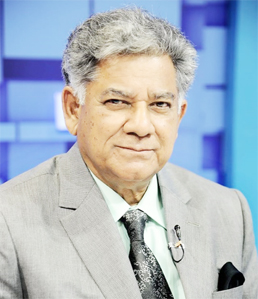
Former Adviser to the Ministry of Labour and Employment Brigadier General (Retd) Sakhawat Hossain on Friday said the people of Bangladesh have always supported the Palestinian cause and will continue to stand by their rights.
“The people of Bangladesh have always supported the Palestinian cause and will continue to stand by their rights,” he said while addressing a discussion marking International Quds Day in the capital.
The programme was organised by Al-Quds Committee Bangladesh at the auditorium of the Bangladesh Medical Association in Dhaka, with Sakhawat attending as the chief guest.
Referring to the origins of the observance, he said Quds Day has been marked worldwide since 1979 when Ruhollah Khomeini called on Muslims to express solidarity with Palestinians. Bangladesh, he noted, has consistently supported Palestine since its independence and every government has maintained that position.
Sakhawat also mentioned recent developments in Iran, saying the Bangladeshi parliament had expressed condolences following the death of Iran’s Supreme Leader Ali Khamenei.
He described Khamenei’s stance during the crisis as one of “faith and courage,” noting that the “leader” chose to remain with his people despite warnings of possible attacks.
Speaking about regional dynamics, he said Iran currently plays an important role in the Middle East and described it as a major power supporting Palestinians and resisting Israeli expansion.
According to him, the ongoing conflict between Iran, Israel and the United States has created a difficult situation for many countries, including Bangladesh, which is already facing economic challenges.
“If Iran weakens significantly, it could have serious consequences for the Muslim world,” he warned.
Despite complex global politics, Sakhawat said Bangladeshis remain united in their support for Palestinians and will continue to stand for what he called the “moral and principled rights” of the Palestinian people.
Addressing the event, the Iranian ambassador to Bangladesh Jalil Rahimi Jahanabadi called for unity among Muslims and renewed support for Palestine.
He thanked participants for gathering during Ramadan “to defend Al-Quds, the first Qibla of Islam.”
The envoy described Khamenei as “a great leader of the Islamic world,” saying his death was a loss for Muslims globally. “Not only Iran, but all those devoted to Islam and the Quran are mourning,” he added.
He also claimed that Israel was facing growing resistance in the region. “Today the Zionist regime is struggling for its life under a rain of missiles,” he said, referring to attacks by groups aligned with Iran.
He added that Iranian leaders and citizens had continued to participate in Quds Day rallies even during military threats. “Fear has no meaning in Islamic culture,” he said.
The ambassador also referred to Islamic history, noting that Jerusalem first came under Muslim rule during the era of the second Caliph Umar ibn al-Khattab, when commanders such as Abu Ubaidah ibn al-Jarrah and Khalid ibn al-Walid led the campaign. He also mentioned the later reconquest of the city by Saladin.
According to the envoy, Islamic rulers historically protected religious sites and civilians. “Muslim armies did not kill women or children or destroy places of worship,” he said, citing the historic Pact of Elia as an example of protections given to Christians and Jews.
He criticised Western media narratives about the conflict, alleging double standards in discussions about terrorism and human rights.
Concluding his speech, the ambassador said the cause of Jerusalem should unite Muslims worldwide. “Quds Day is not only for Iran or Palestine. It is a day for the revival of Islam,” he said.
The ambassador also expressed gratitude to the Bangladesh Parliament, the Speaker and the Prime Minister for adopting a condolence resolution over the death of Iranian Supreme Leader Ali Khamenei.
Iranian Cultural Counsellor Seyed Reza Mirmohammadi urged Muslims worldwide to remain united and continue supporting the Palestinian cause.
He said the annual observance of Quds Day ensures the Palestinian issue remains in global focus.
Among the designated discussants were Maolana Ruhul Amin, Khatib of Easternplus Jame Mosque in Dhaka; Professor Dr. Md. Abul Kalam Sarker from the Department of Persian Language and Literature at the University of Dhaka; and Sarwar Tushar, politician and author of a book on Palestine liberation.
Speaking at the programme, Badruddoza also Vice-President of Al-Quds Committee Bangladesh said Iran’s leadership views the Muslim world as a whole rather than through Shiah-Sunni divisions.
He argued that Iran has been targeted largely because of its support for Palestine and Gaza. “This attack would not have happened if Iran had not stood for Palestine.”
Calling Iran “a shield” for the Muslim world, Badruddoza warned that if the country were destroyed, Muslims everywhere – including in Bangladesh – would face serious consequences.
He said the global community should protest the killing of Khamenei and criticised the United States, accusing it of speaking about democracy while promoting leaders like Donald Trump.
“Their fate will be like that of the Mohammedans after the death of Siraj-ud-Daulah – they will be disgraced and insulted in the world,” he said.
Earlier in the day, members of the Al-Quds Committee formed a human chain in front of the Jatiya Press Club protesting the attack on Iran.