Tobacco control ordinance to be passed as act in the upcoming parliamentary session

Staff Reporter:
The long-awaited Smoking and Tobacco Products Use (Control) (Amendment) Ordinance, 2025 is set to be passed as an Act during the upcoming parliamentary session, according to Zahir Uddin Swapon, the Minister of Information and Broadcasting.
This significant development comes at a time when Bangladesh is grappling with a severe public health crisis, with 35.3 percent of its adult population (aged 15 and above) suffering from tobacco addiction.
On average, tobacco use claims 548 lives each day, while many others live with disabilities caused by tobacco-related diseases. The economic loss due to tobacco is estimated at around BDT 87,000 crore annually.
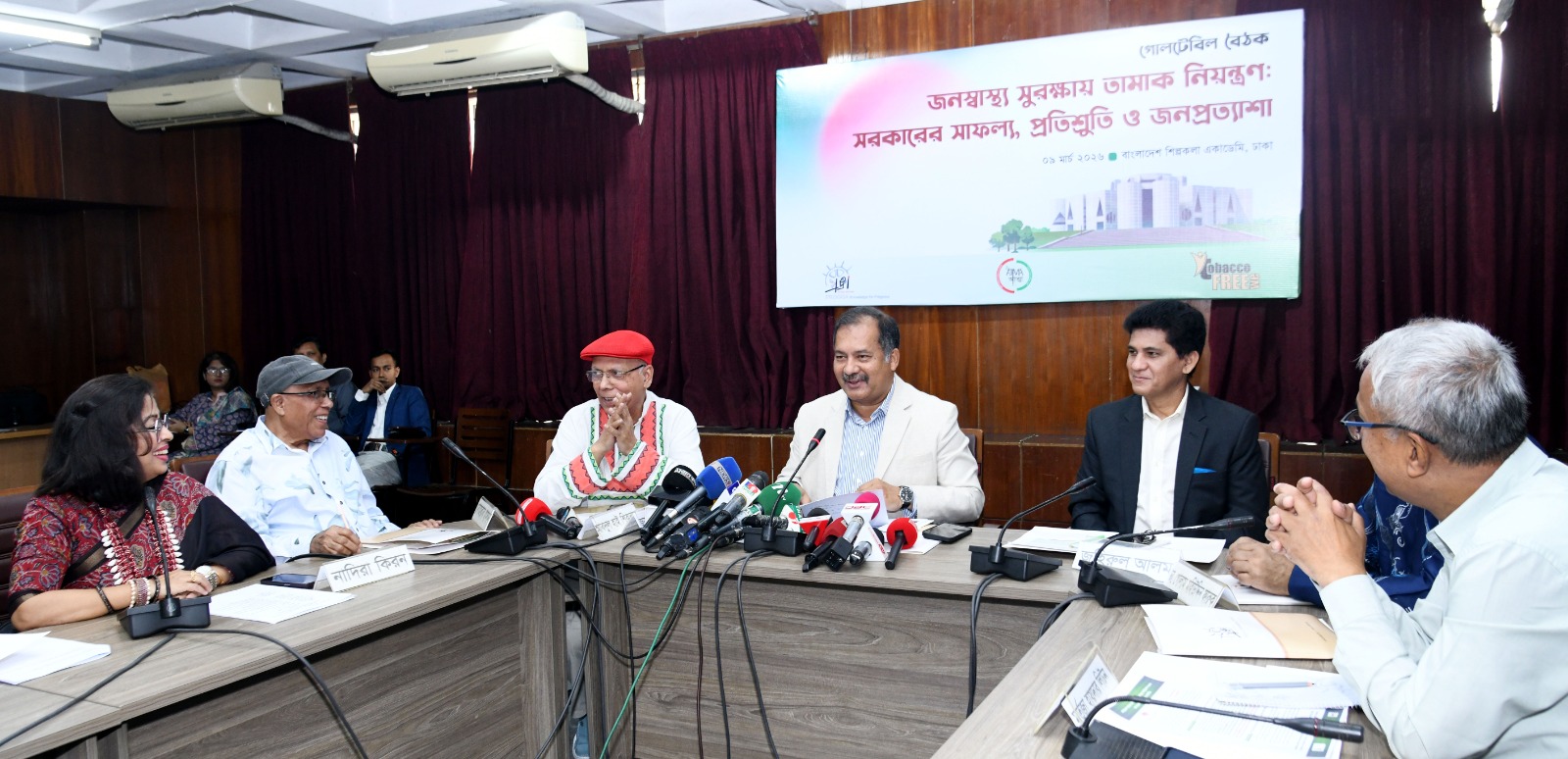
The Minister made the announcement during a roundtable discussion titled “Tobacco Control for Safeguarding Public Health: Government Achievements, Commitments, and Public Expectations” organized by PROGGA (Knowledge for Progress) and the Anti-Tobacco Media Alliance (ATMA).
The event was held at the National Theatre Hall seminar room of the Bangladesh Shilpakala Academy on March 9, 2026.
Addressing the gathering, Minister Swapon reaffirmed the government’s commitment to fulfilling its election promise of tackling non-communicable diseases (NCDs), many of which are caused by tobacco use.
He stated, “To fulfill the election commitment, the Tobacco Control Ordinance will be passed as an Act in the upcoming session of Parliament.”
He also assured that the Ministry of Information and Broadcasting would offer full support to ensure the Act’s effective implementation.
The roundtable highlighted the pressing need for tobacco control legislation, with experts noting that tobacco-related diseases are responsible for a significant portion of deaths in Bangladesh, accounting for about 71 percent of all fatalities, according to the World Health Organization (WHO).
The passing of the Tobacco Control Ordinance into law is seen as a vital step toward reducing these statistics and alleviating the burden on the country’s healthcare system.
Abdul Hye Sikder, Editor of The Daily Jugantor, emphasized the urgency of passing the amendment, stating, “There is no alternative to a strong tobacco control law to address the growing prevalence of NCDs. I urge the government to ensure the swift passage of the amendment to meet public expectations.”
Zahirul Alam, Executive Director of Channel 24, acknowledged the important role of mass media in advocating for the amendment, stating that the media’s ongoing efforts are crucial for the successful passage of the law.
Similarly, Sohrab Hasan, Editor of the online platform Chaarcha, called on the government to pass the ordinance as it stands, ensuring a strong and immediate impact on public health.
During the event, Prof. Dr. Golam Mohiuddin Faruq, President of the Bangladesh Cancer Society (BCS), shared heartfelt testimonies from tobacco-induced cancer victims.
He urged the government to act decisively: “We have heard enough of the suffering caused by tobacco. Our only request is that we do not want to hear such harrowing experiences anymore.”
The Tobacco Control Ordinance proposes several key measures to protect public health, particularly targeting youth and vulnerable groups.
It bans the production, import, marketing, and use of e-cigarettes, vaping, and heated tobacco products. It also eliminates designated smoking areas in public places and transport, ensuring protection from secondhand smoke for women and children.
Additionally, it prohibits the sale of tobacco products within 100 meters of educational institutions, hospitals, and playgrounds, aiming to shield children and adolescents from the harmful influence of tobacco.
The ordinance also enforces a total ban on the display of tobacco products at points-of-sale, along with a prohibition on all forms of advertising, promotion, or sponsorship by tobacco companies.
As the government moves closer to passing this critical piece of legislation, the focus rema