Middle East Conflict : 268 Dhaka flights cancelled in eight-day


The escalating conflict in the Middle East has severely disrupted air travel to and from Bangladesh, with 268 flights cancelled from Hazrat Shahjalal International Airport in the past eight days, airport authorities said on Saturday.
Authorities said that 20 international flights were cancelled on Saturday.
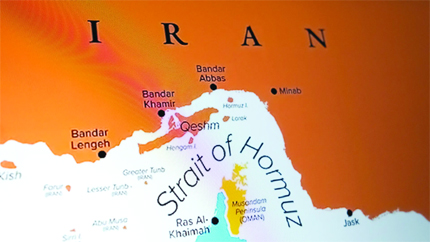
The disruption follows the closure of airspace by several Middle Eastern countries after joint military strikes by the United States and Israel on Iran triggered a wider regional security crisis.
In response to the heightened tensions, Iran, Iraq, Kuwait, the United Arab Emirates, Bahrain, Qatar and Jordan temporarily shut their skies, forcing airlines to suspend or reroute services.
Officials at Hazrat Shahjalal International Airport confirmed that from 28 February to 7 March a total of 268 flights scheduled to depart from Dhaka were cancelled due to the unfolding crisis. During the same period, however, 214 flights managed to operate to various destinations in the Middle East.
The disruption continued into Friday night. Airport authorities said that by 11:59 pm on 6 March, 20 flights had been cancelled while 41 flights were able to depart despite the difficult circumstances.
The unprecedented instability in Middle Eastern air routes has created uncertainty for thousands of passengers and is also threatening serious financial losses for airlines operating in the region.
Bangladesh flag carriers, particularly Biman Bangladesh Airlines and US-Bangla Airlines, are among those most affected.
Ramadan and the period leading up to Eid festival traditionally mark the busiest travel season for flights between Bangladesh and the Middle East, as thousands of migrant workers return home to spend time with their families.
Biman Bangladesh Airlines spokesperson Bosra Islam told the media that the situation had disrupted what is normally a profitable period for the national carrier.
“During this season we usually expect strong business as flights remain full with expatriate passengers travelling home for Ramadan and Eid,” she said.
“But instead we are having to cancel flight after flight. If the situation does not improve quickly, it could lead to significant financial losses for the airline,” she added.
US-Bangla Airlines has also been forced to suspend several services. Kamrul Islam, the airline’s general manager for public relations, said the company had already cancelled 24 flights due to the conflict.
“This is a difficult situation for us,” he told reporters. “During Ramadan thousands of expatriates usually travel back to Bangladesh. Because of the current crisis that flow has been interrupted. If the problem continues, the airline may face substantial financial losses.”
He added that it was still too early to calculate the exact financial damage as the situation remained fluid and unpredictable.
Passengers have also been caught in the turmoil, with many forced to wait for hours or even days at airports while airlines scramble to adjust schedules.
Several travellers at Hazrat Shahjalal International Airport described scenes of confusion and frustration as announcements of cancellations continued throughout the week.
Abdul Karim, a construction worker who had planned to travel to Dubai for work, said he had already postponed his journey twice.
“I was supposed to leave three days ago,” he said while waiting at the airport terminal. “First the flight was delayed and then it was cancelled. My employer is asking when I will arrive but I do not have any answer. Every day I am waiting for the next update.”
Another passenger, Nasima Begum, who was hoping to visit her husband in Qatar during Ramadan, said the uncertainty had disrupted her plans entirely.
“I had saved money for this trip so that I could spend Ramadan with my family,” she said. “Now the airline says they cannot confirm when the next flight will operate. It is very frustrating.”
Some travellers have also reported difficulties with rebooking and ticket adjustments as airlines struggle to manage the sudden surge in cancellations.
Industry insiders say airlines are now closely monitoring developments in the Middle East while prioritising passenger safety.
Until the regional airspace restrictions are lifted and the security situation improves, uncertainty is likely to continue for both airlines and travellers relying on the busy Middle Eastern routes that connect Bangladesh with millions of its expatriate workers.