Governor meets 8 leading economists : Panel to deal with shock of Mid East crisis urged

Leading economists have urged the Bangladesh Bank (BB) to prioritize the preservation of foreign exchange reserves and seek alternative energy sources to shield the national economy to deal with the potential impact of the ongoing crisis in the Middle East.
Economists also suggests forming an inter-ministerial crisis committee, that will provide regular briefings to prevent unnecessary alarm.
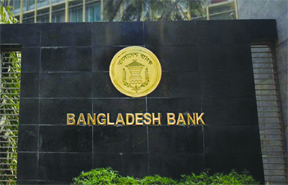
The proposal came during a meeting between the Bangladesh Bank governor and eight leading economists at the central bank headquarters on Saturday.
Md Mostaqur Rahman, the new governor of Bangladesh Bank, convened the discussion in light of the ongoing Middle East crisis.
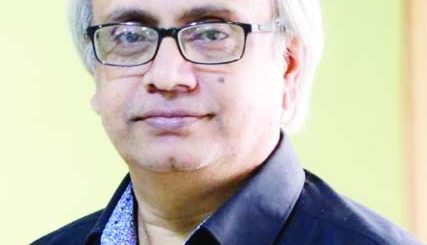
The meeting was attended by Mostafizur Rahman, Distinguished Fellow of the Center for Policy Dialogue (CPD) and Fahmida Khatun, Executive Director at the Centre for Policy Dialogue (CPD),Mostafa K. Mujeri former Chief Economist of Bangladesh Bank, Mohammad Abdur Razzak, Chairman of Research and Policy Integration for Development (RAPID), Salim Raihan, Executive Director of South Asian Network on Economic Modeling (SANEM), Masrur Riaz, Chairman of Policy Exchange Bangladesh, AK Enamul Haque, DG of Bangladesh Institute of Development Studies (BIDS), and Nazmus Sadat Khan, Senior Economist of the World Bank’s Dhaka Office.
Deputy governors, members of the Monetary Policy Committee, and the chief economist of Bangladesh Bank also attended the meeting.
Central bank officials said the economists advised against using foreign exchange reserves under any circumstances. Since reserves are limited, alternative methods of paying for oil imports must be explored.
“If necessary, agreements should be reached with exporting countries such as Saudi Arabia. Opportunities for deferred payment should be sought, or loans could be taken from the Asian Development Bank or other sources to settle fuel import bills,” they said.
The meeting also emphasized the need to encourage remittances during this period. Incentives may be offered to motivate expatriates to send money through formal channels.
Economists said that it is difficult to completely avoid the potential impact of global instability. Therefore, emphasis should be placed on damage reduction strategies.
The current reserves should be preserved and imports from the reserves should be avoided by spending additional dollars.
They also said that if energy supplies from the Middle East are disrupted, initiatives should be taken to procure energy from alternative sources such as Brunei and Singapore. At the same time, they emphasized on strengthening market management.
It is also recommended that the World Bank and other development partners take steps to quickly release promised loans. Economists also believe that additional loans from the Islamic Development Bank (IDB) can be arranged for oil imports.
Currently inflation is still at a high level. Therefore, no policy should be adopted that will further increase inflation. To combat inflationary pressures, it is necessary to emphasize the proper implementation of social security programs including the government’s family card,they added.
At the same time, it is also recommended to pay special attention to ensuring that small and medium entrepreneurs can get loans as needed.