The Need for Social Equilibrium
Md Mahbub-ul Alam
Issues like liberty, discipline, and transgression are quite relative at individual level. However, the scope of defining the issues is multifaceted. Their interpretations vary across social, cultural, and geographical contexts. What is considered liberty in one part of the world may be considered disorder or transgression in another.
Within a social framework, individual liberty can be defined as capacity to regulate one’s own lifestyle, thoughts, ideas and actions. It is a basic right through which an individual freely expresses his opinions. Since liberty is a fundamental right, it’s very important for an individual to become competent for its appropriate exercise. Only an individual, well-educated and sound in mental nature, can comprehend the value of liberty and apply it meaningfully. Freedom is not only a right; it is inseparable from responsibility and awareness. Therefore, while exercising liberty, one must have accountability and respect for others. If exercise of one’s liberty causes inconvenience to others, it inevitably creates an atmosphere of disorder. Freedom is universally cherished, just as chaos is universally disliked. Conflict arises when practice of freedom crosses legitimate boundaries. The poet Rangalal Bandyopadhyay, in his poem Shwadhinota, writes:
“Who wishes to live without freedom, who wishes to live?
Who will wear the shackles of slavery, who wishes to wear?”
Failure to regulate oneself according to situations often leads to transgression. In the context of personal liberty, transgression signifies arbitrariness and recklessness. When an individual forgets his sense of responsibility and disrupts rights, peace, or order of others while exercising freedom, such conduct creates transgression. It creates social conflicts and threatens collective peace. For example, freedom of expression is, of course, welcome; but if it humiliates or harms others, it is simply unacceptable. Responsibility and respect for others are, therefore, indispensable in exercising freedom. Subjugation is desired by no one. To be free from disgrace of subjugation, society first needs to be prepared and capable of understanding the significance of freedom and worthy of enjoying its true essence.
One must be conscientious that his practice of liberty should never cause pain to others. This needs moral awareness at personal and social levels, that helps maintain balance in the practice of liberty. Enjoying the true pleasure of liberty is impossible without having civic awareness; and to enjoy freedom, inclusiveness of the entire social system is required. There is no alternative to raising people’s awareness of their rights. A morally conscious individual cannot disregard others’ rights in response to the violation of his own. Therefore, self-restraint within an ethical limit is indispensable. Regardless of situations, one must refrain from crossing one’s limit. Since liberty and discipline are indispensable for a society, in the name of freedom, arbitrariness can never be justified. No society can expect that one can do anything simply because he likes it. Therefore, to enjoy freedom meaningfully, one needs to be civilized and conscientious.
Only a well-educated person can be wise and considerate. Merely having institutional degrees or attaining higher education does not necessarily make one considerate. Education that sharpens the conscience is different, and such education is noticeably lacking in the present society. The involvement of so-called educated individuals in corruption is simply unfortunate and deeply regrettable for a nation. If this is the case, it should be acknowledged that there remain inherent flaws within the overall education system itself.
Overcoming this challenge requires an integrated approach that harmonizes authentic education at the familial, social, and institutional levels. A value-oriented education system, grounded in ethics, should be considered as the core foundation of education. It is imperative to develop an education system which contributes to producing responsible and enlightened human beings.
A morally educated and conscious individual would neither engage in corruption nor abandon his elderly parents at an old age home. However, it has become an increasing problem in the context of our society. A closer look at orphanages of our country reveals that majority children are there from poor or under-educated families. On the contrary, residents of old age homes are often the parents of their affluent and supposedly educated children. This social reality implies an acute crisis of ethical and value-based knowledge within our existing education system. The holy Qur’an provides especial instructions regarding this:
“Your Lord has decreed that you should worship none but Him and that you must show kindness to your parents. If one or both parents reach old age in your care, do not utter to them a word of irritation, nor rebuke them, rather speak to them with gracious words. Embrace them with manner of humility and politeness and say, ‘My Lord, have mercy upon them as they raised me when I was infant” (17:23–24).
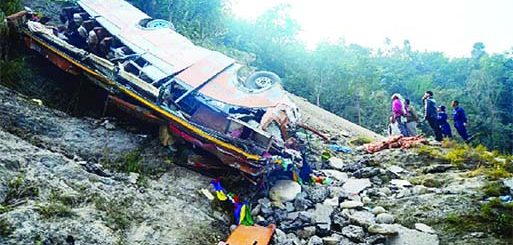
Apparently, our society lacks this sort of moral education. On the other hand, we are observing serious crimes like transgression frequently. For example, after a road accident, failing to identify the liable vehicle, people start vandalizing other vehicles, assaulting drivers, harassing ordinary passengers, even forcibly blocking roads, etc. Can this be considered an exercise of freedom by a conscious citizen? This is clearly a transgression and violation of laws and social order. Furthermore, the driver or the passengers involved in the accident, sensing fearful harassment by the general people, try to escape quickly for their own safety, instead of rescuing or showing sympathy to the injured people. This cannot be called responsibility of conscious citizens in a civilized society.
In recent times, it has been seen that people from different professions are protesting and demanding their rights. It is true that the people will draw the authorities’ attention to different issues for attaining their rights by exercising their freedom individually and/or collectively; but if a conscious citizen would understand the meaning of freedom, then he would have carried out these movements in such a way that the common people would not be harassed by their movements. There can be no merit in violating country’s laws. If wrongdoers do not repent for their action after committing any misdeed or crime, then there is a great lack of values and sense of humanity in them. That humanity and human virtues must be awakened first. This issue is also inseparably related to education, society and culture.
Once, I read a story in childhood – a man brought two mangoes from the market for his two sons and gave them to one, telling him to share with his brother. Although the task was simple, trouble occurred elsewhere. One of those mangoes was rotten partially. Then the son, who had been given the responsibility of sharing the mangoes, couldn’t fix which one to take for himself and which one to give his brother. When he thought of giving the rotten mango to his brother, an unknown impediment starts to arise in his mind. If he gives the rotten mango to his brother, it means he is cheating on his brother. Again, his mind didn’t agree to take the rotten mango for himself. Out of this dilemma, he decided to give the good mango to his brother at last because this will not cause any dilemma, nor any guilt in his heart for cheating on his brother. He will be able to work with a completely free mind. Without achieving such freedom of mind, one cannot enjoy liberty in actual sense of the term. It is mentioned in the Hadith:
“None of you can be a true believer, until he must choose for his brothers, what he likes for himself” (Sahih al-Bukhari: 13).
Therefore, achieving and enjoying the sustenance of freedom is not possible for everyone. Both spiritual and human knowledge are inseparably linked to the proper application of the acquired freedom.
The more a person can control himself, the more he can truly enjoy freedom. When will the people be able to exercise their freedom properly? And when will they be respectful of the laws and regulations? When will they maintain discipline and won’t cross the limit? A culture that values and respects differences of opinion is more likely to develop, when the administration will pay heed to the sufferings and legitimate demands of people with due importance, and try to solve them even if it is nearer to impossible to implement. Then, perhaps, people will not take the law into their own hands or create any sort of chaos. Everyone must be patient. There is no alternative to exercising patience; success lies in it. The Holy Quran has given several advices on patience. For example: “……Indeed, Allah is with those who are patient” (Al-Quran- 02: 153). The systematic cultivation of patience inevitably leads to positive outcomes. All parties must create a place of trust for one another. There is no alternative to a culture of mutual understanding.
There is a necessity to respect the thoughts and opinions of others, even if they are not in favour of our own opinion or interests. The solution achieved by applying force is temporary. However, it will be more sustainable and enduring if it is achieved through mutual understanding. The establishment of a balanced relationship between individual freedom, discipline, and social order, along with the prevention of transgression—requires the cultivation of sound and effective education, strong moral values, and mutual respect. Ascertaining the proper application of genuine liberty is contingent upon a good sense of responsibility, practices of human virtues, adherence to rules of law, and practices of religious knowledge.
It is crucial to have a clear understanding of individual liberty, discipline, order and transgression to keep our social environment disciplined, habitable and tolerant. Achieving social equilibrium requires the active participation of citizens through a properly integrated education earned from family, society and institutions. Teaching-learning and practicing ethics and morality are essential for building a civilized, secure and habitable society.
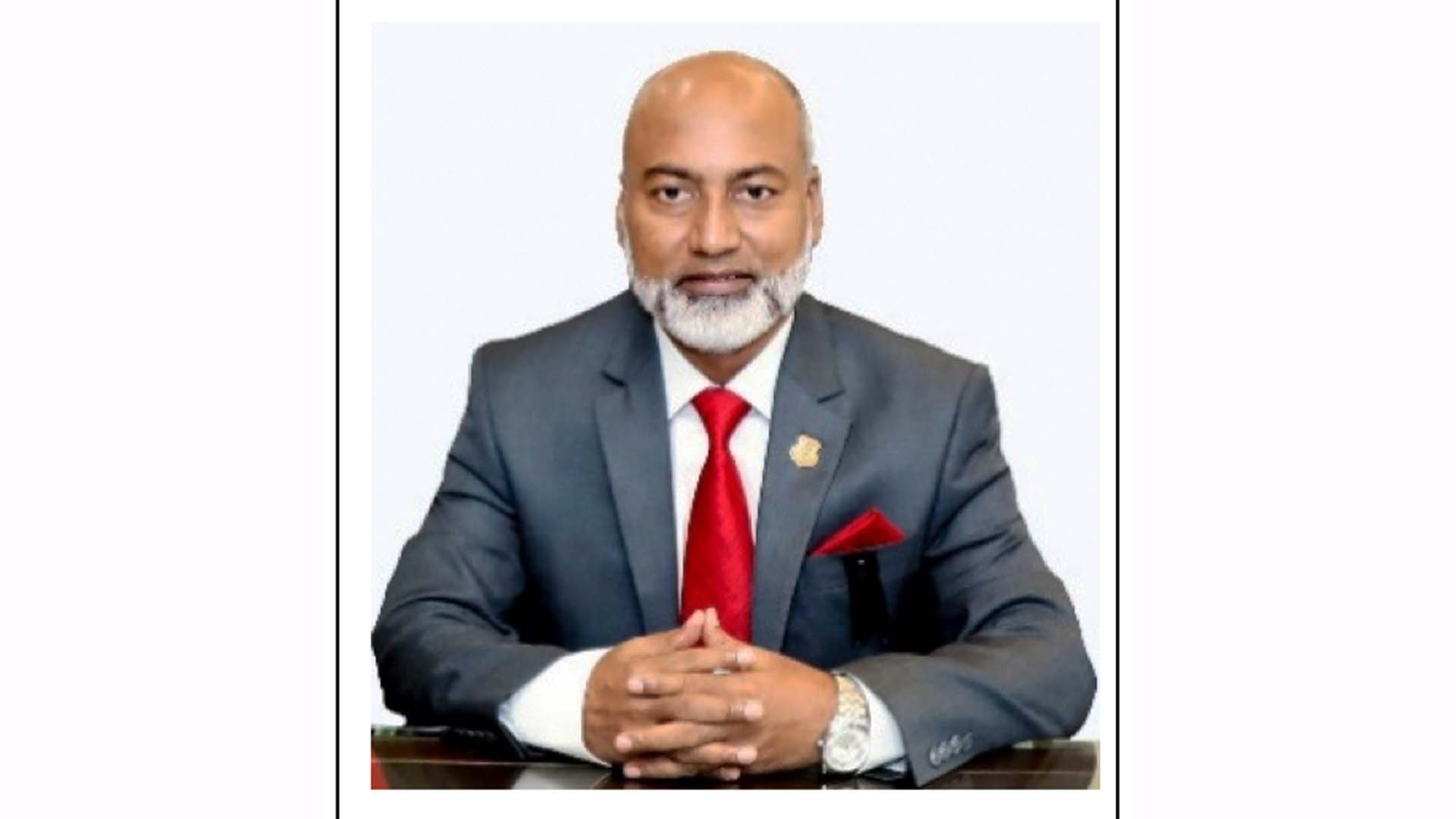
Major General Md Mahbub-ul Alam is the Vice Chancellor of Bangladesh University of Professionals.