Pakistan says ‘no dialogue’ with Afghanistan as attacks persist
Agencies :
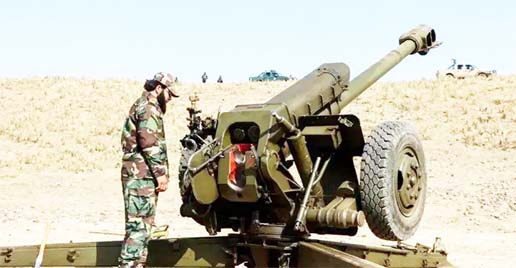
International calls for mediation are growing as Pakistan and Afghanistan engage in cross-border fighting for a third day, in the most serious flare-up in violence between the neighbours in months that Pakistan says has brought them into “open war”.
The European Union’s foreign policy chief Kaja Kallas urged on Saturday for the countries to bring down the temperature and enter talks, warning the violence could affect the wider region.
Iran, Jordan, the United Arab Emirates and Russia, as well as UN Secretary-General Antonio Guterres, also urged de-escalation and mediation.
Afghanistan’s Taliban rulers have said they are open to negotiations to bring an end to the conflict.
But Pakistan on Saturday said there would be “no dialogue”, repeating its long-running demand that Afghanistan stop harbouring “terrorism”, an allegation Kabul denies.
“There won’t be any talks. There’s no dialogue. There’s no negotiation. Terrorism from Afghanistan has to end,” the Pakistani prime minister’s spokesperson for foreign media, Mosharraf Zaidi, told Pakistan TV, stressing that Pakistan’s responsibility was to protect its citizens and territory.
Meanwhile, tit-for-tat attacks occurred near the fraught border. Afghan media reported that Taliban forces fired drone attacks on Pakistani military camps in the border areas of Miranshah and Spinwam.
Pakistan’s Dawn newspaper reported a drone attack hit a mosque in the city of Bannu further south, injuring at least five people.
And Pakistan TV said Pakistani forces waged their own attack targeting several positions of the Afghan Taliban.
Meanwhile, tit-for-tat attacks occurred near the fraught border. Afghan media reported that Taliban forces fired drone attacks on Pakistani military camps in the border areas of Miranshah and Spinwam.
Pakistan’s Dawn newspaper reported a drone attack hit a mosque in the city of Bannu further south, injuring at least five people. And Pakistan TV said Pakistani forces waged their own attack targeting several positions of the Afghan Taliban.
The United States, which considers Pakistan a major non-NATO ally, said it backs Pakistan’s right to “defend itself against Taliban attacks”.
Pakistan has witnessed a sharp rise in violence within the country in recent years, including suicide bombings and coordinated assaults targeting security forces.
Pakistani authorities blame the Pakistan Taliban, or TTP, for many of the attacks, and accuse Afghanistan of sheltering the group inside Afghanistan.
Kabul rejects the allegations and says it does not allow anyone to use Afghan soil for attacks on any country, including Pakistan.
Pakistan is nuclear-armed and its military capabilities are vastly superior to Afghanistan’s. However, the Taliban is adept at warfare, hardened by decades of fighting with United States-led forces.