Merit, Not Quota: DGFI Gets a Battle-Tested Chief
Ahsan Habib :
Whenever a powerful appointment drops in Bangladesh, one question pops up like clockwork: Was this about merit — or was this about quota?
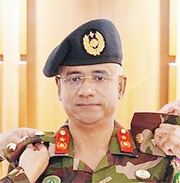
The appointment of Major General Kaiser Rashid as Director General of Directorate General of Forces Intelligence (DGFI) lands squarely in that debate. But a look at his track record makes the answer pretty unambiguous: this is a textbook merit pick.
He didn’t just pass through the Bangladesh Military Academy (BMA) — he dominated it. Commissioned as the second-best cadet of the 29th BMA Long Course, he later rose to become the top officer of his batch. Among peers, there’s a running joke that he never finished second at anything that mattered in training. In a system where rankings are ruthless, that consistency isn’t luck — it’s elite performance.
He completed the Staff Course twice — once at home and once in the UK due to best performance at home — and sharpened his artillery and gunnery expertise through advanced courses in Turkey and Pakistan. That kind of professional exposure isn’t ceremonial; it’s competitive, technical, and earned.
Quota doesn’t carry you through multinational military standards. Performance does. Operationally, he handled demanding responsibilities in the Chittagong Hill Tracts as a Brigade Major. Intellectually, he shaped officers for years as Directing Staff (Instructor) and later Chief Instructor at the Defense Services Command and Staff College (DSCSC). Add three separate instructor tenures at the School of Artillery, and you get a rare blend: a field officer who can also build minds. Institutions don’t place average performers in charge of training their future leadership pipeline.
In 2019, he was selected for UN Headquarters through an open global competitive process, 1st BD officer to serve as Chief of Force Generation in UNHQ. After joining UNHQ he made BD top Troops Contributing Country (TCC) and maintained that position for 4 yrs by generating more than 1500 vacancies for BD which earned hundred crores of remittances for BD.
The General played a hands-on role in expanding deployment opportunities for Bangladesh’s security forces. His performance earned the trust of the Military Adviser to the UN Secretary-General (MILAD) — a level of professional confidence that’s built through competence, not connections.
People who trained with him still tell the same story years later: he set the standard early. One former officer recalled learning the basics of military life — from wearing boots properly to delivering a first salute — under his guidance at the academy.
Across training, operations, and administration, peers describe him as relentlessly sharp and professionally disciplined. That kind of reputation doesn’t travel by rumor; it travels by results.
DGFI isn’t a ceremonial posting. It’s one of the country’s most sensitive intelligence platforms, where judgment errors can ripple into national consequences.
The role demands strategic depth, calm under pressure, international exposure, and an instinct for both people and power. On paper and in practice, this profile fits him disturbingly well.
If quota were the driver, we’d see soft edges in the résumé. Instead, what stands out is pressure-tested excellence — elite training results, hard operational roles, high-stakes teaching appointments, and credibility on the global stage.
This appointment doesn’t read like favoritism. It reads like a system, for once, choosing its strongest card.
(The writer is a columnist)