Family Card: Who qualifies and how they be chosen?

Staff Reporter :
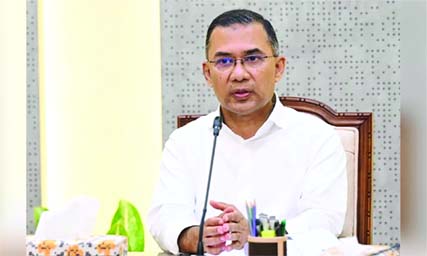
Prime Minister Tarique Rahman is set to inaugurate the pilot phase of the government’s flagship “Family Card” programme on March 10, as authorities move to operationalise a key electoral pledge aimed at expanding cash support for low-income households.
The announcement follows a high-level meeting at the Secretariat chaired by the prime minister. Officials say the programme will initially be rolled out on a trial basis before being expanded nationwide in phases.
According to the gazette notification outlining the committee’s mandate, the government must formulate an appropriate implementation design and determine a transparent beneficiary selection process before full-scale deployment.
The notification states that, at the outset, one upazila from each of the country’s eight administrative divisions will be selected for the pilot launch.
Under the pilot scheme, one ward in a single union across 14 selected upazilas will be brought under the programme. Each enrolled family will receive Tk 2,500 per month in direct financial assistance.
The government intends to formally launch the initiative ahead of Eid-ul-Fitr, with a four-month pilot phase planned before a nationwide rollout.
Social Welfare Minister Abu Zafar Mohammad Zahid Hossain minister on Tuesday said the decision to initiate the programme on a trial basis was taken following recommendations by a Cabinet committee led by the finance minister.
After the pilot phase, the scheme is expected to be expanded gradually — first to additional wards, then to entire unions, and eventually to every upazila across the country.
According to the Social Welfare Ministry, the Family Card will primarily target extremely poor, poor and lower-income households, with funds disbursed directly to the female member or head of each family.
Officials say this design aims not only to provide income support but also to strengthen women’s economic empowerment at the household level.
To ensure transparency and prevent irregularities, the government is establishing a centralised digital database.
Beneficiary identification and monitoring will be conducted through an integrated Management Information System (MIS), linking National ID (NID) records with the National Household Database.
Each family’s information will be stored under its NID profile to minimise duplication and strengthen oversight.
The implementation committee has also been tasked with recommending the structure of this digital MIS and assessing whether any existing women-focused social protection programmes can serve as a foundation for the Family Card framework.
The gazette further states that the Ministry of Women and Children Affairs will provide secretarial support to the committee, which may convene meetings as necessary and co-opt additional members if required.
Officials say the application process has yet to begin formally, but prospective applicants have been advised to keep their National ID card, passport-size photographs and an active mobile phone number ready.
Once the pilot phase is completed, application forms are expected to be made available through union parishad offices, municipal offices, city corporation councillor offices and a dedicated government online portal currently under preparation.
The Family Card initiative was a central promise in Tarique Rahman’s election manifesto, where he pledged to build a more humane and inclusive welfare system.
If the pilot phase proves successful, authorities say the programme will be expanded gradually to cover all upazilas across the country, potentially becoming one of the most extensive cash assistance schemes introduced by the new administration.