Mob Attacks Soar: Lawless crowds, deadly consequences

Staff Reporter :
On the night of 23 February, another life was extinguished in a brutal mob attack, the latest in a disturbing pattern that has gripped communities nationwide.
The victim, a 35-year-old, was beaten by a group of people on suspicion of theft near a cremation ground in Dhaka.
He was rushed to a medical facility but later died from his injuries, highlighting yet again the lethal consequences of extrajudicial violence that has increasingly become a grim feature of everyday life across the country.
This tragic event comes against the backdrop of an alarming surge in lynch-mob incidents in Bangladesh — not isolated flare-ups, but a trend that has expanded in scope, frequency and severity in recent years.
Data compiled by human rights organisations paint a stark picture: mob violence is no longer sporadic or confined to remote districts; it has grown into a nationwide phenomenon with mounting tolls.
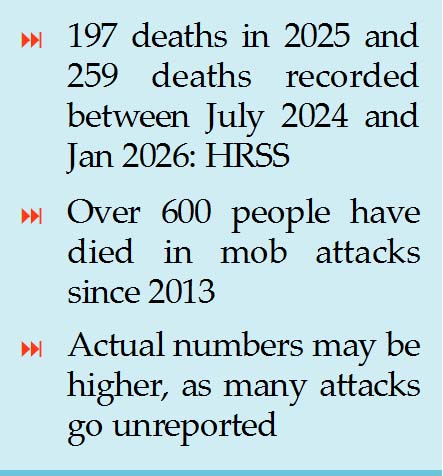
According to a recent report by Ain o Salish Kendra (ASK), at least 197 people were killed in mob violence incidents in 2025, up from 128 in 2024. This represents nearly a 54% increase year-on-year — a dramatic jump that has raised alarm bells among rights advocates and legal experts alike.
Another survey by the Human Rights Support Society (HRSS) shows 259 mob-related deaths and 313 injuries nationwide between July 2024 and January 2026, indicating that the problem shows little sign of abating.
Historical tracking suggests that over 600 people have lost their lives in lynch-mob attacks across Bangladesh since 2013, with concentrated spikes in recent years. What once appeared to be sporadic occurrences has evolved into a recurring cycle of mob violence cutting across urban and rural communities alike.
These numbers, rights groups caution, likely understate the reality, as many attacks especially in rural and hard-to-reach areas go unreported or unrecorded.
Experts said that slow investigations, perceived inaction by law enforcement and delayed legal proceedings have left many feeling justice is unattainable through official channels, prompting some to resort to direct action.
Speaking to the New Nation, Advocate Sayeed Ahmed, a Supreme Court lawyer said, “Mob violence is not a symptom of justice — it is a failure of the justice system,” said a constitutional law specialist in Dhaka.
“When people feel that police and courts cannot deliver timely justice, they take extreme steps that endanger lives and undermine public confidence in state institutions.”
He also said, “The rapid circulation of unverified information particularly via social media and messaging platforms often sparks fear and anger, mobilising crowds before authorities can verify facts.
“Allegations of theft, child abduction, violence against women, or attacks on religious sentiment can ignite collective rage, with communities taking the law into their own hands without waiting for due process.”
Human rights advocates point to the fact that a pattern of punishment without trial not only breaches national law, but erodes the very foundations of democratic governance and civil liberties.
A human rights lawyer Barrister Faran md Araf told the New Nation, “Mob attacks do not just take lives but they violate basic human rights and instil fear in communities,” said a representative from an international rights group. “Timely prosecution, transparent investigations, and accountability are essential to rebuild trust.”
BNP party leaders have cited the proliferation of mob attacks as evidence of deteriorating law and order, urging authorities to take stronger action to protect citizens and prevent extrajudicial violence.
Home Minister Mohammad Salahuddin Ahmed warned that “mob culture” would no longer be tolerated and that strict action would be taken against any such incidents.
“The practice of mobilising mobs to block highways or roads to press demands is over,” he said, adding that legitimate demands must be pursued through lawful channels such as submitting memoranda, holding rallies or assemblies, or seeking legal remedies in court.