Deep reforms and inclusive budget now critical: Khasru

Staff Reporter :
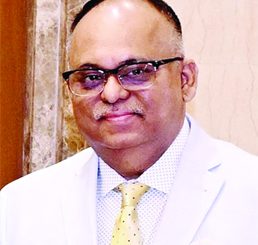
The country’s economy is passing through what the government describes as a “difficult and stagnant” phase, marked by rising poverty, falling investment and shrinking employment opportunities, Finance and Planning Minister Amir Khasru Mahmud Chowdhury said on Friday.
Speaking to journalists at his residence in Mehedibag in Chattogram, the minister said the worsening economic indicators have made structural reforms an urgent priority.
“At a time when poverty is increasing and both investment and employment are declining, the government must focus on deep reforms, a participatory national budget and building a trust-based capital market,” he said.
Referring to recent gains in the stock market, Khasru described the rise in indices as largely “cosmetic.”
He said the temporary improvement may reflect investor optimism around the return to democratic governance, but warned that such short-term gains would not be enough to restore long-term confidence. Sustainable recovery, he stressed, would require reforms in laws, regulations and market oversight.
To that end, the minister said the role of the Bangladesh Securities and Exchange Commission would be strengthened to ensure transparency and enforce a zero-compromise policy.
“Our goal is to bring fundamentally strong and profitable companies to the market, attract both local and foreign investment, and rebuild investor trust,” he said. Turning to the upcoming national budget, Khasru said it would break away from conventional practices.
Rather than favouring select groups, the budget would aim to ensure a level playing field so that all citizens can participate fairly in economic activity.
He said patronage politics would no longer be tolerated, arguing that special interest groups had long benefited at the expense of ordinary people.
The new budget, he added, would focus on spreading the gains of development more evenly while encouraging fair competition. The minister also spoke about the country’s debt burden and the challenge of recovering laundered money.
He said a significant portion of borrowed funds in the past had not been used productively and, in some cases, had been siphoned off. As a result, the current government is now servicing liabilities linked to assets that effectively do not exist.
He noted that large debt repayments lie ahead and said efforts are ongoing at the government-to-government level, with assistance from international professional institutions, to recover misappropriated funds as much as possible.
On development in Chattogram, Khasru said projects would continue, but with stricter oversight to ensure transparency and effectiveness.
He emphasised that transforming Chattogram into a true commercial capital would require higher investment, improved port efficiency and expanded employment opportunities.
Later, speaking after a meeting with the Port Users Forum, the minister said inefficiencies and poor coordination at Chattogram Port are significantly raising the cost of goods.
Delays in cargo clearance, additional charges and procedural complexities, he said, are increasing production costs that ultimately get passed on to consumers nationwide.
The impact, he added, extends beyond consumer goods to raw materials and nearly all imported products. He said some immediate solutions to port-related problems had been agreed upon, while others requiring inter-ministerial coordination would be resolved soon.
Special priority is being given to clearing essential commodities ahead of Ramadan to prevent further price hikes.
The minister expressed optimism that improved port operations would speed up cargo handling, reduce costs and help ease market pressure. Earlier in the day, he arrived in Chattogram via Shah Amanat International Airport.