Government’s initiative for LDC graduation deferral timely

As the clock is ticking toward November 2026, Bangladesh is supposed to formally step out of the least developed country (LDC) after eight years of assessments and repeated reviews by the UN committee for Development Policy.
However, experts and business leaders have long been saying that the country is still not adequately prepared to face the harsher reality of a post-LDC world.
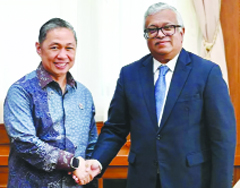
Meanwhile, the new government’s Commerce Minister Khandaker Abdul Muktadir on Wednesday said that the government will take initiative to defer Bangladesh’s graduation from the LDC categorically.
Works has already started at the Commerce Ministry, he said, adding: coordination and communication will soon be carried out with Economic Relations Division (ERD).
Regarding the slowdown in exports, experts and business leaders have said that Bangladesh’s export structure remains highly concentrated on a single product.
At present, around 85 per cent of the country’s total export earnings come from the readymade garments.
To address this situation, diversification in export products should be introduced.
Besides, expanding into new markets and providing proper support to private entrepreneurs should be the government’s priority.
They said Bangladesh is not fully prepared to face the economic and institutional challenges that will follow its graduation from the LDC category, warning that it could expose the economy to serious risks.
However, they warned that even a two- or three-year extension would be meaningless without concrete action.
We already had eight years to prepare. There were many meetings and seminars, but have little real progress.
It is to be noted that last year, apparel exports reached $39 billion, making Bangladesh the second-largest garment exporter after China with close to 8 percent of the global market.
The risk, according to economists, is concentration. Unlike many countries that have graduated, Bangladesh is heavily reliant on a single export sector and a limited number of markets, leaving it more exposed to any sudden loss of trade privileges.
The hard truth is that in the past few years since graduation was confirmed, Bangladesh has made little tangible progress in addressing the structural reforms required for a smooth transition.
It now needs to be decided, by both policymakers and the business community, whether the country should actively pursue a deferral of LDC graduation and for how many years.
There is precedent for such extensions, as some LDCs in the past have sought and secured more time.
There is nothing wrong in seeking for this breathing space. Bangladesh can similarly seek an extension, as the process to request a delay is not complicated. There are instances in this regard.