
Illegal cigarette market expands amid weak oversight

Staff Correspondent
Despite intensified operations by law enforcement agencies and customs authorities, the illegal cigarette market has failed to come under control and has instead expanded. The trend was evident across the cigarette sector in 2025.
Alongside smuggled foreign brands, illegally produced and counterfeit domestic cigarettes have become increasingly available, from the capital to remote rural areas. Analysts say the counterfeit market has expanded as a result of sharp increases in cigarette prices and taxes introduced without adequately considering on-the-ground realities.
Tobacco tax hike
Typically, changes to taxes and duties are announced during the budget. In 2025, however, the government took a different course and decided to raise taxes in the tobacco sector at the start of the year.
In early January, an ordinance announced increases in cigarette prices and duties. Shortly afterward, the National Board of Revenue (NBR) issued directives outlining new cigarette price tiers and a revised tax structure. As a result, the price of a 10-stick pack of low-tier cigarettes rose sharply from Tk 50 to Tk 60.
Under the revised structure, the minimum retail price of a 10-stick pack of low-tier cigarettes is set at Tk 60. Based on this price, the government tax burden per 10-stick pack stands at Tk 49.80.
However, 10-stick packs of various brands are being sold in the market for Tk 50 or even less. After paying the applicable taxes, it is not commercially viable to sell a pack at a profit margin of only 20 paisa. An analysis of production and distribution costs clearly indicates that large-scale tax evasion is taking place in this segment.
Meanwhile, in an effort to rein in the illegal cigarette market nationwide, the National Board of Revenue (NBR) instructed revenue circles in February last year to conduct enforcement drives.
Committees comprising more than 200 revenue officials from various tax circles, along with members of law-enforcement agencies, were formed, and intensive nationwide operations were carried out over a continuous 10-day period. Around 159 raids were conducted across different districts.
The NBR claims these operations led to a partial reduction in the supply of illegal cigarettes and tobacco products, which in turn increased demand for legally sold products.
Market researchers say the sudden price hike last year created fresh incentives for smugglers to bring in larger volumes of cigarettes, further fueling the illegal market. While enforcement operations led to the seizure of some consignments, a significant portion of illicit supplies remained beyond the reach of authorities.
Enforcement operations and seizures increase
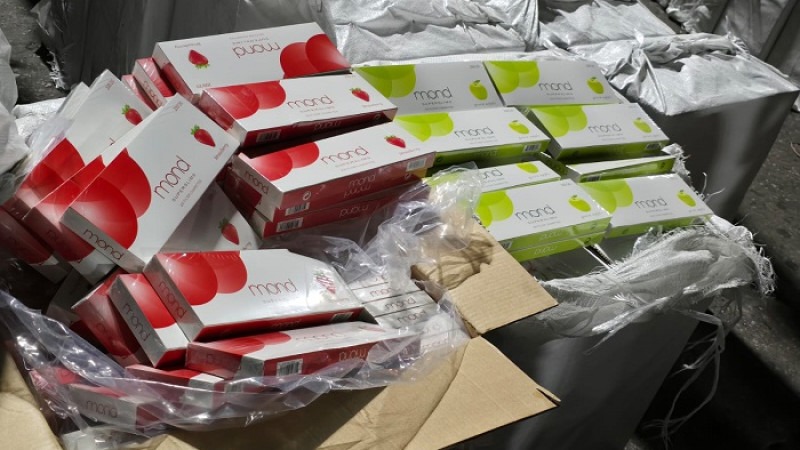
An analysis of media reports shows that in 2025, a total of 68 enforcement operations were conducted nationwide, resulting in the seizure of 4 crore 51 lakh 43 thousand 520 sticks of illicit cigarettes and 39 lakh 75 thousand 500 banderols. Had these products reached the market, the estimated revenue loss would have been around Tk 261 crore.
In the previous year, 2024, a total of 30 enforcement operations were carried out, leading to the seizure of 1 crore 17 lakh 15 thousand 330 sticks of illicit cigarettes and 3 crore 49 lakh 9 thousand 800 banderols. The potential revenue loss from these seizures was estimated at around Tk 43 crore.
Illicit market continues to grow
A recent research report by market intelligence firm Inside Metrics has revealed alarming findings. According to the report, around 13.1 percent of cigarettes currently sold in the domestic market are illicit, representing a 31 percent increase compared to the previous year.
The study estimates that approximately 83 crore 20 lakh sticks of illicit cigarettes enter the market every month, resulting in an annual revenue loss of nearly Tk 4,000 crore.
Revenue collection falls short
Despite higher taxes in the tobacco sector, revenue collection has failed to increase, prompting frustration from Abdur Rahman Khan, chairman of the National Board of Revenue (NBR).
Speaking at a seminar in the capital in August of last year, he said tobacco taxes were raised to as much as 83 percent in the 2024–25 fiscal year, with expectations of generating an additional Tk 10,000 crore in revenue. However, he noted that revenue collection from the sector declined instead of increasing, citing cigarette smuggling and illegal local production as the main reasons.
Analysts’ views
Analysts, reviewing trends over the past year, say practical, reality-based measures are urgently needed to curb the illicit cigarette market and prevent revenue leakage.
They argue that bringing all tobacco companies under a single revenue reporting unit would improve transparency in production and sales data and reduce opportunities for tax evasion.
They also recommend installing modern volume measurement technology at factories, with systems that report production data directly to government authorities, making it easier to detect illegal output.
In addition, analysts stress the need to modernise the security features of tax stamps to prevent the use of counterfeit banderols.
They further say the sale of cigarettes below the government-set minimum retail price must be completely prohibited, with strict enforcement to ensure compliance. At the same time, avenues for the resale of seized cigarettes should be closed, and confiscated illicit products should be destroyed promptly so they do not re-enter the market.
Analysts add that forming a permanent joint task force involving the National Board of Revenue, law-enforcement agencies, customs authorities and local administrations would help build an effective and sustainable response against the illegal cigarette trade.