
Finance minister outlines govt’s immediate priorities
Business Report :
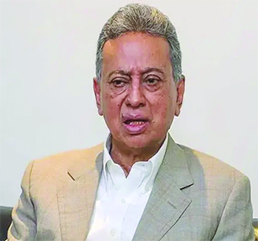
Finance Minister Amir Khasru Mahmud Chowdhury on Wednesday outlined his government’s immediate priorities, placing institutional reform, economic inclusivity, broad-based economic participation and deregulation at the top of the agenda.
Speaking to reporters after assuming charge at the finance ministry, the minister said the government’s ability to deliver depends fundamentally on the strength and efficiency of its institutions.
Khasru, also the minister of planning, acknowledged that state institutions are currently in a poor condition and require urgent attention. “Our primary problem is that the state institutions are in a very bad shape,” he said. “We have to address this first. The institutions must be recovered.”
He stressed that restoring professionalism, transparency and efficiency within public institutions would be the first priority. According to him, without these core elements, even the most ambitious economic programmes would fail to produce meaningful results.
“We have to bring professionalism into the institutions. We have to ensure transparency. We have to ensure efficiency. This is the most important issue,” he said, adding that in the absence of these qualities, no major initiative would work effectively.
The finance minister described institutional reform as the “number one” task before the ministry, underscoring that rebuilding governance structures is a prerequisite for sustainable economic management.
Turning to broader economic policy, he said the country must move away from what he described as a ‘patronage-driven’ economic model and instead democratise the economy.
“The economy of Bangladesh must be for all people,” he said, emphasising the need to ensure a level playing field. He noted that every citizen should have an opportunity to participate in economic activity and to benefit from its outcomes.
He reiterated that wider participation in the economy is essential for inclusive growth. Ensuring that economic gains reach every segment of society would be a key benchmark of success under his leadership.
On regulatory reforms, the finance minister renewed his call for serious deregulation and liberalisation, arguing that Bangladesh has become an over-regulated country over time.
He attributed this trend to years of patronage-based politics, which, in his view, resulted in layers of regulations that have increased the cost of doing business and limited fair competition.
“Bangladesh has become over-regulated,” he said. “To make this successful, we must undertake serious deregulation. We have to liberalise and create a level playing field so that everyone has equal rights to participate in the economy and its benefits reach all.”
The minister argued that excessive regulation often creates opportunities for corruption and rent-seeking, adding that rationalising the regulatory framework would reduce barriers, improve competitiveness and enhance investor confidence.
When asked to summarise his priorities, he responded that the economy would remain his central focus, with institutional reform, deregulation and inclusive participation forming the core pillars of his agenda.
The finance minister’s remarks signal a reform-oriented approach at the finance ministry, with emphasis on strengthening institutions, reducing regulatory burdens and ensuring that economic opportunities are accessible to all citizens.