New Govt’s 120 days: Experts suggest pragmatic plans to recover economy

Staff Reporter :
After securing a landslide victory in the election, BNP Chairman Tarique Rahman is assuming responsibility for the country at a time when the macroeconomy faces multiple crises and challenges.
On one hand, the government must manage the Ramadan and Eid market situation, and on the other, it must prepare a new national budget within four months.
In the current context—where the economy is under multidimensional pressure, inflation remains persistent, confidence in the banking sector is fragile, foreign exchange reserves are under strain, disparities in health and education are stark, and questions linger over administrative effectiveness—the first 120 days become a critical period for policy reset.
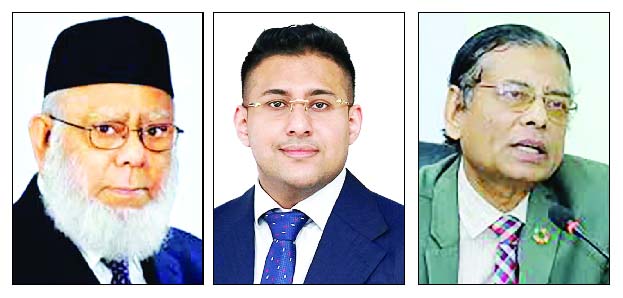
In this regard, speaking recently to the media were Mahbubur Rahman, President of International Chamber of Commerce Bangladesh (ICC Bangladesh); economist (FSACHE, FLMI) and Managing Director of Labaid Cancer Hospital & Super Speciality Center, Sakif Shamim; and Dr. Mustafizur Rahman, Honorary Fellow and economist at the Centre for Policy Dialogue (CPD).
Experts say the first 120 days—or four months—of a new government are not merely a timeframe; rather, they represent a defining moment in shaping the philosophy of governance and the future trajectory of the economy.
Bangladesh is currently experiencing multidimensional economic pressure, where rebuilding public confidence and implementing structural reforms have become major challenges. Reviving the sluggish economy is now the most urgent priority.
According to them, this is not merely a change of power for the new government but a difficult “economic war.”
To win this battle, there is no alternative to strong political will and an efficient administrative framework.
Mahbubur Rahman stated that over the past year and a half, the government has distanced itself considerably from the private sector.
As a result, the country’s business and economic landscape stands at a critical juncture.
After forming the new government, close coordination with the private sector will be essential.
He emphasized that economic challenges should be addressed through joint initiatives between the government and private sector.Sakif Shamim said that without restoring economic stability, no reform will be sustainable.
Controlling inflation requires more than market monitoring or mobile courts; it demands an integrated “economic stabilization framework,” ensuring effective coordination among the Ministry of Finance, Bangladesh Bank, the Ministry of Commerce, and the agricultural sector.
Weaknesses in the supply chain of essential commodities—from the import stage to retail markets—must be identified through data-driven analysis.
Dr. Mustafizur Rahman said the new government should set a target of reducing inflation to 4–5 percent. Increasing market supply is key to achieving this. To boost supply, investment must rise.
However, high interest rates pose a major obstacle to investment. While they cannot be reduced overnight, investor confidence can be restored by lowering the cost of doing business, reducing port turnaround times, launching a single-window system, and implementing a logistics policy.
He added that good governance, improved law and order, anti-corruption measures, and enhanced administrative transparency are essential for economic revival.
Sakif Shamim further noted that when a newly elected government assumes office, public expectations extend beyond a mere transfer of power—they anticipate visible changes in governance character, policy priorities, and the state’s philosophy of administration.
Particularly in the present context of economic strain, persistent inflation, banking sector distrust, pressure on foreign exchange reserves, inequality in health and education, and administrative inefficiencies, the first 100 days become a policy reset period.
Although all problems cannot be resolved within this time, it signals the direction the government will take, whose interests it will prioritize, and how inclusive and responsible its vision of governance will be.
Dr. Mustafizur Rahman also said that within the first 120 days, the government should ensure free, fair, transparent, and competitive elections in FBCCI and all national and regional trade bodies.
This is significant not only organizationally but also symbolically as an economic message.
When competent and elected business leaders emerge, policymaking reflects real-world experience.
In areas such as banking, exports, taxation, and industrialization, public-private partnership strengthens. An effective FBCCI means a robust public-private dialogue platform.
Investors can then be assured of policy continuity and a stable business environment.
Inequality in the health sector has become a major risk to social stability. While specialized services are expanding in urban areas, rural populations remain deprived of quality healthcare.
Within the first 120 days, telemedicine connectivity at the upazila level could be made mandatory, digital tracking of medicine supply in public hospitals could be introduced, and a draft national health insurance framework could be published.
This would ease the burden on families who currently bear significant out-of-pocket healthcare expenses.
At the same time, in the next phase of digital transformation, Bangladesh must evolve from merely being a technology user to becoming a technology producer.
In this context, AI diplomacy is crucial, as technological cooperation with developed countries now extends beyond software and services to include semiconductors, data architecture, and strategic technology capabilities.
Through joint research, technology transfer, and skills development with the United States, Bangladesh should gradually build domestic semiconductor and chip manufacturing capacity.
Additionally, an AI Infrastructure Policy Committee should be formed to develop domestic technological capabilities.
As a Muslim-majority country, Bangladesh holds a natural advantage in halal food production.
The global halal economy has already become a trillion-dollar market. Strengthening halal certification authorities, developing processing industries in line with international standards, and expanding markets in the Middle East and Southeast Asia could significantly increase foreign currency earnings.
Halal cosmetics, pharmaceuticals, and tourism may also become integral parts of this economy.