
The Dream of Safe Sleep and Public Security: People’s Expectations from the Incoming Government
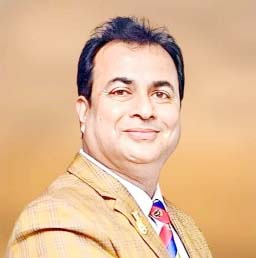
Mir Abdul Alim :
After bringing an end to a prolonged period of political and economic instability, a new reality is about to unfold as a government led by Tarique Rahman prepares to assume office.
At this moment, the foremost challenge before the incoming administration is repairing the collapsed state machinery and ensuring the fundamental security of citizens.
Over the past several years, law and order and public safety in the country have deteriorated to extreme levels. Restoring this situation will be the government’s first and most critical trial by fire.
Unless the culture of fear is eliminated, discipline is restored on the streets, and the safety of every citizen’s life is ensured, no reform can ever become sustainable.
At the same time, inflation in Bangladesh has become an enormous burden on ordinary people’s lives.
When rising prices of rice, lentils, and salt leave the middle class gasping for breath, any ideological debate becomes meaningless.
The new government, therefore, does not face a bed of roses, but rather a mountain of accumulated challenges.
From education to roads, from industry to foreign relations, signs of decay are visible at every level. Healing these wounds requires long-term vision and ironclad decision-making.
Reining in the market must be the top priority. While neighboring India’s retail inflation stands at 2.75 percent, Bangladesh’s rate of 8.58 percent is deeply alarming.
Upon taking office, the Tarique Rahman government must declare its first battle against inflation.
Preserving the value of the national currency and controlling inflation require strict coordination between monetary and fiscal policies.
Import duties on essential commodities should be temporarily reduced, and the central bank must be granted full autonomy to regulate market liquidity. To increase agricultural production, subsidies must be delivered directly to farmers.
Improving law and order will be a major challenge and the foundation of rebuilding the state structure.
Over recent years, a culture of partisanization has taken root within the police system; breaking free from this will be one of the new government’s primary tasks. Police stations must become safe havens for ordinary citizens.
Establishing a politically neutral police administration and ensuring merit-based recruitment are essential. The environment of fear must be replaced with the rule of law.
Law enforcement agencies must be equipped with modern training so they can serve the people while upholding human rights.
Ensuring a safe life is a constitutional right of every citizen. Creating an environment where people can sleep safely at night and go to work without fear during the day must be the core objective of public security.
To achieve this, community policing must be strengthened and technological surveillance expanded.
Dark chapters such as enforced disappearances and extrajudicial killings must be permanently closed, and offenders must be punished strictly through legal processes.
Only when an ordinary citizen feels that the state truly stands beside them can public security be said to exist.
An uncompromising fight against drugs must be a firm commitment of the new government to protect the youth.
Drugs are crippling an entire generation. The new government must adopt a zero-tolerance policy in its war against narcotics.
Not only drug users, but the godfathers of the drug trade must be brought under the law.
The Border Guard Bangladesh (BGB) must be further modernized to prevent drugs from entering through the borders. Adequate state-run rehabilitation centers must be established for addicts.
No political shelter should be provided to major criminals involved in drug financing or money laundering.
Ending syndicates is essential for freeing the market and the economy. Bangladesh’s economy is currently hostage to a handful of business syndicates that create artificial shortages to drive up prices. The new government must dismantle these networks.
The Competition Commission must be strengthened and strict laws enforced to curb monopolistic practices.
Syndicate-driven corruption in public procurement and tender processes must be eliminated through fully transparent e-tendering systems.
Eradicating the unholy alliance between business and politics that drains the pockets of ordinary people will be a major challenge.
Industrial development and the revival of closed factories must be prioritized. Industrialization is the key to employment generation.
Many jute mills, textile mills, and heavy industries remain shut due to debt burdens and mismanagement.
These must be revived under public-private partnership (PPP) frameworks.
A “one-stop service” must be ensured for new investors, along with uninterrupted electricity and gas supply in industrial zones. By modernizing BSCIC industrial estates, small and medium enterprises (SMEs) should be encouraged.
The quality of education has fallen to an alarming low. Instead of producing degree-holding unemployed graduates, emphasis must be placed on job-oriented and technical education.
Universities must be transformed into centers of research, and teachers must be freed from political subservience. A respectable portion of GDP must be allocated to education.
Ending question paper leaks and the dominance of coaching centers, and building a creative and intellectually vibrant education system, will be the driving force of future Bangladesh.
The power and energy crisis is hampering industrial production. The new government must reduce dependence on energy imports and focus on domestic gas exploration.
Investment in renewable energy must be increased. Controversial agreements such as quick rental power plants should be reassessed to formulate a cost-effective and sustainable energy policy.
Ensuring uninterrupted electricity supply in both rural and urban areas will invigorate the rural economy.
Reforming the healthcare sector and making treatment accessible to all is essential. The health system has become excessively commercialized.
By upgrading district and upazila-level public hospitals, modern healthcare must reach people’s doorsteps.
Health sector allocations must increase, and medicine prices must be regulated.
Special incentives and security arrangements are needed to ensure doctors serve in rural areas.
Introducing health insurance should be seriously considered so that low-income citizens are freed from the burden of expensive medical care.
Judicial independence and justice for all must be prioritized. Restoring public trust in the judiciary is one of the new government’s greatest tasks.
The number of judges must be increased at all levels, and case backlogs reduced. The judiciary must be allowed to function fully independently from the executive.
A transparent and fixed policy for judicial appointments must be established to eliminate political influence.
When people feel that justice is attainable without money or power, true democracy will flourish.
Rebuilding a nation cannot be achieved overnight, but with firm political will, it is not impossible.
Under the leadership of Tarique Rahman, the new government has an opportunity to build an equitable and prosperous Bangladesh.
People do not seek grand promises alone; they want affordable food and the assurance of peaceful sleep.
Reducing inflation, dismantling syndicates, and establishing the rule of law will determine the government’s success.
By transforming the immense pressure of public expectations into strength, the government can steer the country in the right direction. This is the hope of millions today.
(The author is a Journalist and Social Researcher Advisor, Board of Trustees, Sonargaon University)