
News Analysis: BNP Secures Sweeping 211-Seat Mandate in Historic Parliamentary Landslide
Editorial Desk :
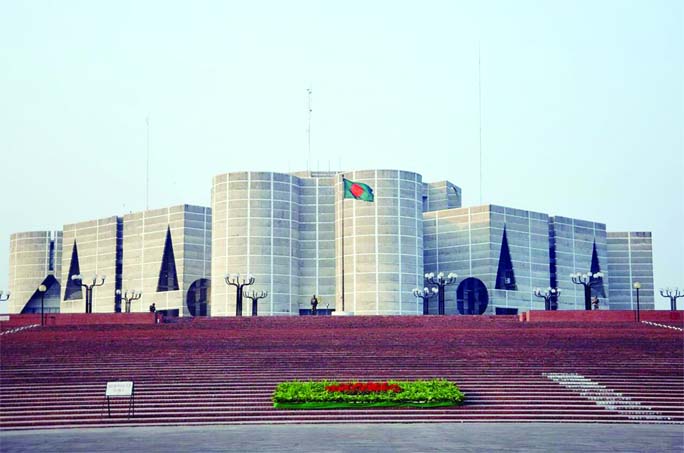
In a decisive electoral verdict that reshapes the country’s political landscape, the Bangladesh Nationalist Party has secured 211 seats in the 300-member Jatiya Sangsad — a commanding supermajority that signals one of the most emphatic mandates in recent parliamentary history.
Crossing the crucial two-thirds threshold of 200 seats, the result provides the BNP not merely with the authority to govern, but with the constitutional strength to initiate structural reforms, amend key provisions, and assert firm legislative control.
In numerical terms, the party now holds more than 70 percent of the national legislature — a scale of victory that comfortably qualifies as a landslide.
A Mandate Beyond Majority
Political observers note that this outcome goes far beyond a routine transfer of power.
With 211 seats, the electorate has delivered a verdict that reflects both a demand for change and a consolidation of support around a singular political alternative.
The scale of the victory suggests that voters were not merely choosing a party, but endorsing a broader political direction.
Analysts point to economic concerns, governance issues, youth employment, and institutional reform as key themes that likely shaped public sentiment.
Constitutional Implications
A two-thirds majority in parliament carries profound implications.
It enables the ruling party to introduce constitutional amendments, restructure oversight mechanisms, and pass high-impact legislation with minimal reliance on opposition cooperation.
However, with such power comes heightened scrutiny.
History shows that supermajorities can either usher in eras of transformative reform or generate debate over checks and balances. Much will depend on how responsibly and inclusively the mandate is exercised.
The Road Ahead
While celebrations mark the immediate aftermath, the governing challenge now begins. Public expectations will be high.
Economic stabilization, institutional confidence, diplomatic positioning, and democratic credibility will define the first phase of governance.
The opposition, though reduced in parliamentary numbers, will likely seek to regroup and redefine its strategy in the wake of this setback.
A Defining Political Moment
The 211-seat victory stands as a defining political moment — one that resets the balance of power and signals a significant shift in voter alignment.
Whether this supermajority translates into lasting reform or simply parliamentary dominance will determine how history judges this election.
For now, one conclusion is clear: the electorate has spoken with unmistakable force.