Business halt amid 13th national elections

Business Report :
Business activities across Bangladesh witnessed significant disruption as the country held its 13th national parliamentary election on Thursday, with financial institutions, cross-border trade, and several commercial operations temporarily suspended to ensure smooth polling and security.
Authorities imposed restrictions on movement and commercial operations ahead of the election, resulting in reduced economic activity nationwide. Financial institutions remained closed on February 11 and 12 as part of election-related measures aimed at preventing irregular transactions and maintaining law and order during the voting period.
Cross-border trade also faced interruptions, with key land ports suspending import-export operations for several days surrounding the election. Officials said such closures were necessary to strengthen security and minimize risks linked to political tensions during the polling process.
Movement restrictions imposed by the Election Commission, including limitations on vehicles, further slowed commercial transport and logistics, affecting supply chains and retail activities in various regions.
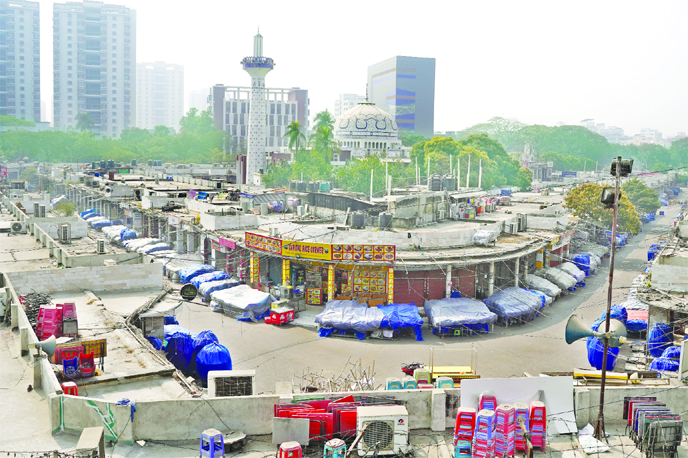
In the capital, usually crowded shopping hubs such as New Market, Gausia Market and surrounding commercial areas appeared largely deserted as government directives led to the temporary closure of markets and shopping centres. Traders kept their shops shuttered, while footfall dropped significantly compared to regular business days.
Several institutions and services temporarily shut down or reduced operations on election day, reflecting broader precautionary measures. Even international service providers, such as visa processing centres, announced closures due to the nationwide vote.
Business leaders noted that while such interruptions are common during major national polls, prolonged political uncertainty has already weighed on key sectors, including manufacturing and exports. Analysts say the outcome of the election could influence investor confidence and economic stability, which are crucial for industries such as ready-made garments that have faced declining exports and market uncertainty in recent months.
Economists expect most election-related disruptions to remain temporary, though short-term impacts on trade, transport, and daily commerce were evident as the country prioritised electoral security and voter participation.