
Weekly Wet Market: Lemons spike early, essentials hold steady before Ramadan
Muhammad Ayub Ali :
The holy month of Ramadan is knocking on the door, in the week before the start of this holy month the prices of most daily necessities have eased—except for lemons and chicken Although consumers usually brace for sharp pre-Ramadan price hikes, this year’s market has remained relatively calm, offering some relief to households ahead of the holy month.
Traders said prices of many essentials typically rise sharply at least a month before Ramadan, but that pattern has not emerged this year.
In fact, prices of several staples have stayed stable or even eased compared to previous years, with typically sensitive items such as sugar, chickpeas and onions remaining within a manageable range.
An early exception has been seen in lemons and cucumbers, which have recorded noticeable price hikes well ahead of Ramadan, even though their prices usually surge on the first day of fasting.
This year, however, the increase has come much earlier, even before the middle of the month.
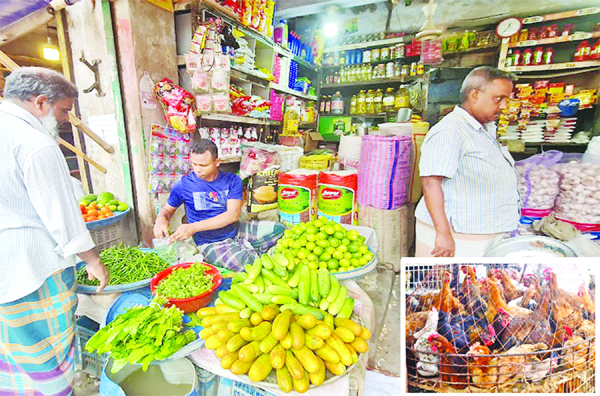
A visit to several capital markets on Friday found lemons selling at Tk60–80 per hali, up from Tk35–40 just a week earlier.
Small lemons, previously priced around Tk20, are now going for Tk30–40. Retailers said prices began rising two days before Shab-e-Barat, fueled by a sudden surge in demand.
A visit to several capital markets on Friday (6 February) found lemons selling at Tk60–80 per hali, up from Tk35–40 just a week earlier. Small lemons, previously priced around Tk20, are now going for Tk30–40. Retailers said prices began rising two days before Shab-e-Barat, fueled by a sudden surge in demand.
Retailers linked the rise in lemon prices to higher demand during Ramadan, when lemon juice is a popular iftar drink. Agriculture department officials noted that domestic production often falls short of meeting this surge, prompting the sale of immature lemons and driving prices up.
Apart from these, most staple items remain steady, with chickpeas at Tk80–100 per kg, Ankor dal at Tk55–60, and large-grain lentils at Tk90–100, all lower than last year’s prices.
The sugar market remains stable, with prices at Tk100–105 per kg, below last month’s Tk100–110 and last year’s Tk120–125.
Onions are another relief for consumers, as the arrival of seasonal varieties has kept prices affordable at Tk40–50 per kg.
Edible oil prices have remained unchanged, with bottled soybean oil selling at Tk190–195 per litre, loose soybean oil at Tk175–185, and palm oil at Tk155–162.
Egg prices have fallen to Tk105–115 per dozen, while broiler chicken has risen to Tk180–190 per kg and golden chicken to Tk320–330 per kg, up from Tk280–300 before Shab-e-Barat.
Overall, although certain items are experiencing price increases, the wider market remains relatively stable compared to previous Ramadans, providing cautious optimism for consumers.