
Tarique to Unveil today: BNP’s manifesto highlighting youths, women and workers
Reza Mahmud :
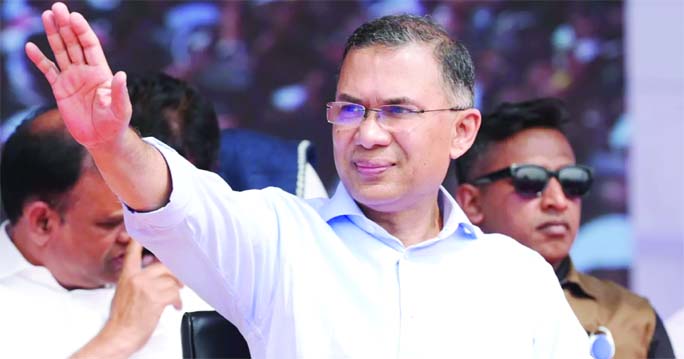
BNP Chairman Tarique Rahman will unveil the party’s election manifesto today prioritising youths, women and workers, sources said.
BNP insiders said the party has prepared its manifesto highlighting its electoral promises including family cards, job creations and women empowerment.
The manifesto is presenting eight major commitments that it says will shape the country’s future if it voted to power.
Ahead of the 13th parliamentary election, BNP Chairman Tarique Rahman is scheduled to formally announce the manifesto at 3:00pm at the Sonargaon Hotel in Dhaka, BNP press wing member Sayrul Kabir Khan.
When contacted, BNP Standing Committee Member Dr. Khandaker Mosharraf Hossain told The New Nation, “You know the youths are the future of the nation. Therefore the BNP has given utmost priorities to the next generation.”
He said, the BNP focus the future job creations, technological education and such others horizones to open for the youths.
Contacted, BNP Chairman’s Advisory Council Member Advocate Sayed Moazzem Hossain Alal told The New Nation, “The BNP focusing women empowerment in its election manifesto as they are the half of the total population.”
Without giving significance to the women no nation could be advanced, Alal said.
Concern sources said, the manifesto places strong emphasis on curbing corruption, ensuring good governance and expanding economic freedom.
The programme will be attended by diplomats, intellectuals, distinguished citizens and representatives from various professional groups.
Party sources said the manifesto has been drafted by integrating BNP’s previously declared 31-point reform agenda, the July Charter, pledges made by Tarique Rahman during election rallies and the party’s latest political directives.
The document prioritises youth, women, farmers and workers, with eradicating corruption, establishing good governance, generating employment and ensuring economic emancipation identified as the party’s principal objectives. Special initiatives aimed at attracting new voters have also been incorporated.
According to insiders, the manifesto’s central focus will be eight priority areas: family cards, farmer cards, social security, employment generation, youth and women’s empowerment, demand-driven education, improved healthcare services and family-oriented policies. These programmes, already disclosed publicly, will receive top priority.
The manifesto will further include commitments to waive agricultural loans of up to Tk 10,000 along with accrued interest, build the Padma Barrage as a response to India’s Farakka Barrage, implement the Teesta mega project and address region-specific challenges nationwide.
Key themes will include restoring democratic governance, rebuilding the electoral system, ensuring judicial independence, decentralising administration, safeguarding human rights and strengthening anti-corruption bodies.
BNP policymakers said the party is determined to return ownership of the state to the people and establish an administration free from partisan control.
Party leaders expressed optimism that the integrated manifesto-based on the 31-point agenda, the July Charter and target-group-oriented pledges-will resonate with public expectations.
Sources said Tarique Rahman personally oversaw the manifesto’s preparation, with the slogan “Bangladesh First” receiving special emphasis.
BNP Standing Committee member Salahuddin Ahmed said the party has already outlined practical programmes to ensure economic freedom for citizens, which will be prominently reflected in the manifesto.
“The BNP manifesto aims to rebuild the collapsed state structure, establish a robust democratic system and strengthen our independence, security and democracy through constitutional reforms, ultimately guaranteeing economic freedom for the people,” he said.
BNP first announced its 31-point reform framework on July 13, 2023, focusing on constitutional, institutional and economic reforms.
The manifesto will elaborate on critical issues such as holding free and fair elections under a non-partisan government, ensuring Election Commission independence, protecting human rights, upholding freedom of expression, ensuring administrative transparency and revitalising the economy.
In line with the July Charter, full autonomy and neutrality of constitutional institutions-including the Election Commission, Human Rights Commission and Anti-Corruption Commission-will be prioritised.
The document will also pledge development of Qawmi madrasahs, establishment of an Islamic research fund, modernisation of religious education and ensuring an environment free from obstacles to religious practice.
It will promise special tribunals to prevent land grabbing from religious and ethnic minorities, security cells, state support during religious festivals and strict measures to curb communal violence.
Targeting young people, BNP has pledged large-scale job creation, including one crore new jobs within the first 18 months in office, along with startup financing, IT skills training, access to new overseas labour markets and the formation of an anti-drug task force.
Agriculture will receive special attention, with commitments to reduce production costs, ensure fair crop prices, simplify loan procedures and guarantee transparent procurement of rice and paddy.
Tarique Rahman has recently said farmers will no longer be compelled to sell their produce at a loss.
The manifesto also includes measures to ensure women’s safety, equal workplace opportunities, dedicated funds for women entrepreneurs, increased maternity benefits and fast-track tribunals to combat violence against women.
BNP has already shared its eight priority social policy sectors with diplomats and development partners.
These sectors include family cards, farmer cards, healthcare, education, sports, environment, employment and welfare-oriented roles for mosque- and madrasa-based religious leaders.
On January 21, BNP highlighted these eight sectors at a policy dissemination event at a hotel in Banani, attended by ambassadors and diplomats from around 30 countries, including the United States, United Kingdom, China, India, Pakistan and Russia.