
Dr Shafique calls citizens to guard ballot boxes
Staff Reporter :
Jamaat-e-Islami Ameer Shafiqur Rahman on Thursday vowed that no form of electoral malpractice would be tolerated in the upcoming national elections, urging citizens to remain vigilant in protecting their votes and ensuring a fair and credible polling process.
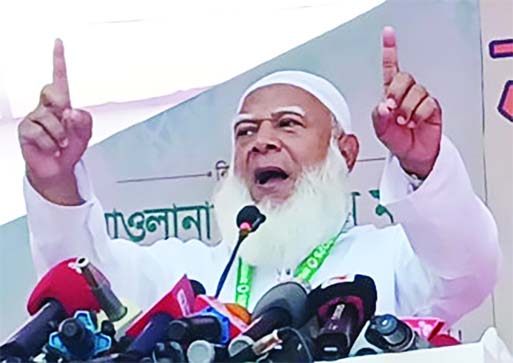
Speaking at an election rally at the historic Madrasa Ground in Rajshahi, Shafiqur Rahman said Jamaat does not seek the victory of any single party, family, or group, but rather what he described as the victory of the entire nation.
“We do not want a partisan government, nor the victory of Jamaat-e-Islami or any family-based administration,” he said.
“What we want is the victory of the 18 crore people of Bangladesh—a victory that belongs to all.”
Calling on supporters to guard polling centres, he warned that electoral irregularities would be firmly resisted.
“No vote robbers, no vote thieves, no vote engineers—no one will be spared this time,” he said, urging party activists to begin monitoring voting centres from now on to ensure a smooth and transparent election.
Failure to do so, he added, would mean “Bangladesh will lose.”
Referring to the upcoming referendum, Shafiqur Rahman framed it as a decisive civic moment. “‘Yes’ means freedom, ‘No’ means slavery,” he said, calling on voters to participate actively.
He also criticised what he described as past exploitation of the public, questioning whether those who had previously held power could be trusted to protect citizens’ dignity and rights if returned to office.
“Those who do not engage in extortion, corruption or harassment are now being labelled oppressors,” he said, urging the public to judge political forces by their actions rather than rhetoric.
Addressing young people and women voters, the Jamaat chief called for calm, patience and engagement in what he described as the struggle to build a “new Bangladesh.”
He pointed to the recent victories of Islami Chhatra Shibir-backed panels in student union elections at several public universities as a sign of growing resistance to authoritarianism.
“Students from five universities have already shown red cards,” he said. “On February 12, similar red cards will be shown against fascism—new or old.”
On economic issues, Shafiqur Rahman raised concerns about the country’s sugar sector, arguing that losses in state-run sugar mills were the result of corruption and mismanagement rather than agricultural shortcomings.
He also outlined Jamaat’s broader political vision, saying the party’s 11-party alliance is committed to unity and reform.
He claimed that none of the alliance’s candidates were involved in bank looting, extortion, loan defaults or abuse of power, and said politics in Bangladesh must move away from dynastic rule toward merit and competence.
“Politics in this country will no longer be hereditary,” he said. “Leadership will be based on merit, qualifications and proof of patriotism.”
On governance and foreign policy, he said a future Bangladesh should reject domination and uphold relationships with neighbouring and global partners based on equality and mutual respect. “We want to stand with our heads held high,” he said.
Shafiqur Rahman also outlined proposals on health and social welfare, pledging free healthcare for children up to the age of five and for senior citizens, alongside the establishment of medical colleges and specialised hospitals in every division and district, including dedicated facilities for workers.
Referring specifically to Rajshahi, he acknowledged longstanding local problems and promised to revive stalled projects, including upgrading the existing dental unit into a full dental college.
On the justice system, the Jamaat Ameer called for strict equality before the law, saying the same punishment should apply to ordinary citizens and the highest office-holders alike. “When justice is established, people will regain their rights in every sphere,” he said.
Describing the February 12 election as a turning point, Shafiqur Rahman said it was not an ordinary contest but a vote to change the course of the nation.
“This election has come at the cost of much blood,” he said. “We want a Bangladesh where children, women, workers and the elderly are safe, respected and empowered—a truly new Bangladesh.”