
Prioritising real estate sector imperative for economy
Staff Reporter :
Experts consider the real estate and construction sector to be one of the principal engines driving the urban economy.
According to them, after agriculture, housing and construction constitute one of the country’s largest labor markets—providing livelihoods to millions of people, ranging from architects and engineers to masons, painters, electricians, and other workers.
The sector plays an indispensable role in reducing urban unemployment, generating income flows, and keeping overall urban activities vibrant. Experts shared these opinions while talking with journalists yesterday.
They said how prosperous, well-planned, and livable a city becomes depends largely on the pace and quality of housing and infrastructure development.
The real estate sector is linked with more than two hundred (approximately 230–260+) backward and forward linkage industries.
The construction of a high-rise building alone creates demand for cement, steel rods, bricks, sand, stone, tiles, glass, aluminum, paint, sanitary ware, and electrical materials—stimulating numerous sub-sectors. At the same time, as new residential areas emerge, roads, schools, colleges, hospitals, shopping malls, and service ecosystems expand alongside them, indirectly improving civic amenities and overall quality of life. Simply put, if the real estate sector becomes stagnant, there is a risk of a downturn in the urban economy—because the sector does not merely meet housing demand; it keeps the wheels of many industries and services turning.
However, the sector is not free from controversy. The dominance of broker syndicates in land and apartment transactions, prolonged registration and transfer processes, customer harassment, and fraud have all raised concerns.
In this context, stakeholders believe it is essential to clearly define short-term and long-term policy perspectives to make the sector more effective and sustainable.
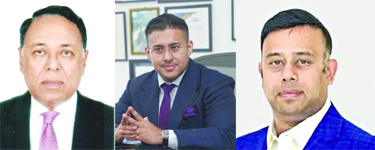
Recently, former FBCCI President Mir Nasir Hossain, Sakif Shamim, and Chairman of Policy Exchange of Bangladesh Dr. Masrur Riaz shared their views with the media on this issue.
Mir Nasir Hossain describes the real estate and construction sector as a linkage industry—or the “mother of industries.”
According to him, when this sector slows down, hundreds of sub-sectors—including cement, steel, glass, and furniture—are adversely affected. In Bangladesh, the private sector plays the primary role in addressing housing needs.
Sakif Shamim stated that Bangladesh’s real estate and housing sector contributes approximately 7–8 percent to GDP, both directly and indirectly.
He noted that more than 230 backward and forward linkage industries are connected to this sector—including cement, steel rods, bricks, glass, sanitary products, electrical goods, furniture, banking, and insurance. He further pointed out that Bangladesh is one of the world’s fastest urbanizing countries; according to United Nations estimates, nearly 50 percent of the population will live in urban areas by 2030.
Ensuring housing, workplaces, commercial spaces, transportation, and utility support for such a vast population is difficult for the state alone.
Therefore, the real estate sector can effectively function as a de facto urban planning partner. In cities like Dhaka, most residential and commercial buildings have been developed by private developers, energizing urban economic activity.
In his view, sectoral development requires a stable and forward-looking policy framework that simultaneously ensures investor confidence, consumer protection, and planned urban growth.
Dr. Masrur Riaz views the real estate sector as a crucial pillar of the country’s macroeconomy. He believes that growth in this sector directly influences the growth of many sub-sectors such as cement, steel, and construction materials; thus, a slowdown in housing translates into negative shocks across the entire industrial supply chain. One of the sector’s major problems, he said, is the lack of long-term financing. Without 15–20-year mortgage facilities, it is difficult for middle-income families to purchase apartments.
Experts argue that in Bangladesh, real estate is often narrowly viewed as merely the business of buying and selling apartments; in reality, it is a multi-dimensional sector—directly linked to urbanization, employment, financial markets, infrastructure development, and overall GDP growth. It also reshapes urban economic behavior. A new residential project leads to the expansion of nearby shops, schools, clinics, transport, and service industries; similarly, the development of commercial buildings creates office culture, service-sector jobs, and corporate ecosystems. As a result, real estate effectively functions as a local economic multiplier.
Challenges, however, remain significant. Unplanned urbanization, encroachment on wetlands, traffic congestion, and infrastructure strain are attributed to weak zoning, regulatory violations, and implementation gaps.
Stakeholders warn that if the Detailed Area Plan (DAP) of the Capital Development Authority (RAJUK) is not properly implemented, the real estate sector could become a burden rather than a support to the urban economy. Strong regulation, transparency, and responsible development are therefore essential.
From a policy perspective, in the short term, the government and policymakers should aim to keep construction and investment activities dynamic—by simplifying approval processes, reducing registration and transfer complexities, establishing rational tax and fee structures, and ensuring adequate liquidity support for home loans and construction financing. This would boost investment and employment, restore market confidence, and have a positive short-term impact on the overall economy.
In the long term, a stable and forward-looking policy framework is required—one aligned with long-term urban planning, effective implementation of zoning policies, special incentives for rental-based and affordable housing, policy support for mixed-use development, and encouragement of green and energy-efficient buildings. At the same time, expanding effective private-sector participation in public-private partnerships (PPP) and redevelopment-based urban projects would reduce pressure on the government and advance planned urbanization in a practical manner.
Overall, experts believe that the real estate sector shapes the structure of the urban economy, creates employment, keeps numerous linkage industries active, is deeply connected to the financial sector, and plays a major role in determining the future of cities. With the right policy support, responsible development, and effective regulation, this sector can become the primary driving force behind Bangladesh’s smart, inclusive, and sustainable urbanization.