Breakdown in cricket relations with Bangladesh rings alarm bells for India’s Olympic bid
Agency :
Bangladesh’s withdrawal from the men’s T20 World Cup could have implications for India’s 2036 Olympic bid amid concern at the International Olympic Committee (IOC) over the potential politicisation of sport.
Bangladesh pulled out of next month’s tournament last weekend after the International Cricket Council (ICC) declined a request to move their group matches from India to the co-hosts Sri Lanka, after a long-running political row triggered by Kolkata Knight Riders’ decision to remove the Bangladeshi bowler Mustafizur Rahman from their Indian Premier League squad.
Relations between the two countries have worsened significantly over the past month since the death of a Hindu man in northern Bangladesh, which has led to violent street clashes, with Kolkata saying they acted on instructions from the Board of Control for Cricket in India (BCCI). Pakistan are also reported to be considering boycotting the T20 World Cup in an act of solidarity with Bangladesh, with a final decision expected this weekend.
Although the decision to insist that Bangladesh, who have been replaced in the tournament by Scotland, remain in India was taken by the ICC, the BCCI is understood to have lobbied the ICC not to allow the switch. While the ICC says its governance is independent, it has a history of taking decisions that favour the BCCI, such as giving India a guaranteed semi-final in Guyana at the T20 World Cup in 2024 for broadcasting and financial reasons.
The BBCI is hugely influential at ICC level and has close links to the Indian government. The ICC chair, Jay Shah, was formerly secretary of the BCCI and his father, Amit Shah, is minister of home affairs in Narendra Modi’s government.
The ICC’s chief executive is Sanjog Gupta, who was previously the chief executive of sport and live experiences at JioStar, the media conglomerate that has exclusive TV rights in India for all ICC events.
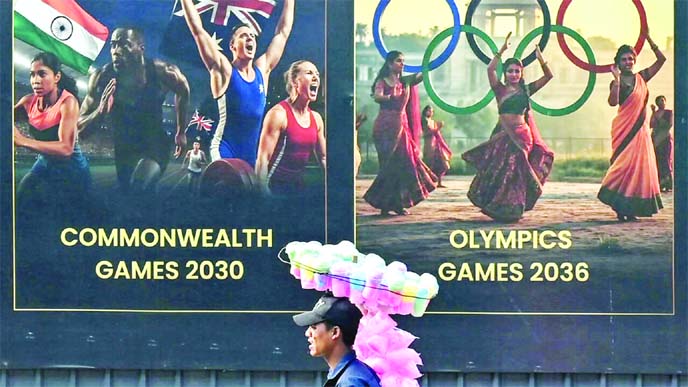
The political row has come at a bad time for India, which, after being confirmed last month as host of the 2030 Commonwealth Games in Delhi, is bidding to host the 2036 Olympics in Ahmedabad, with Qatar seen as its biggest rival.
The IOC’s tolerance of political interference is far less than that of the ICC, however, with one source saying that it is unthinkable that India would be awarded the Games if there was a danger of other countries boycotting as a result.
The Olympic Charter mandates that sports organisations must operate independently, controlling their own rules and governance, free from outside political influence, while Rule 50.2 explicitly prohibits expressions of political or religious opinions at the Games.
The IOC’s zero-tolerance approach was illustrated most recently last October when Indonesia was suspended from having any dialogue over hosting future Olympic events as a sanction for refusing to grant visas to the Israeli team for the World Artistic Gymnastic championships in Jakarta. Indonesia had also been in the race to host 2036 before falling at the first hurdle.