
Bangladesh’s Upcoming Referendum and the Moral Test of Democracy
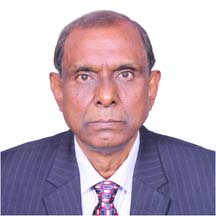
Prof. Golam Rasul, PhD :
Bangladesh stands at a historic crossroads. The referendum of 12 February 2026 is more than a constitutional amendment—it is a test of the nation’s democratic conscience.
At stake is not only a legal provision, but the moral identity of the state, the legacy of the Liberation War, and the meaning of equal citizenship.
The proposal to remove secularism from the Constitution’s fundamental principles forces a deeper question: what are the limits of democratic choice? If democracy is reduced to the will of the numerical majority alone, it risks hollowing out its own ethical foundation. International experience underscores this danger.
In the UK’s Brexit referendum, the preferences of Scotland and Northern Ireland were overridden by an England-centric majority.
In Canada’s Quebec referendums, cultural and linguistic divides revealed how majority decisions can deepen political fractures rather than resolve them.
These cases demonstrate a core democratic insight: majority rule is necessary, but not sufficient.
Democracy derives its legitimacy not only from numbers, but from its moral capacity to protect equal dignity, security, and rights—especially for minorities.
When democratic procedures undermine those protections, they may remain procedurally valid but lose moral legitimacy.
Political theory has long warned of the “tyranny of the majority,” a recurring reality in South Asia.
Democratic backsliding in Hungary and Turkey shows how majoritarian passions erode constitutional safeguards.
Bangladesh’s referendum poses the same test: will democracy rest on moral restraint or unchecked numbers?
The answer lies in how the referendum is structured, for process design determines whether democracy’s promise can be upheld.
Framing of the Referendum
While referendums are often seen as the highest expression of popular sovereignty, their democratic quality depends critically on their design.
The proposed structure of Bangladesh’s referendum raises serious concerns. Multiple fundamental constitutional changes are bundled into a single question, forcing voters to accept or reject them wholesale.
This denies citizens the ability to express differentiated preferences—supporting one reform while opposing another—and thus constrains genuine democratic choice.
In democratic theory, this violates the principle that voters must be able to express a free and informed choice on each distinct constitutional issue.
The process itself has also lacked inclusiveness. Of Bangladesh’s 52 registered political parties, only 25 endorsed the July Charter.
Among the 50 representatives involved, there was not a single woman and only one minority representative.
Such exclusion undermines the Charter’s claim ton represent the national consensus and reinforces the perception that decisions about secularism are being made without those most affected by its removal.
More troubling still is the complete omission of the term “secularism” from the referendum question itself.
A number of political parties opposed the removal of secularism from the constitution during the national consensus-building process, while a few parties supported the idea of putting secularism to a referendum.
The principle that has generated the deepest moral, political, and existential debate in the country is excluded from explicit public consideration.
This omission undermines transparency and violates the principle of informed consent.
Freedom of Religion vs. Secularism
The July Charter’s replacement of secularism with freedom of religion compounds the problem. While the two concepts are not inherently opposed, they are not interchangeable.
Freedom of religion protects individual belief and worship, but it is sustainable only when the state remains neutral among religions.
Religious freedom protects individual belief; secularism protects civic equality. Without secularism as a constitutional anchor, religious freedom risks becoming uneven—protecting the majority while leaving minorities exposed.
Consider this distinction in practice: a state may guarantee “freedom of religion,” yet if it privileges the majority faith in public institutions—such as mandating religious education or favoring one religion in state ceremonies—minorities are left with nominal freedom but diminished equality.
In such cases, religious freedom exists in form but not in substance, because neutrality is absent.
Global experience confirms this fragility. As John Locke noted, religious freedom is hollow if the state privileges one faith, leaving minorities unprotected.
Charles Taylor likewise shows that secularism is not anti-religious but a framework of fairness, ensuring equal freedom for all. Without such neutrality, freedom risks becoming the majority’s prerogative alone.
The Charter’s drafting process also revealed a lack of inclusiveness. Of Bangladesh’s 52 registered political parties, only 25 signed it. With two representatives from each, a total of 50 representatives signed the Charter.
Among the 50 representatives involved, there was not a single woman and only one minority representative. This composition reveals not merely an oversight, but a structural exclusion.
The most serious flaw lies in the government’s failure to meaningfully engage minority communities on the question of secularism.
No formal consultations were held to hear their concerns, and their perspectives are conspicuously absent from the July Charter.
In the absence of institutional mechanisms to register and reflect minority views independently, the referendum process cannot be regarded as inclusive.
International standards for referendums, including widely accepted principles articulated by bodies such as the Venice Commission, emphasize that democratic legitimacy rests on transparency, inclusiveness, and fairness.
Most critically, when changes to a constitution’s foundational principles are proposed, democratic validity depends on securing the informed consent of all citizens—particularly those whose rights and security are most directly affected.
The 1971 Liberation War rejected religion-based statehood and gave birth to a constitution grounded in equality and pluralism. Secularism was its ethical cornerstone.
Pakistan’s denial of linguistic, cultural, and political rights to East Bengal’s population produced a constitutional vision grounded in equality and pluralism.
Accordingly, the 1972 Constitution enshrined democracy, nationalism, socialism, and secularism as the state’s foundational principles.
Together, these perspectives converge on a single principle: democracy is not merely procedural; it is moral. Secularism is the constitutional articulation of that moral commitment.
Secularism and Democratic Risk
Bangladesh, though Muslim majority, has historically significant Hindu, Buddhist, Christian, and Indigenous minorities.
Removing secularism would create a profound democratic dilemma, as it is the constitutional safeguard against majoritarian dominance and structural exclusion.
South Asian experience shows the risks of privileging religion in constitutions. Sri Lanka’s special status for Buddhism, coupled with nationalism, marginalized minorities and fueled decades of conflict, damaging tourism, investment, and fiscal stability.
Pakistan’s religious state identity narrowed citizenship, entrenched discrimination, and weakened accountability, producing recurring instability and economic uncertainty. Globally, religious exclusion heightens political risk, erodes investor confidence, and harms reputation.
Yet the region also offers positive lessons. Nepal’s post conflict reforms introduced proportional representation, requiring parties to include minorities in their lists.
This turned symbolic inclusion into genuine participation, strengthening democracy’s inclusiveness.
Conclusion
Bangladesh’s referendum is a defining moral test. Its outcome will show whether democracy is reduced to the tyranny of numbers or upheld as justice, equality, and inclusion.
Comparative experience warns that majoritarianism corrodes democracy, while Nepal proves that design can deepen inclusion.
Bangladesh must decide whether democracy will be defined by numbers alone—or by justice, equality, and inclusion. A referendum may grant procedural legitimacy, but democracy’s durability rests on moral legitimacy.
Preserving secularism is not simply a political choice—it is the fulfillment of the Liberation War’s promise and vision—ensuring that all citizens, regardless of faith, share equal dignity.
Without inclusiveness and dialogue, democracy may pass the vote but fail its test. At minimum, democratic compliance requires that constitutional referendums meet three tests: clarity of question, inclusiveness of process, and protection of those most vulnerable to the outcome.
The referendum will define not only the future of the Constitution, but whether Bangladesh’s democracy is governed by justice—or by numbers alone.
(The author is Professor, Department of Economics, International University of Business Agriculture and Technology (IUBAT), Dhaka Email: [email protected])