
‘Fair polls alone not enough for democratic transition’
Staff Reporter:
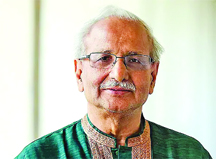
A free, fair and acceptable election is a necessary condition for Bangladesh’s democratic transition, but it is not sufficient on its own, Sushasoner Jonno Nagorik (SUJON) Secretary and Chief Executive Badiul Alam Majumdar said on Sunday, stressing that deep legal, institutional and structural reforms are essential to make democracy sustainable.
He made the remarks while speaking as chief guest at a dialogue in Sylhet on the aspirations of the July Uprising, state reform and election manifestos, organised by Sylhet district SUJON.
Badiul said that although authoritarian rule ended through the student- and public-led uprising in July,
the struggle to establish a truly democratic system is far from over.
“Authoritarianism may have fallen, but democracy has not yet been institutionalised,” he said, adding that purifying the electoral system, ensuring accountability for human rights violations and undertaking comprehensive state reforms are central to building an equitable and just society — the core aspirations of the uprising.
In his address, Badiul identified what he described as seven major obstacles to establishing a credible electoral system. These include the criminalisation of politics, the undue influence of money in elections, the dysfunction of the Election Commission, the weakening of civil society, bias within election-time administrations, and excessive centralisation of power.
Without overcoming these barriers, he warned, elections alone would not be able to guarantee democratic governance or protect citizens’ rights.
Leaders from SUJON’s district units in Sylhet, Sunamganj, Habiganj, Moulvibazar and Brahmanbaria also spoke at the dialogue, echoing calls for meaningful reforms and broader public engagement in shaping post-uprising state restructuring.
The discussion focused on aligning political parties’ election manifestos with the goals of the July Uprising, particularly the demand for accountable governance, institutional independence and the rule of law.