
No Service, No Bill: Tasnim Jara
Staff Reporter :
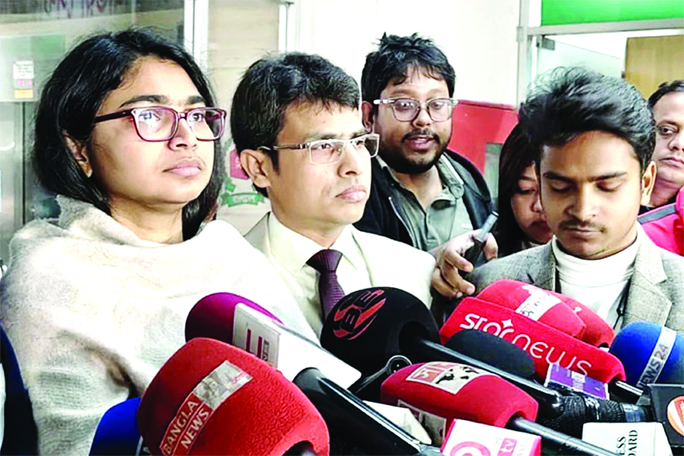
Independent candidate Dr Tasnim Jara has released an extensive election manifesto for Dhaka-9 ahead of the 2026 general election, promising sweeping reforms in public services, healthcare, safety, education and political accountability.
Contesting with the football symbol, Jara has positioned herself as a non-traditional politician and a local resident determined to end what she describes as years of neglect of the constituency.
Speaking through her six-point manifesto, Jara argued that residents of Dhaka-9 pay the same taxes and utility bills as affluent areas such as Gulshan and Banani but receive far inferior services.
Jara described herself “I am not a migratory bird. I am the daughter of your residence.”
She accused successive representatives of treating the area as a source of revenue rather than a community with equal rights, saying politicians appear during election campaigns and disappear afterwards.
On basic services, Jara pledged to prioritise gas supply, roads and drainage, criticising the practice of charging residents full gas bills despite frequent shortages.
She said her first move in parliament would be to push for a “No Service, No Bill” policy, under which utility companies would be barred from collecting fees if they fail to deliver services.
She also vowed to challenge LPG price syndicates by pressing the government to ensure fair-priced alternatives in areas without reliable pipeline gas, while promising stricter oversight of drainage, waste management and road repairs to address waterlogging, filth and prolonged construction works.
Healthcare features prominently in her platform, with Jara highlighting the pressure on Mugda Medical College Hospital, the only major public hospital serving an estimated 700,000 to 800,000 people in the constituency.
A medical doctor herself, she pledged to push for more staff, functional modern equipment and stronger accountability at the hospital.
She also proposed upgrading community clinics into “mini-hospitals” to reduce pressure on tertiary facilities and announced plans for a year-round dengue control taskforce.
Women’s health, including affordable maternity care and breastfeeding facilities, was identified as a key priority.
On public safety, Jara warned that drug syndicates have taken over neighbourhood streets, making women feel unsafe after dark.
She promised to introduce “safe corridors” with CCTV cameras and high-powered street lighting around schools, colleges and garment factory routes, and vowed zero tolerance for drug traffickers while supporting treatment and rehabilitation for addicts.
She also said she would work with transport owners and authorities to ensure reserved seating and safer travel conditions for women on public buses.
In education, the candidate criticised frequent curriculum changes and alleged corruption in school admissions, claiming that money and recommendations often determine access to quality institutions.
She pledged that, if elected, there would be no MP quotas or recommendations in school admissions and said she would fight “admission trade” strictly.
She said she would advocate higher pay and dignity for teachers and stronger mechanisms to prevent bullying, including active parent-teacher forums.
Addressing livelihoods and the local economy, Jara pointed to widespread youth unemployment and the lack of capital for small entrepreneurs.
She proposed a “Start-up Dhaka-9” seed fund from her discretionary allocation to support young entrepreneurs with easier, collateral-free financing, and said she would push banks to improve access to credit.
She also pledged to establish subsidised community daycare centres in every ward to support working mothers, advocate fair wages and legal protection for informal workers, and expand e-commerce training and online market access for local businesses.
She urged residents to support her in the upcoming election to secure equal rights to gas, water and public services, and to build a drug- and violence-free Dhaka-9.