
Rooppur project saves BDT 1.66B in government funding
Pabna Correspondent :
Although the cost of the Rooppur Nuclear Power Plant construction project has been revised due to the increase in the US dollar exchange rate and the global economic situation, Bangladesh has achieved savings of approximately BDT 1.66 billion (166 crore taka) in the Government of Bangladesh (GoB) funding component.
According to project-related sources, the Rooppur Nuclear Power Plant construction project, implemented by the Bangladesh Atomic Energy Commission under the Ministry of Science and Technology, was approved at an ECNEC meeting on 6 December 2016. At that time, the total project cost was fixed at BDT 113,092 crore, with the project duration scheduled up to December 2025. However, considering the realities of implementing a long-term project, the first revised Development Project Proposal (DPP) has proposed extending the project duration up to June 2028.
When contacted in this regard, Saikat Ahmed, Senior Information Officer of the Rooppur Nuclear Power Plant Project, said that the work of revising the DPP is currently underway.
According to the revised proposal, the project’s total estimated cost now stands at BDT 138,685 crore. Although the overall cost has increased, a notable aspect is that expenditure under the GoB component has decreased by BDT 166 crore, thereby slightly reducing the government’s direct pressure on the national budget.
At the time of project approval, the exchange rate was calculated at BDT 80 per US dollar. Over the past nine years, the dollar rate has increased to approximately BDT 122.40, causing the local currency value of the foreign loan component to rise and, consequently, increasing the overall project cost. In this context, expenditures under various heads have been restructured in the revised DPP.
Under the revised proposal, expenditures have been increased in 34 sectors, while allocations have been reduced in 49 sectors. Significant savings have been achieved through reductions in manpower costs, land acquisition compensation, electricity bills, and consultancy services.
In addition, 10 new sectors have been incorporated to meet emerging needs based on project implementation experience.
To ensure long-term operation, discussions are ongoing regarding Operation and Maintenance (O&M) service contracts and spare parts supply agreements. Furthermore, under intergovernmental agreements, the revised proposal includes plans to complete unfinished buildings in the Green City residential area to accommodate foreign personnel of the Russian contractor, as well as to construct necessary facilities on approximately 6.06 acres of newly acquired land.
Considering the impact of the COVID-19 pandemic, the Russia-Ukraine war, global supply chain disruptions, and actual project progress, the Joint Coordination Committee (JCC) recommended extending the loan agreement period. As a result, the provisional takeover deadline for Unit-2 of the power plant has been set for December 2027.
Sources from the Planning Commission noted that using the same VVER-1200 technology, the cost of constructing two nuclear power units in Hungary was about USD 13.2 billion, four units in Egypt cost USD 30 billion, four Russian-owned units in Turkey cost USD 20 billion, and two units in Belarus cost USD 11 billion. Compared to these projects, the Commission believes that the construction cost of the Rooppur Nuclear Power Plant is internationally competitive and reasonable.
On the other hand, in India’s Kudankulam Nuclear Power Plant, the supply of equipment alone for the fifth and sixth units using VVER-1000 technology cost approximately USD 6.7 billion. Officials stated that due to India’s prior experience in nuclear power, trained manpower, and existing infrastructure, project implementation there was possible at relatively lower costs.
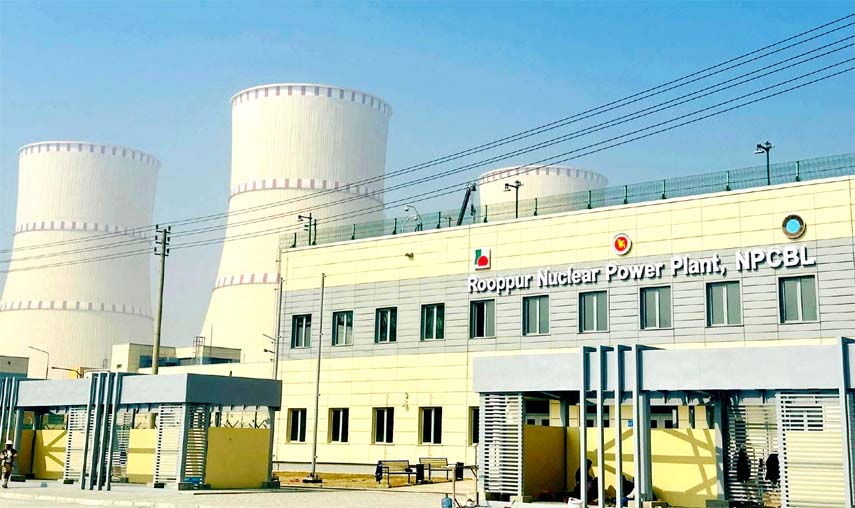
It is worth mentioning that the commissioning activities of Unit-1 of the Rooppur Nuclear Power Plant are currently at the final stage, marking a significant milestone on Bangladesh’s path toward its first-ever nuclear power generation. Once both units are operational, the power plant will add a total of 2,400 megawatts of electricity to the national grid.