
Bangladesh’s strategic alliances with China, Turkey, and Pakistan
Dr. Nasim Ahmed :
In an increasingly multipolar world, strategic alliances have become vital for middle and emerging powers to boost their influence, security, and economic stability. For Bangladesh, building robust, practical alliances is crucial for navigating regional rivalry and global economic uncertainty.
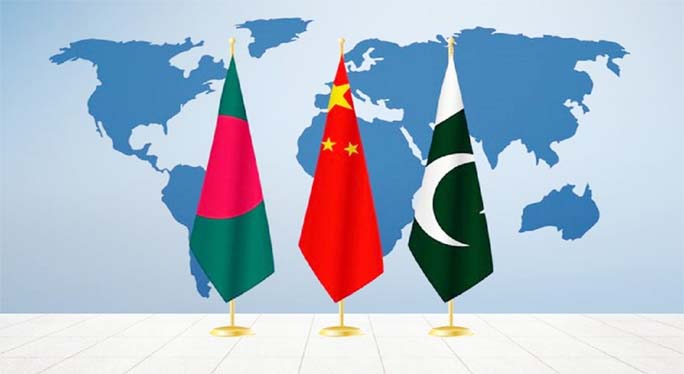
Partnerships with China, Turkey, and Pakistan can collectively strengthen Bangladesh’s regional standing, improve national security, and increase its influence in global economic and diplomatic spheres. When managed carefully within Bangladesh’s longstanding principle of “friendship to all, malice to none,” these alliances can support rather than conflict with its broader foreign policy goals.
Regional power is not solely determined by military strength; it also stems from economic connectivity, diplomatic networks, and strategic relevance. China, Turkey, and Pakistan each offer Bangladesh distinct avenues to enhance its regional standing. China’s role as a major economic and infrastructure partner significantly enhances Bangladesh’s regional influence.
Improved infrastructure strengthens Bangladesh’s position as a logistical and commercial hub linking South Asia, the Bay of Bengal, and the broader Indo-Pacific region. This connectivity enhances Bangladesh’s bargaining power in regional forums and reinforces its importance to neighboring economies.
Turkey offers Bangladesh a bridge to West Asia and Europe. Turkey’s expanding diplomatic footprint, together with its experience as a middle power balancing relations between Western and non-Western blocs, provides Bangladesh with valuable diplomatic leverage. Cooperation in education, cultural exchange, and defense diplomacy enhances Bangladesh’s soft power and visibility beyond South Asia.
As a South Asian country, Pakistan offers Bangladesh an additional regional diplomatic partner. Despite historical sensitivities, pragmatic engagement with Pakistan can contribute to South Asian pluralism and reduce overreliance on any single regional actor. Such diversification strengthens Bangladesh’s autonomy and strategic flexibility in regional affairs.
In the contemporary context, national security extends beyond traditional military defense to include economic security, energy security, technological resilience, and strategic autonomy. Alliances with China, Turkey, and Pakistan can strengthen Bangladesh’s security architecture across multiple dimensions.
China is a major defense supplier and technological partner for Bangladesh. Cooperation in defense modernization, surveillance technologies, and cybersecurity strengthens Bangladesh’s ability to protect its sovereignty and maritime interests in the Bay of Bengal. Chinese support for capacity building and diversification of military hardware reduces dependence on a limited set of suppliers, thereby increasing strategic autonomy.
Turkey’s rapidly developing defense industry presents Bangladesh with opportunities for technology transfer, joint production, and training. Turkish expertise in drones, naval systems, and defense electronics can strengthen Bangladesh’s deterrence capabilities while also contributing to domestic defense-industrial development. Beyond military aspects, Turkey’s experience in counterterrorism and disaster management can support Bangladesh’s internal security and resilience.
Pakistan contributes through military training, intelligence sharing, and experience in counterinsurgency and peacekeeping operations. Bangladesh’s armed forces have long participated in UN peacekeeping missions, and cooperation with Pakistan can further enhance professional capacity and international credibility. Such collaboration reinforces Bangladesh’s image as a responsible contributor to global and regional security.
In the global economic arena, alliances enable smaller and middle economies to amplify their voices, negotiate better terms, and diversify economic risks. Bangladesh’s partnerships with China, Turkey, and Pakistan can significantly enhance its global economic leverage.
China is Bangladesh’s largest trading partner and a key source of foreign direct investment. By aligning its industrialization goals with Chinese manufacturing networks, Bangladesh can move up global value chains, especially in textiles, electronics, and light engineering. Participation in China-led economic initiatives enhances Bangladesh’s access to capital, technology, and export markets, strengthening its negotiating position in global trade discussions.
Turkey offers Bangladesh access to diversified export markets and investment opportunities, particularly in textiles, pharmaceuticals, construction, and defense-related manufacturing. Turkish firms’ experience in global markets can help Bangladeshi industries improve quality standards and competitiveness. Moreover, cooperation with Turkey strengthens Bangladesh’s engagement with emerging economies and reduces excessive dependence on traditional Western markets.
Economic cooperation with Pakistan, though currently limited, can be expanded through preferential trade arrangements, logistics cooperation, and joint ventures in agriculture, pharmaceuticals, and services. Strengthening South-South trade enhances Bangladesh’s resilience against global economic shocks and supply chain disruptions.
Collectively, these alliances allow Bangladesh to coordinate positions on global economic governance issues such as development finance, climate change funding, debt sustainability, and trade equity. Acting in concert with like-minded countries increases Bangladesh’s bargaining power in international institutions and multilateral negotiations.
While alliances with China, Turkey, and Pakistan offer substantial benefits, their effectiveness depends on careful diplomatic balancing. Bangladesh must ensure that these partnerships complement its relations with other major powers, including Japan, the European Union, and the United States. Strategic autonomy, not alignment with any single bloc, should remain the guiding principle.
By pursuing issue-based cooperation rather than exclusive alliances, Bangladesh can extract economic and security benefits while minimizing geopolitical risks. Transparent diplomacy, regional confidence-building, and adherence to international norms will be critical in sustaining these relationships without provoking strategic tensions.
Together, these partnerships can support Bangladesh’s ambition to emerge as a confident, resilient, and influential middle power. The ultimate success of these alliances, however, will depend on Bangladesh’s ability to balance interests, preserve strategic autonomy, and align foreign partnerships with its long-term national development goals.
(The author holds a PhD in Public Policy from Ulster University in the UK and works as Associate Professor of Public Policy at the Bangladesh Institute of Governance and Management (affiliated with the University of Dhaka). Email: [email protected])