The Conflict in Eastern DR Congo and Impact on Regional Security

Dilshad Ahmed :
An overview of the genesis of the conflict
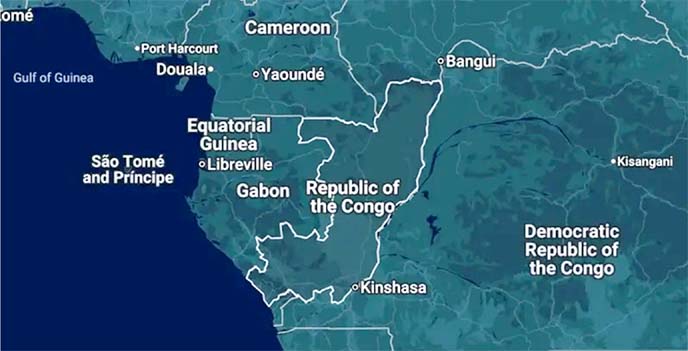
The East of DR Congo suffers from internal conflict that has ultimately led to dangerous ethnic marginalization and discrimination with potential violent and massive killings against the Congolese Tutsi population.
In 1994 when the genocidal government of Rwanda was defeated by Rwanda Patriotic Front, the armed forces and Interahamwe militia that committed the genocide in Rwanda fled to Eastern DRC with their arsenal untouched and entire government logistics.
The then Government of Zaïre never bothered to disarm the newcomers armed with full state weaponry nor take a decision to abide by the international law to accommodate them far from Rwanda’s borders.
The fighters, the militia that had killed more than a million Rwandan Tutsi in only three months, millions of the population taken as hostages by the killers, fled to DRC a few meters from Rwanda’s borders.
From there they started launching deadly incursions into Rwanda to disturb the newly liberated country and continue their bloody actions, kill the survivors and terrorize the rest of the population.Meanwhile, those who fled to Tanzania in the East part of Rwanda were disarmed by Tanzanian government and were taken far from Rwanda’s borders.
There was no adverse impact from the Tanzanian side. When in Eastern DRC, the Rwandan refugees with bloody hands exported their ethnic cleansing on the new territory in Congo.Having the same community composition like Rwanda in 1994, the Eastern DRC has also Hutu and Tutsi.
The Rwandan killers known as Interahamwe started to target the Congolese Tutsi calling them the siblings of the Rwandan Tutsi they had preyed on few months, weeks before. The idea was to empty the Eastern DRC of Tutsi community by killing and sending them to Rwanda, and ultimately occupy the victims’ lands and property.
An ignored refugees fate, frustration and rebellion
The Congolese refugees fled the Interahamwe and former Rwandan army killers in early 1996. Their fate and grievances have not been addressed by the international community.
Frustration and continued silence of the United Nations have disappointed the refugees who have resorted to forming armed rebellion to claim forcefully their rights.Successive governments of the DRC have not solved the problem of many refugees scattered in the Great Lakes Region and beyond.
On the contrary, governments sought responses for a wrong problem. Tutsi refugees were always being labelled as Banyarwanda, because of their facies and Kinyarwanda language.
Therefore, for governments and extremist elements of the civil society mainly, contaminated by ideologues of genocide from Rwandan genocide perpetrators, the Congolese Tutsi refugees must stay in Rwanda as their country. Surprisingly, the hutu refugees are tolerated and allowed to stay on DR Congolese land.
The armed fronts that have advocated for the refugees cause have chronologically morphed into different acronyms: AFDL (Alliance des Forces Démocratiques Pour la Libération du Congo/The Alliance of Democratic Forces for the Liberation of Congo), CNDP (Conseil National pour la Défense du Peuple/National Congress for the Defence of the People) and M23 (Mouvement du 23 Mars 2012).
The big portion of soldiers of the M23 were pushed into Uganda in 2012 by MONUSCO’s Force Intervention Brigade (FIB), and another small number exiled in Rwanda. The peace accord between Government and the former CNDP was never honored by the government side, calling for further hostilities between the belligerents.
The M23 rebel group was joined by Congolese politicians who fell apart with Kinshasa regime or President TshisekediTshilombo. Mr. NangaaYobeluo, former Chairman of the Congolese Election Committee, separated with Tshisekedi and formed Alliance Fleuve Congo (AFC) that became the fighting umbrella of the rebel groups in the Eastern DRC, namely M23 and MRDP Twirwaneho in south Kivu, a group of marginalized Tutsi Banyamulenge who have been facing extinction threats by local militias supported by Kinshasa government and now the Burundi armed forces Forces de Defense Nationale du Burundi (FDNB).
Tshisekedi wants war, refutes political solution
DRC President Felix Tshisekedi has long denied that M23 is a real ground adversary, and insisted that he would talk to Rwanda, not to the AFC-M23. He maintains that AFC-M23 is a proxy of Rwanda.
The more the Kinshasa regime presents to its population a wrong enemy, the more Rwanda has always called for peace For Rwanda, the Washington Accords for Peace and Prosperity and the Doha Framework represent the most viable paths toward lasting peace, stability, and prosperity in the Great Lakes Region.
Hence, another additional agreement is considered unnecessary. What is lacking is a political will and good faith from the DRC Government to implement the mentioned agreements.
Specifically on this matter, the President of Rwanda H. E. Paul Kagame stated in Washington, that: “Rwanda will not be found wanting. We are ready to play our part and to uphold our commitments — provided all parties abide by theirs. Rwanda carries its own burden and will not accept to carry the burden of the DRC or Burundi.
We therefore call on the international community to adopt a fair and constructive position that holds all parties accountable.”Concerning tensions with Burundi, there are ongoing mediation efforts by the United States to de-escalate the situation which led to contacts between security organs of both countries.
What is ahead?
As the world watches with much optimism the unfolding of the DR Congo crisis, the hate speech and targeted killings of the Congolese Tutsi by extremists supported by the Kinshasa regime rage on, unabatedly, under the feigning eye of the UN peacekeeping mission in DRC, MONUSCO.
The Rwandan genocidal force FDLR is embedded within the DRC army. They continue to fight, together with the Burundian forces, against the AFC/M23; the war seems for from ending as Tshisekedi vowed to never talk to his countrymen fighting his administration.
For Rwanda, as for any other country, peace and security are a prerequisite for her development. As long as the FDLR continues roaming the region with the support of its ideological twins to materialize their evil intent of destabilizing Rwanda, the latter will not remove its defensive measures to protect its people’s territorial integrity.
(The writer is a Social Media Analyst)