
Tajul cautions politicians against use of term ‘Mob’, calls remark a ‘Threat’
Staff Reporter:
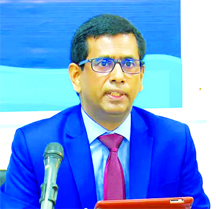
International Crimes Tribunal Chief Prosecutor Tajul Islam on Sunday urged caution in using the term “mob,” arguing that it is often employed with an intent to question or undermine the legitimacy of a revolution.
He made the remarks at a policy dialogue titled “Judicial Independence and the Rule of Law” held at the CIRDAP auditorium in Dhaka, organised by the Centre for Governance Studies (CGS).
Tajul Islam said the word “mob” should be used carefully, noting that indiscriminate use risks discrediting the movement that led to the fall of Ganabhaban.
He stressed that acts such as street crimes or violence against religious minorities by certain groups cannot be equated with the broader revolutionary movement. “The word ‘mob’ must be used with extreme caution,” he said.
However, his remarks drew sharp criticism from several speakers at the event. Former Communist Party of Bangladesh (CPB) general secretary Ruhin Hossain Prince and Bangladesh Samajtantrik Dal (BSD) General Secretary Bazlur Rashid Firoz described the comments as a potential “threat,”arguing that they undermine the principle of the rule of law.
In his opening remarks, CGS Executive Director Parvez Karim Abbasi said Bangladesh was witnessing “mobocracy” rather than the rule of law, warning that social media trials and mob justice were eroding legal safeguards.
“If so-called religious groups can take the law into their own hands and justice continues to be delayed, symbolic measures alone will not ensure the rule of law,” he said.
Speaking on the same issue, Jatiyo Party Secretary General Shameem Haider Patwary warned that tolerating injustice either before or after a revolution would inevitably backfire.
“Mobs were allowed, and now mobs are consuming the government, consuming the Election Commission. They could consume the country as well,” he said.
Responding to the criticism, Tajul Islam reiterated that repeatedly using the term “mob” to describe revolutionary achievements risks deliberately questioning or discrediting those who participated in the movement.
He urged restraint if there were attempts “in certain quarters” to challenge the revolution through such language.
Ruhin Hossain Prince rejected this view, saying, “You cannot claim to uphold the rule of law while simultaneously encouraging mobs. That cannot work in Bangladesh.” BNP leader Nilufar Chowdhury also criticised Tajul Islam’s remarks during the discussion.
Moderating the dialogue, CGS President Zillur Rahman recalled that a senior government figure had earlier claimed there was “no such thing as mobs, only pressure groups.”
He cautioned that such justifications could lead to serious incidents in the future. “We fear that if this narrative continues, similar incidents or accidents may soon follow,” he said.
The dialogue was attended by politicians, lawyers, human rights activists and members of civil society.