EU observers stress holistic view of election process

European Union Election Observation Mission (EU EOM) today underscored the importance of assessing Bangladesh’s electoral process holistically to ensure an impartial and fact-based evaluation, as it deployed long-term observers nationwide.
“Let us observe and let us wait until a holistic assessment is done,” EU EOM Deputy Chief Observer Inta Lase told reporters at a city hotel, noting that “they all know there is no perfect election anywhere in the world.” News BSS
She said that it is crucial to examine the entire electoral process in its full context while preparing the mission’s assessment, describing the election as a historic moment for Bangladesh.
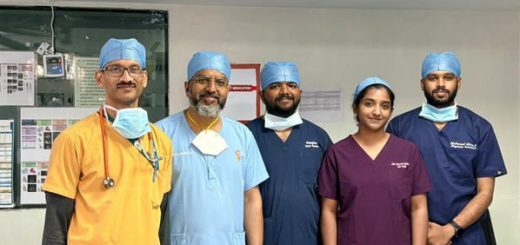
Lase made the remark while deploying EU’s 56 long-term observers (LTOs) across all 64 districts of Bangladesh to monitor the parliamentary elections scheduled for February 12.
The Deputy Chief Observer said the mission’s assessment and report along with recommendations prepared in the spirit of friendship and cooperation would help improve future electoral processes in the country.
She said the observers are highly experienced, although many of them are visiting Bangladesh for the first time.
Addressing the observers, Lase said, “You are the ones who are in the field, seeing the realities, telling us here in Dhaka how the situation is unfolding in each and every district. We are really looking forward to your report and assessment from the field.”
“Trust me, we are all very privileged to hear from you and see this historical election,” she added.
Lase acknowledged that the observers’ working hours on the ground would be long but rewarding.
“The long-term observers are a critical element of our mission. Their observations and insights will ground our impartial and fact-based evaluation of the electoral process,” she said.
The EU EOM follows a robust and well-established methodology of long-term, nationwide observation to ensure a balanced and thorough assessment of the electoral process.
The long-term observers will closely monitor key aspects of the election at the regional level and support the analysis of the core expert team based in Dhaka.
“Our observers will work in two teams and in their areas of observation they will meet voters, election officials, candidates and political parties, as well as citizen observers and youth activists not only in the cities, but also in small towns and villages,” Lase said.
The observers have been drawn from EU Member States, Canada, Norway and Switzerland, and prior to deployment received extensive briefings on the electoral process, political environment, legal framework, and media and social landscapes in Bangladesh.
The mission was deployed following an invitation from Bangladesh’s authorities and is led by Chief Observer Ivars Ijabs, a Member of the European Parliament, who officially launched the mission in Dhaka on January 11.
As election day approaches, the mission will be further reinforced with 90 short-term observers, along with observers from diplomatic missions of EU Member States, Canada, Norway and Switzerland, who will observe voting, counting and tabulation processes. A delegation of Members of the European Parliament will also join the mission.
At full strength, the EU EOM will comprise 200 observers from all 27 EU member states, Canada, Norway and Switzerland.
The EU EOM will present its preliminary findings at a press conference in Dhaka on February 14, while a final report with recommendations for future electoral processes will be submitted to the authorities after completion of the entire electoral process. Both documents will be made public and published on the Mission’s website.
The EU EOM operates under a strict code of conduct requiring neutrality and non-interference and conducts its activities in line with the Declaration of Principles for International Election Observation endorsed under United Nations auspices in 2005, EU officials said.