
Culex mosquito threat likely to intensify in March: Experts

Staff Reporter :
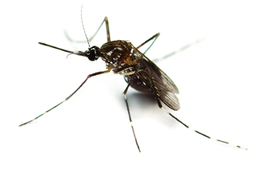
Experts have warned that while the population of dengue-spreading Aedes mosquitoes has shown a slight decline, Culex mosquitoes are rapidly increasing and are expected to reach their highest level in March this year.
Speaking at a discussion at the Sagar-Runi Auditorium of the Dhaka Reporters Unity (DRU) on Saturday, Jahangirnagar University professor Kabirul Bashar said the growing dominance of Culex mosquitoes, alongside the potential resurgence of Aedes, proves that Dhaka’s mosquito problem has evolved beyond a seasonal issue into a deep-rooted scientific and structural crisis.
“At present, Aedes mosquitoes are comparatively fewer, but Culex numbers are rising steadily and will peak in March.
I am confident that city dwellers will continue to suffer unless immediate action is taken by both authorities and citizens,” he said at the discussion titled ‘Mosquito menace and civic suffering’.
Dr Bashar stressed that eradicating mosquitoes from Dhaka is impossible without active public involvement. While authorities must be held accountable, he said citizens’ carelessness also contributes significantly to the problem.
“Stagnant water on rooftops, abandoned containers and uncovered water tanks-these minor lapses eventually cause major public health crises,” he noted.
He further said mosquitoes have become more than a source of irritation, posing a serious challenge to public health, urban governance and administrative efficiency.
Referring to mosquito surveillance conducted by Jahangirnagar University, Dr Bashar said the growth of Culex mosquitoes in Dhaka is occurring at an alarming and largely unchecked rate.
Data showed that nearly 85 percent of adult mosquitoes collected in the city during the last week of December 2025 belonged to the Culex species.
“This situation is the outcome of prolonged urban mismanagement. Poor drainage planning, clogged drains left unattended for years, and waterlogged basements and parking spaces have turned Dhaka into a perfect breeding zone for Culex mosquitoes,” he added.
Dhaka South City Corporation Chief Health Officer Dr Nishat Parvin said city corporations alone cannot curb dengue or mosquito infestation.
“Residents must ensure cleanliness in and around their homes and remain vigilant. We are carrying out field-level operations, but success will remain unattainable without public cooperation. A mosquito-free Dhaka is possible only through collective effort,” she said.
Bangladesh Institute of Planners (BIP) President and urban planner Dr Md Ariful Islam emphasized the need for long-term solutions rather than short-term measures.
“Unplanned urban growth, poor housing practices, ineffective drainage systems and waste mismanagement are the fundamental barriers. Without proper urban planning and strong public awareness, no intervention will yield sustainable results,” he said.