
World leaders, foreign missions mourn death of Khaleda Zia
Diplomatic Correspondent :
Heads of different countries and foreign missions based in Bangladesh have expressed deep condolences over the death of former prime minister and Bangladesh Nationalist Party (BNP) Chairperson Khaleda Zia, remembering her as a towering figure in the country’s political history.
In separate condolence messages sent to the government, the Zia family and the BNP, foreign leaders acknowledged Khaleda Zia’s long role in shaping Bangladesh’s democratic journey and public life.
Several leaders noted her tenure as prime minister and her influence during some of the most critical phases of the country’s politics.
Countries and entities expressing condolences include the United States, China, India, Pakistan, the United Kingdom, Germany, Japan, France, Australia, Nepal, Bhutan, Iran, Switzerland, United Nations and the European Union.
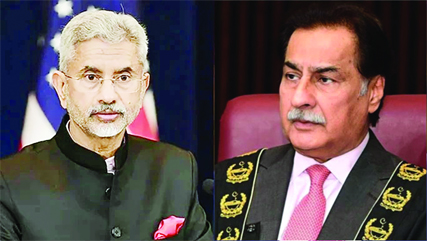
Pakistan’s National Assembly Speaker Ayaz Sadiq will attend her funeral while India’s External Affairs Minister, Dr S Jaishankar will represent India at her funeral. Senior representatives from Bhutan and the Maldives are also expected to attend the funeral prayers.
The US Embassy in Dhaka extended its deepest condolences, saying Khaleda Zia played a pivotal role in shaping Bangladesh’s modern history and that her leadership was instrumental in advancing the country’s development.
China’s Ambassador to Bangladesh Yao Wen, in a condolence letter to BNP Acting Chairman Tarique Rahman, said the Chinese leadership mourned the passing of Begum Khaleda Zia, describing her as a steadfast champion of freedom and a key figure in Bangladesh’s political history.
He said Chinese Premier Li Qiang and Foreign Minister Wang Yi had separately conveyed condolences to Chief Adviser Professor Muhammad Yunus and Adviser for Foreign Affairs Md Touhid Hossain.
Yao Wen said Khaleda Zia embodied the democratic aspirations of the Bangladeshi people and was a cherished friend of the Chinese people whose contributions strengthened China Bangladesh relations.
He added that the Communist Party of China would continue its longstanding friendly relations with the BNP under Tarique Rahman’s leadership.
Indian Prime Minister Narendra Modi also condoled her death, recalling her contributions as the first woman prime minister of Bangladesh and her role in strengthening India Bangladesh relations.
In a message posted on X, Modi said he was deeply saddened by her passing and recalled his warm meeting with her in Dhaka in 2015.
Indian political leaders, including Rahul Gandhi, Mamata Banerjee, and Mallikarjun Kharge, have expressed sorrow over her death, acknowledging her significant contributions to Bangladesh’s political landscape.
From Pakistan, President Asif Ali Zardari and Prime Minister Shehbaz Sharif expressed heartfelt condolences. Zardari said her leadership and services would be remembered with respect, while Sharif described her as a committed friend of Pakistan and said her lifelong service left a lasting legacy.
The United Kingdom expressed deep sorrow through the British High Commission in Dhaka, extending condolences to her family, friends and the people of Bangladesh.
Germany also conveyed its deepest condolences, honouring her long public service and recalling high level engagements with her over the years, while reaffirming its commitment to enduring friendship with Bangladesh.
Japan expressed profound sorrow at her death, with Ambassador Saida Shinichi recalling her visits to Japan and her contributions to strengthening bilateral friendship and cooperation.
France, in its condolence message, highlighted her significant role in shaping Bangladesh’s national life and extended sympathy to her family and the people of the country.
International leaders, such as Australia’s High Commission in Bangladesh, the Iranian Embassy, Nepalese Prime Minister Sushila Karki, and the Russian Embassy, have also offered their condolences. They praised Khaleda Zia’s role in fostering diplomatic ties and her contributions to democratic governance.
Her leadership as Bangladesh’s first female prime minister and her long-standing political career have left an indelible mark on the country’s political journey.
Leaders from across South Asia and beyond have expressed their sympathies, honoring her legacy and offering support to her family, the BNP, and the people of Bangladesh during this time of mourning.
The European Union said it extended its deepest condolences to the people of Bangladesh on the passing of Begum Khaleda Zia.
Diplomatic missions in Dhaka described her death as a significant loss for Bangladesh and extended sympathy to her family, party colleagues and supporters.
Many ambassadors and high commissioners highlighted her contribution to parliamentary democracy and recognised her prominence as one of South Asia’s leading women political leaders.
Khaleda Zia, country’s first female prime minister, passed away around 6:00am on Tuesday while undergoing treatment at Evercare Hospital in Dhaka. She was 80.
Her death has prompted an outpouring of reactions at home and abroad, reflecting her enduring impact on the country’s political landscape.