
Forex reserves may reach $35b by end of fiscal year: BB
Staff Reporter :
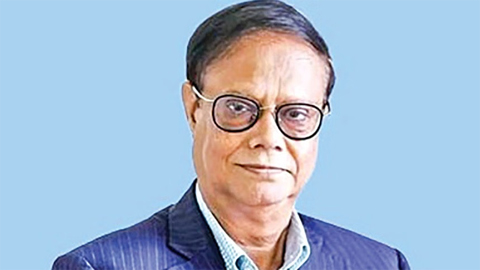
Bangladesh Bank Governor Ahsan H Mansur has expressed confidence that the country’s foreign exchange reserves could rise to between $34 billion and $35 billion by the end of the 2025-26 fiscal year.
Speaking at a discussion titled “Banking Sector Reforms: Challenges and Actions, organised by the Economic Reporters’ Forum (ERF) in the capital on Thursday, the governor said the expected growth in reserves would come primarily from domestic sources, not external borrowing.
He clarified that the central bank is not exerting pressure to collect dollars, noting that foreign currency is being acquired through market-based auctions instead.
According to Mansur, Bangladesh is steadily moving away from a fragile economic situation toward greater stability, adding that concerns over the balance of payments (BoP) and dollar shortages have largely eased.
Addressing the health of the banking sector, the governor acknowledged that the scale of the crisis is deeper than initially anticipated. While earlier estimates placed non-performing loans (NPLs) at around 25-27 percent, the actual figure has now climbed to approximately 36 percent.
Despite the challenges, he reaffirmed the central bank’s commitment to full transparency, stating that no data would be hidden and that the public would be informed of the economy’s true condition.
As part of structural reform efforts, the governor announced plans to merge five weak banks, assuring depositors that their funds in the merged institutions would remain fully protected.
To further safeguard small savers, deposit insurance coverage has been set at Tk2 lakh. He added that if new entities inject Tk20,000 crore into the system, the risk of depositor losses would be virtually eliminated.
Managing Director of Mutual Trust Bank, Syed Mahbubur Rahman, also spoke at the event, providing historical context to the ongoing banking crisis.
He argued that the emergence of a “mafia system” in the banking sector began with the forced takeover of Islami Bank, which intensified existing problems. He also noted that commercial banks were often compelled to finance long-term industrial projects due to the underdevelopment of the capital market.
While acknowledging that the political transition has brought some positive developments-such as reduced volatility in the dollar market and a gradual increase in reserves-Syed Mahbubur cautioned that banking reforms alone are insufficient.
He stressed that resolving the sector’s entrenched problems will require strong political commitment, alongside technical and regulatory reforms.