Hamas urges stronger global pressure on Israel

Agency :
Hamas on Tuesday urged the international community to increase pressure on Israel before the group proceeds with the next stage of the Gaza ceasefire.
A senior Hamas official said the group wants Israel to reopen a major border crossing, halt lethal attacks, and allow greater humanitarian access to the war-ravaged territory.
Israel, meanwhile, says it is prepared to advance to the next, more complex stage of the 20-point ceasefire plan proposed by U.S. President Donald Trump, and is insisting that Hamas first return the remains of the final Israeli hostage still held in Gaza.
Husam Badran, a member of Hamas’ political bureau, demanded that all commitments in the ceasefire’s initial phase be fully carried out before any further steps are taken.
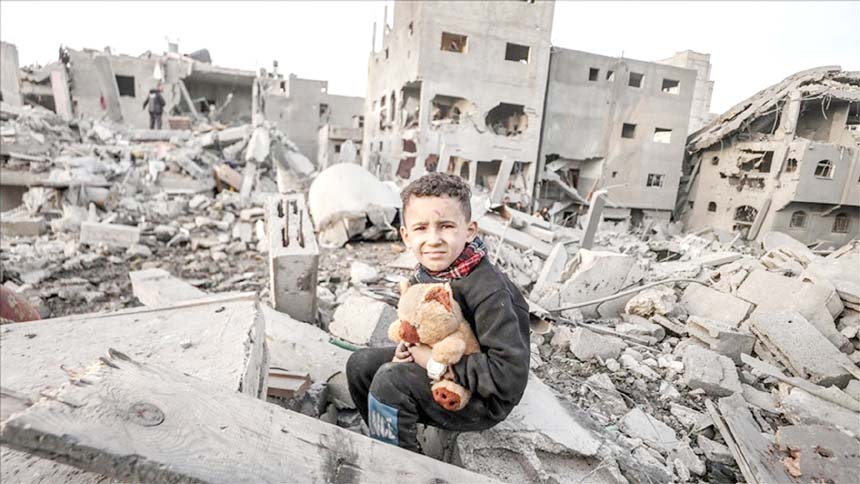
He accused Israel of continuing to demolish Palestinian homes in areas of Gaza it still controls.
According to Palestinian health authorities, Israeli airstrikes and gunfire have killed at least 376 Palestinians since the ceasefire began on Oct. 10.
Badran said the conditions for entering the second phase have not yet been met, signaling a firmer stance from Hamas.
However, Hamas has limited bargaining power and may face strong pressure from regional actors such as Qatar and Turkey not to stall the fragile ceasefire.
Israel has accused Hamas of breaching the agreement and says its recent strikes are responses to attacks on Israeli soldiers.
Israeli forces also acknowledge shooting Palestinians who approached the “Yellow Line,” a loosely defined boundary between Israeli-controlled areas and the rest of Gaza.
While Israel maintains that those killed were suspected militants, some victims-among them women and children-appear to have been civilians.
Humanitarian shortfalls
Aid agencies, including the United Nations, warn that the humanitarian situation in Gaza remains dire and that incoming aid is far below agreed-upon levels.
The ceasefire arrangement called for at least 600 aid trucks per day, but over the past month the U.N. has recorded only about 120 daily. Commercial truck numbers are unclear.
Cogat, the Israeli body overseeing aid entry, claims 600-800 trucks are arriving daily. Still, the U.N. says many goods are unaffordable and essential proteins remain scarce.
It also reports that medical supplies have not significantly increased and that some hospitals continue to face acute shortages.
Israel announced Wednesday that it would start allowing Gaza-bound aid through a Jordan-Israel border crossing.
Border crossings and political plans
The ceasefire plan also requires reopening the Rafah crossing between Gaza and Egypt for two-way traffic. Israel says it is ready to let Palestinians exit Gaza through Rafah but not yet to reenter.
A U.S.-backed proposal for Gaza’s future has gained traction recently, with negotiations over upcoming ceasefire phases-expected to include Hamas’ disarmament-set to begin soon.
Israeli Prime Minister Benjamin Netanyahu said Sunday that both sides are close to entering the second ceasefire stage, pending Hamas’ return of the remaining hostage’s body. Hamas says widespread destruction from Israeli strikes has hindered their search.
Officials also say an international body to administer Gaza may be announced by year’s end.
Israel’s two-year military campaign in Gaza has killed more than 70,300 Palestinians-around half of them women and children-according to Gaza’s Health Ministry.
Although the ministry operates under the Hamas-run government, it is staffed by medical professionals and its data is generally regarded as reliable internationally.
The conflict began after Hamas’ Oct. 7, 2023 attack on southern Israel, which killed roughly 1,200 people and led to the abduction of 251 hostages. Most hostages or their remains have since been returned through ceasefires or negotiated agreements.