
Middlemen exploit farmers, consumers amid surplus vegetable supply
Muhammad Ayub Ali :
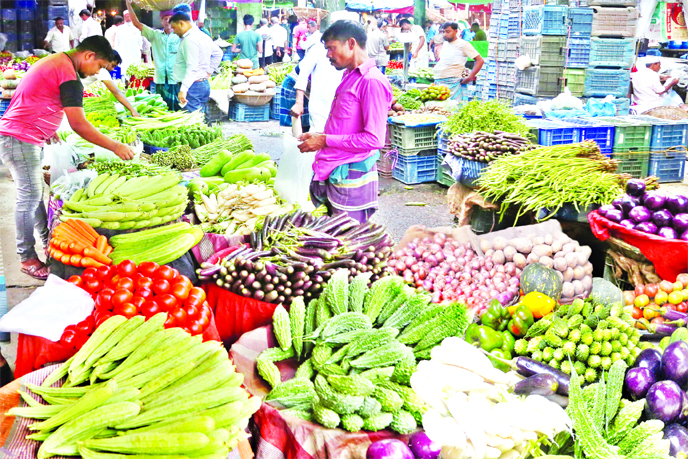
Winter vegetables have arrived in abundance across capital’s markets, yet prices remain stubbornly high, leaving buyers frustrated and raising questions about market management.
Such scenes were observed in several major markets on Friday where vendors pointed to October’s heavy rains as the main reason behind the disruption in winter vegetable production.
In some regions, farmlands were damaged, limiting supply and keeping wholesale prices elevated.
At Malibagh market, shopper Firoz expressed disappointment: “winter vegetables have been here for almost a month, but prices have not eased. In previous years, this was the time when rates became affordable. This year, there is no sign of that happening.”
Vegetable prices continue to climb across the city. Fresh brinjal is selling at Tk 80–100 per kg—close to summer rates instead of the usual winter range of Tk 40–60. Cauliflower and cabbage are priced at Tk 40–60 each, while beans cost Tk 80–100 per kg, a steep rise from the Tk 20–30 of previous years. New potatoes are also high, selling for Tk 100–120 per kg.
Other vegetables have also become costlier: beetroot is Tk 70–80 per kg, dal and patol Tk 60–80 after a Tk 10–20 rise, and sweet pumpkins Tk 80–100 each. Even leafy greens, normally the cheapest winter items, now cost at least Tk 20 a bunch instead of Tk 10–15.
Onions have shown slight relief, with prices dipping from Tk 120 to Tk 110–115 per kg in some places. Egg prices remain stable at Tk 125–130 per dozen.
Chicken prices have risen sharply, with broiler at Tk 190 per kg, sonali at Tk 300–330, domestic at Tk 550–650, and layer at Tk 320, driven by higher feed, labour, and transport costs.
Fish and meat prices are mostly stable, though hilsa supply has improved—medium hilsa sells for Tk 1,500 per kg, large ones Tk 2,000–3,000, and other fish like rui, katla, mrigel, pangas, and tilapia range from Tk 190–750 per kg.
Karwan Bazar Aratdar Malik Samiti President Md Imran Master said vegetable supply may stabilise within 7–10 days as new crops reach the capital.
But despite seasonal abundance, prices continue to strain consumers while farmers fail to secure fair returns.
Middlemen profit unchecked, leaving the market effectively captive to syndicates. The lingering question remains: when will meaningful action be taken to protect both farmers and consumers?